
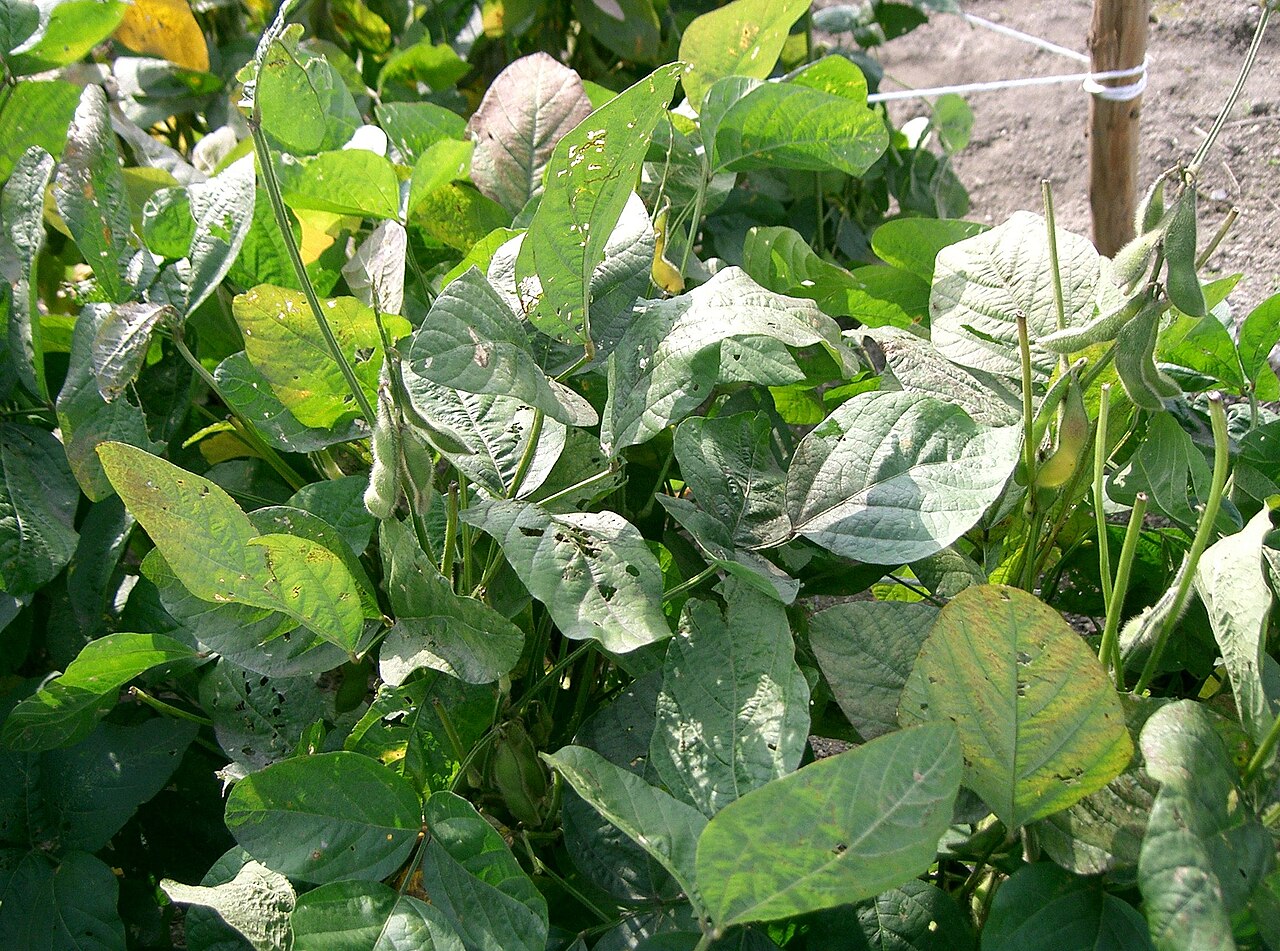
The Indian Institute of Technology Kharagpur and Absolute, an AI-native biosolutions company, have been selected to develop Smart Scout, an artificial intelligence system for monitoring soybean crops, as one of six projects in the first cohort of the Quad's Advancing Innovations for Empowering NextGen Agriculture (AI-ENGAGE) initiative, Krishi Jagran reported. IIT Kharagpur leads the Indian research team, with Absolute as its industry partner.
Smart Scout is a computer-vision system meant to identify the risk of lodging earlier and measure crop damage more precisely, and is also designed for pest detection and yield estimation. It uses cameras and AI and can be carried by hand or mounted on sprayers and other farm machines, so that scouting fits into work farmers already do in the field.
Lodging is when plants bend or fall before harvest. In soybean it usually strikes late, when pods are filling and plants are heaviest: heavy rain softens the soil around the roots, strong wind pushes plants over, densely sown crops grow tall and thin stems, and stem-boring insects weaken plants from the inside. A lodged field loses yield and grain quality, plants lying on wet soil are more prone to disease and pod rot, and flattened crops are slow and wasteful to harvest. Today most farmers judge the damage by walking their fields, often after the window for action has closed.
AI-ENGAGE brings together researchers from Australia, India, Japan and the United States and is stewarded by the Indian Council of Agricultural Research (ICAR), the US National Science Foundation, the Japan Science and Technology Agency and Australia's CSIRO. Each project draws researchers from at least three member countries; Smart Scout involves all four. The cohort is backed by more than $6 million in combined Quad funding, with each agency paying for its own country's researchers, and ICAR supports the Indian part of Smart Scout.
The crop is a big target. World soybean production exceeds 420 million tonnes. India had about 12.95 million hectares under soybean in 2024-25, with Madhya Pradesh and Maharashtra together accounting for around 84.5 percent of the area.
For growers, the promise is an earlier, field-level view of where a crop is lodging or damaged, while there is still time to act, instead of a walk through the field after the loss is done.
Photo: KENPEI / Wikimedia Commons (CC BY-SA 3.0)
Source: Krishi Jagran


Comments
(0)