
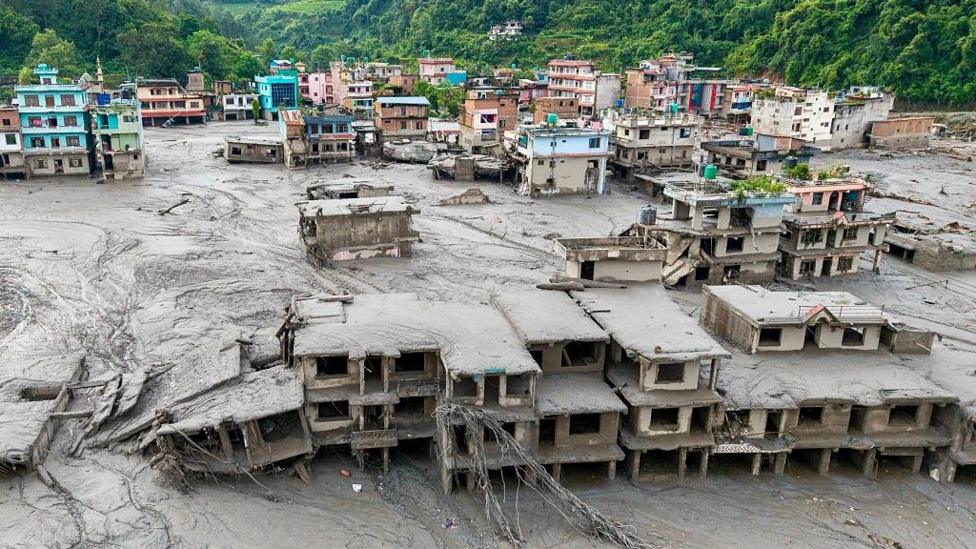
Flash flooding in Nepal has caused heavy loss of life and damage, with more than eight hundred people still missing. On the Tibetan side the number missing is more than 550, though it is not yet certain whether that figure is entirely separate from Nepal's.
Encyclopaedia Britannica defines a flash flood as a sudden and unexpected torrent of water flowing rapidly through a gorge, a narrow gully, a valley or other low, constricted ground.
The difference from an ordinary flood is time. A week or more of continuous rain raises river levels gradually until the situation becomes severe. In a flash flood, three to four hours of rainfall can be enough to produce widespread flooding, taking a river from dry to overtopping its banks, according to Sardar Uday Raihan, executive engineer at Bangladesh's Flood Forecasting and Warning Centre (FFWC).
Excessive rain heads the list of causes. Flash floods are often produced by heavy rainfall associated with thunderstorms, or by the rapid melting of snow and ice in the mountains. According to the United States National Weather Service, they can also follow a dam failure or a landslide.
Terrain is a determinant too. Steeply sloping ground such as hills, and wide areas of surfaces that cannot absorb water — hard soil, rock, roofs, roads and other paved ground — move water quickly towards low-lying areas. The intensity, location and spread of the rainfall decide how fast the flood arrives and which areas it reaches.
These floods are usually short-lived: water rises and falls again within hours or a few days. But the suddenness makes them extremely destructive. Britannica records that some flash floods generate a wall of water powerful enough to scour a riverbed, lift structures off their foundations, destroy roads and bridges, and snap or uproot large trees.
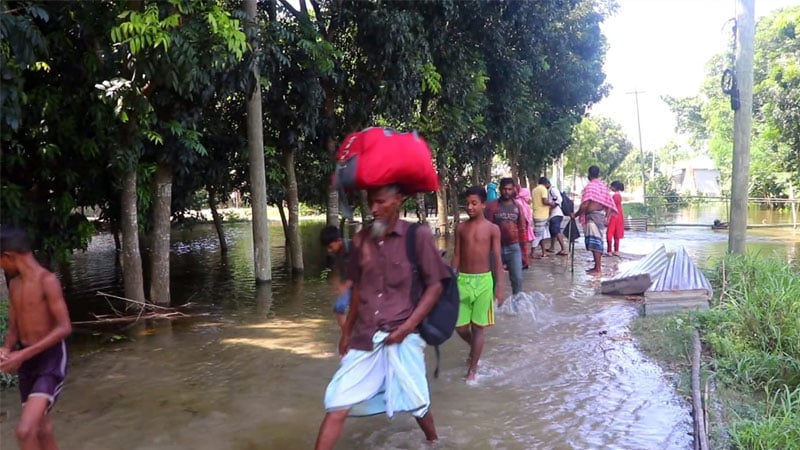
They are also among the deadliest weather events. More than five thousand people die in flash floods worldwide every year, most of them by drowning. In the haor basins and hill districts of Bangladesh and elsewhere, such floods repeatedly submerge fields before the crop can be cut.
Source: BBC Bangla

Comments
(0)