
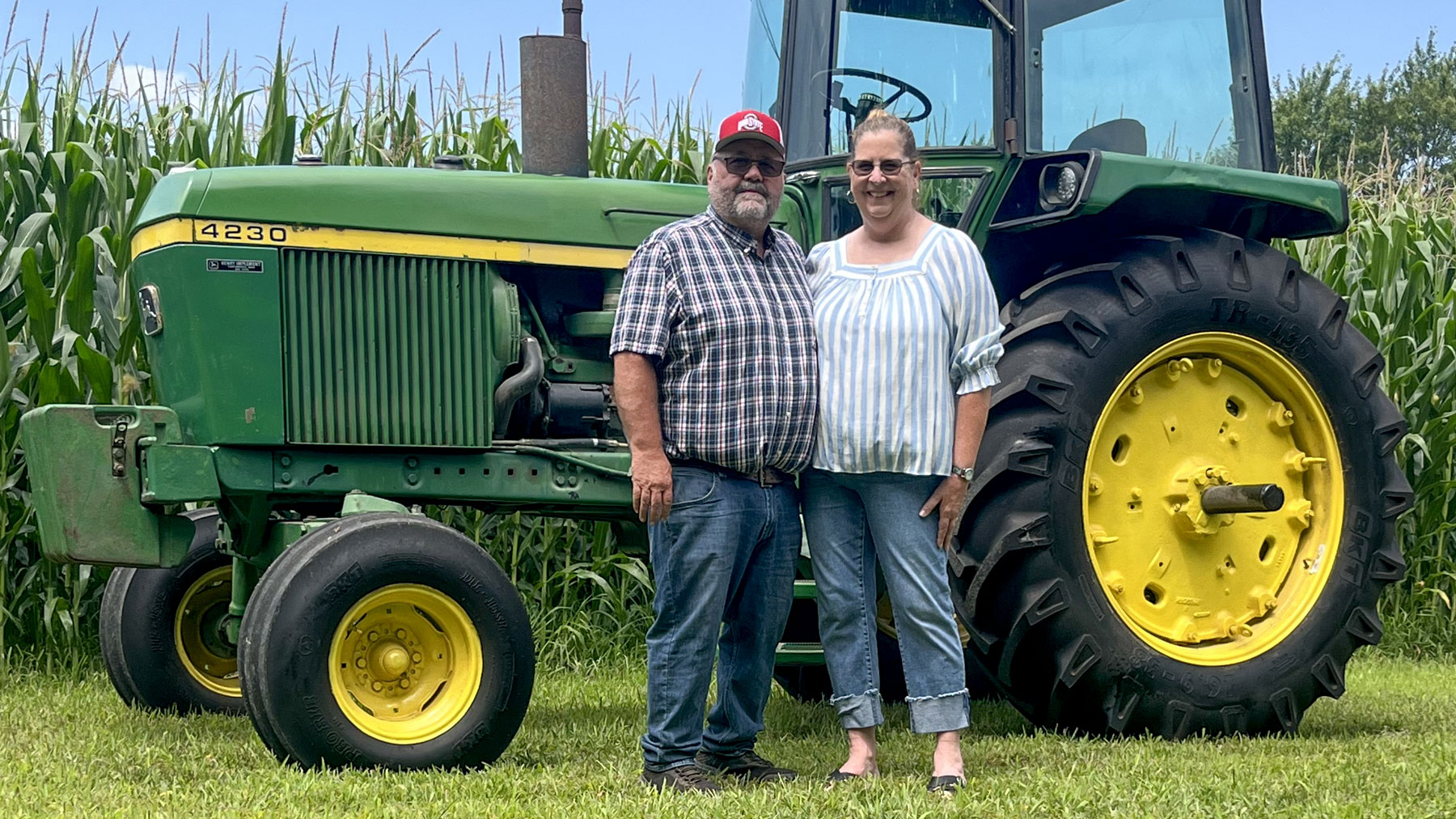
In 2012 a friend told Don Hammersmith to dig ten spots in his field and count the earthworms. He found two. "He goes, 'You should have at least one in every scoop,'" the Defiance County, Ohio, farmer recalled to Farm Progress. That count turned a no-till habit adopted to save time into a soil-health mission that has now won him an Ohio Conservation Farm Family Award in the programme's new small-farm category.
Hammersmith, a Wilmington College agronomy graduate, saw no-till at scale in the mid-1980s on a 3,000-acre southern Ohio farm before returning to Ohio State for a teaching degree. He taught agriculture for 28 years at his home high school in Ayersville. When his father died in 2009 he was teaching, coaching football and raising a family, and conventional tillage on his corn, wheat and soybean rotation simply did not fit. "It was really for a selfish reason of time," he said.
The worm count showed no-till alone was not enough. He had tiled the fields in 2010 and begun applying poultry litter to build organic matter; from 2012 he added cover crops, starting with straight rye and moving to three- to five-way mixes by 2017-18. "Now, I go out there and almost every shovel I get at least one worm, sometimes two or three," he said. Early aerial photographs showed the tile lines; now they are invisible, which he credits to the covers changing how the soil drains.
The economics drive it as much as the ecology. "The days of blanketly putting on 300 pounds of potash are over," Hammersmith said. As an H2Ohio participant he samples soil regularly and has tried Haney tests alongside conventional ones to fine-tune rates. Covers hold water in dry spells and suppress weeds, so he uses less herbicide, on soils that run from sand to Paulding clay.
He keeps experimenting: after years of drilling soybeans at 7.5-inch spacing into terminated rye he is testing 15-inch rows, has set up a pollinator plot, is considering bees, and plants soybeans green into cover crops. His farm hosts plots for Ohio State's Agronomic Crops Network and he works with the county soil and water conservation district.
Now retired after 35 years in agricultural education, he farms full time, works part time with OSU Extension, mentors an FFA student on the farm and trains local schools for Envirothon competitions. His advice to farmers weighing conservation: "It's not a silver bullet. Soil is not made in a day." Start with one practice, plant one cover crop, call a farmer who has done it — and count your earthworms.
Source: Farm Progress

Comments
(0)