
Food systems already make up a large part of the world's carbon markets, but the credits come from a narrow set of project types and some of the biggest sources of farm emissions are barely represented, according to a new analysis by CIFOR-ICRAF researchers Christopher Martius and Nathanael Pingault, published by CGIAR.
The study brings together 9,254 projects that have issued credits under UNFCCC mechanisms or the major independent standards, worth 4.9 billion tonnes of carbon dioxide equivalent in issued credits. The authors looked at them through a food-systems lens that takes in energy, refrigeration, waste and other activities along food value chains, not only farming and land use.
Food-system projects account for 23.3 percent of projects registered under the Clean Development Mechanism and 35.9 percent of its issued credits. In the independent mechanisms covered by the Berkeley Carbon Trading Project database their share is larger still: 61.3 percent of projects and 58.6 percent of credits.
Most of that volume comes from two activities. Of the 4,258 projects the study counts as fully linked to food systems, those dealing with ozone-depleting refrigerants produce 25.2 percent of issued credits and REDD+ forest projects another 23.5 percent, together 48.6 percent. Agriculture, despite its central place in food systems and its emissions, accounts for just 2.8 percent. Part of the reason is size: a REDD+ or refrigerant project can generate large volumes of credits, while many farm activities are small but carry the same fixed costs for design, registration and monitoring.
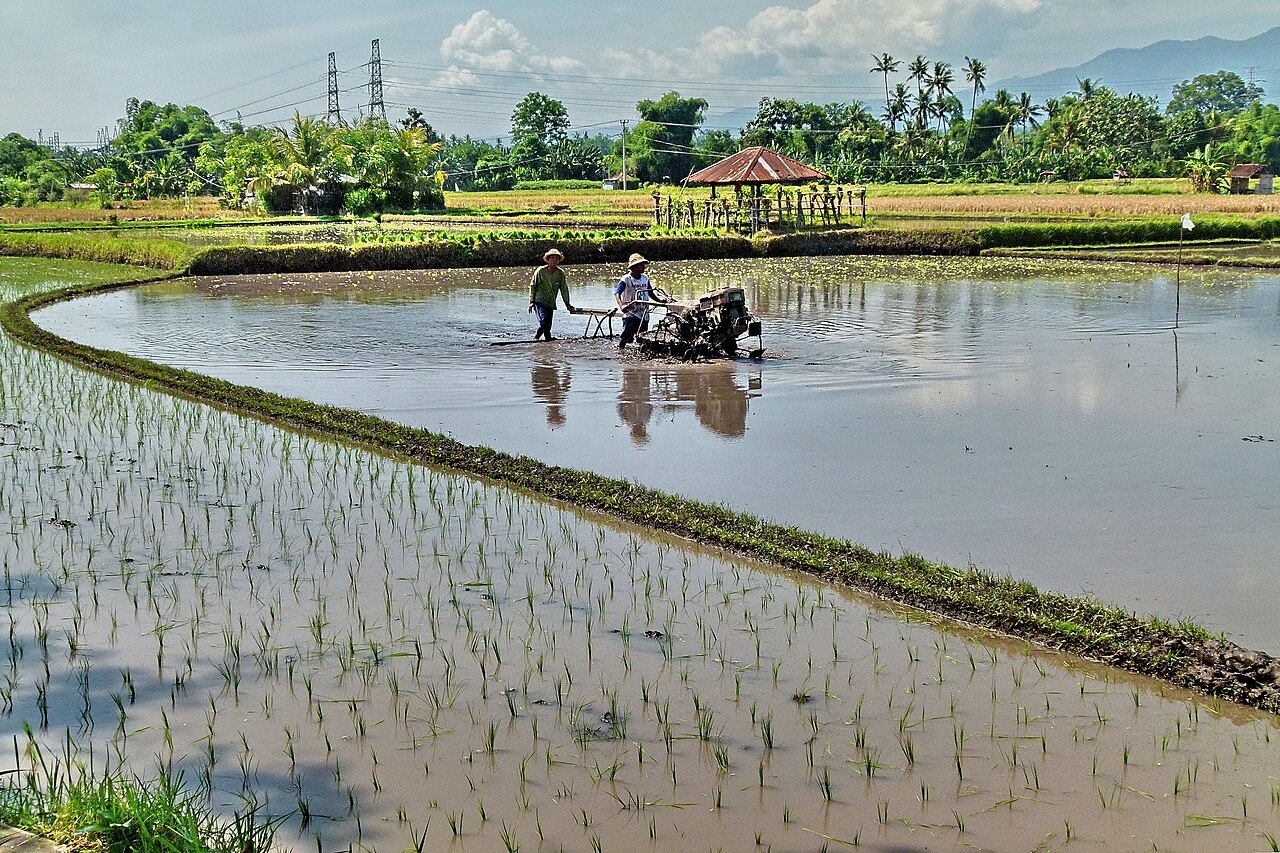
On the farm, methane from livestock digestion (enteric fermentation) is the largest source of emissions in the paper's comparison with FAOSTAT data, and manure management and rice cultivation are also significant. All three appear only lightly in the carbon-project data. Food loss and waste, household energy for cooking and access to clean water are other gaps.
Geography is uneven too. China, India and Brazil host much of the Clean Development Mechanism activity, and the United States, India and China produce close to half the credits in the independent dataset. Africa's share is 3.7 percent of credits under the CDM and 14.3 percent under the independent mechanisms.
The authors warn that more projects do not automatically mean more climate benefit: a credit is only as credible as the reduction behind it. For smallholder farms, which may number thousands in one project, they suggest grouping many small activities under one programme to share the costs of registration, monitoring and verification, and more consistent accounting rules across registries. Some gaps, they add, may be better served by regulation, public investment or other climate finance than by carbon markets. The CGIAR article was written by Ibukun Taiwo and Janelle Marie Sylvester of the Alliance of Bioversity and CIAT with Christopher Martius.
Photo: Schnobby / Wikimedia Commons (CC BY-SA 3.0)
Source: CGIAR

Comments
(0)