
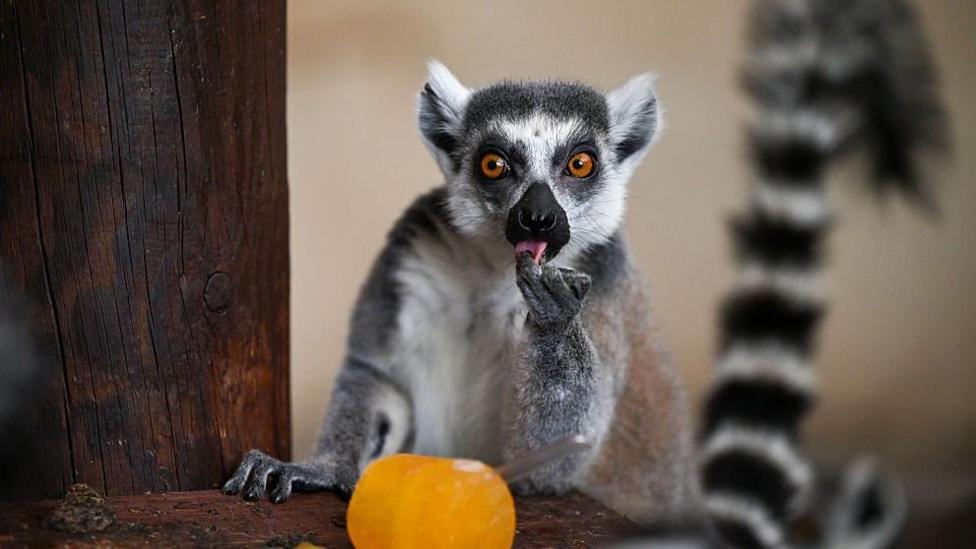
Two ring-tailed lemurs stolen from Gazipur Safari Park about eighteen months ago were trafficked to India, the Criminal Investigation Department (CID) has learned. Officers say the threatened animals passed through several hands and are now at a private wildlife rescue, conservation and rehabilitation centre in Gujarat.
Police had begun an effort to recover them and bring them home. But because the safari park authorities could not supply the necessary evidence, the return of the two lemurs has become uncertain. To recover a trafficked animal, it must first be proved that it came from Bangladesh.
The method of proof is scientific. "A scientific and effective way of doing this is to match the animal's earlier genetic profile, or DNA test report, against a new test report," Dr Mohammad Aminul Islam Bhuiyan of the zoology department at the University of Dhaka told BBC Bangla.
That report does not exist. Officials at Gazipur Safari Park say they hold no DNA report for the two trafficked lemurs. "But we have collected a DNA sample from another lemur that is a blood relative of those two and sent it for testing. That is a place of hope," said Tarek Rahman, the park's acting officer.
The animal is not native to Bangladesh. The ring-tailed lemur comes from the island of Madagascar off Africa, and traffickers catch and move them to various countries, which has put the species at risk.
Their arrival in Bangladesh was itself a smuggling case. In 2018 an illegal consignment of foreign animals and birds was intercepted at Hazrat Shahjalal International Airport in Dhaka; a pair of ring-tailed lemurs was recovered along with macaws, peacocks and other birds, and sent to Gazipur Safari Park. The pair later produced two young.
What followed came quickly. One lemur died in early 2022, and about three years later, in March 2025, the remaining three were stolen together. The case shows how hard it is to recover a trafficked animal when records and genetic profiles have not been kept.
Source: BBC Bangla



Comments
(0)