
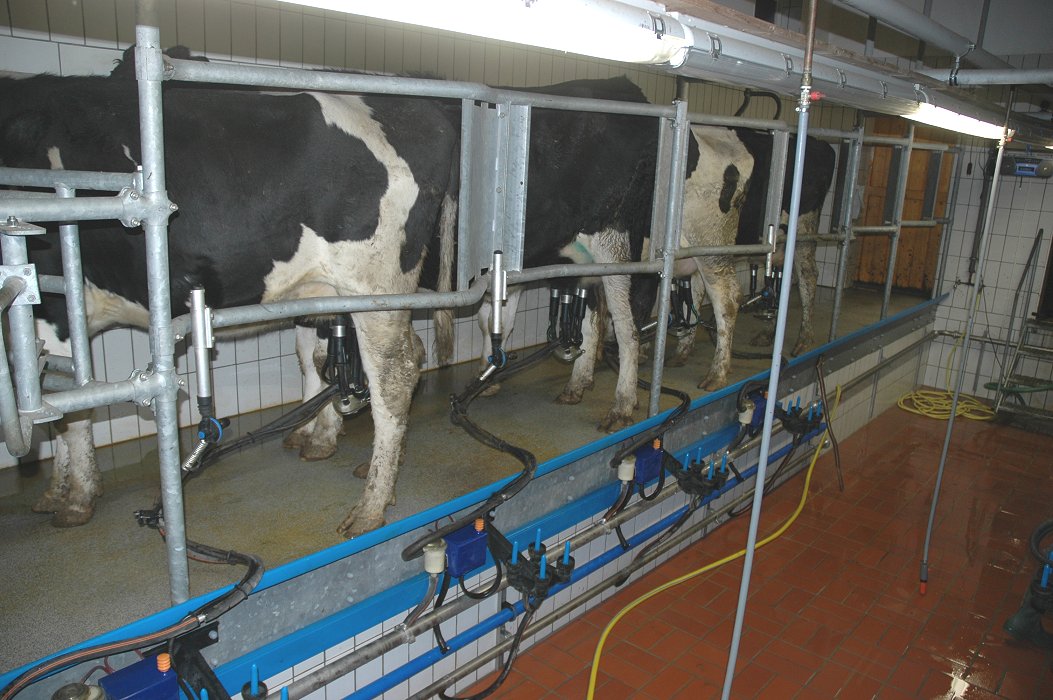
Dairy farmer Jack Munday has built his business around one number: profit per litre, calculated after fixed as well as variable costs. At Town Barton Farm near Crediton in mid-Devon, which he joined in 2012 after studying agricultural business management at the University of Reading, that has meant grazing at every opportunity, calving outdoors in a tight autumn block and breeding a resilient cow, Farmers Weekly reports.
The family does not reveal its profit figure but puts its breakeven milk price at 28p a litre. Average yield is 7,020 litres, of which 2,184 litres (31%) come from grazed grass and 3,636 litres (52%) from total forage. Well-drained sandy clay loam and 900mm of annual rain usually allow about 280 days of grazing a year. This year, with only 50mm of rain between the end of May and late September, grass yields fell to 8.5t of dry matter a hectare against 11-12t in an average year, and silage was fed after every milking for much of the summer.
The herd of 230-240 cows is what the grazing platform suits best, Jack says. Calving began on August 18 and runs to late October, longer than the usual eight weeks because a bovine TB breakdown cut numbers by 45 head in 12 months. Even so, 86% of cows calved in the first five weeks. Maiden heifers and the best third of cows go to sexed dairy semen; the rest to an easy-calving Angus bull. Selecting for milk solids, fertility, health and smaller stature has the 540kg cows producing 638kg of solids, 118% of bodyweight.
Labour, costed at 10p a litre including the family, is the farm's largest single cost and the one David Munday says he will not cut. Herd manager Sam Thomas has a planned day off each week and is home by 5-6pm. Under David's earlier management the herd gave 9,000 litres, "but the profit per litre was poor," he says. "We make seriously more money now."
Jack's wife Danielle, a farm vet, designed the new calf unit: a low dual-pitch roof, solid walls between young calves and a 5% slope to keep bedding dry. Calves receive colostrum from their dams outdoors and are weaned by nine weeks, growing at 0.77kg a day to weaning. Pneumonia has been rare without vaccination, and youngstock mortality was 1.3% in 2025. Heifers calve at 24 months and give 89% of mature cow yields, against a typical industry figure of 80%.
Photo: Gerhard Elsner / Wikimedia Commons (CC BY-SA 3.0)
Source: Farmers Weekly

Comments
(0)