
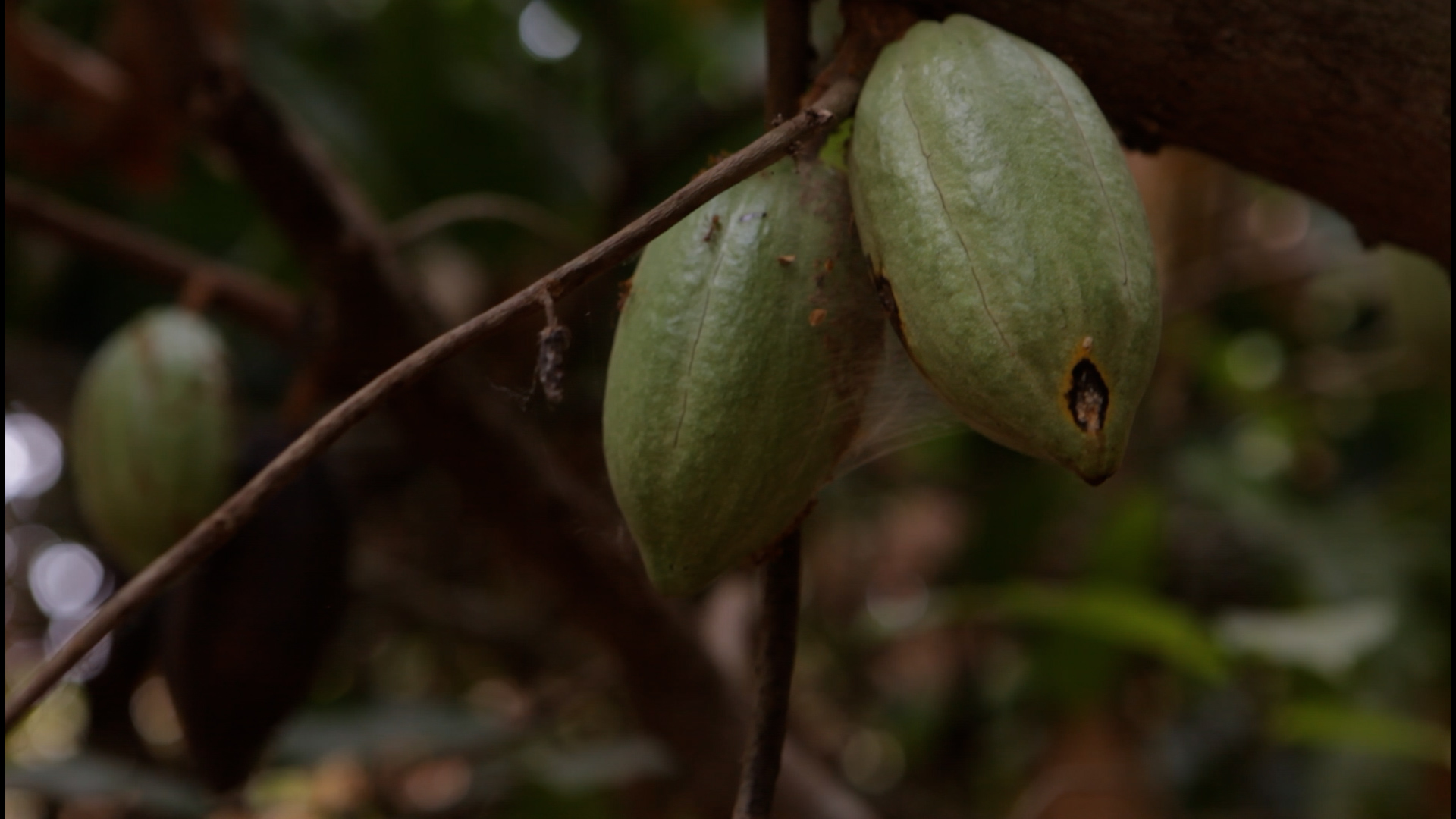
Cocoa farmers in Côte d'Ivoire and Guinea will not plant shade trees and keep them standing on promises alone: they need finance, markets that pay for sustainable cocoa, good advice and secure rights over the trees. That is the conclusion of CGIAR researchers from the Alliance of Bioversity International and CIAT after two national workshops in Abidjan and Conakry in June 2026.
The stakes are large. Côte d'Ivoire alone grows about 44% of the world's cocoa, and Guinea is an emerging producer. Côte d'Ivoire has lost much of its forest cover since the 1950s, and cocoa has contributed to the clearing, including inside protected areas. In Guinea the crop is concentrated in the Forest Guinea region, where farmers face low yields, ageing plantations, poor infrastructure and little access to credit or extension. Rising temperatures, shifting rainfall, droughts and floods add to the strain, and the European Union Deforestation Regulation now requires proof that cocoa sold into the EU is not linked to deforestation.
Agroforestry, growing cocoa alongside shade, fruit and timber trees, can store carbon, provide habitat, improve soil and help farms cope with a changing climate. But the researchers write that the obstacle is rarely persuading a farmer to plant. Farmers may lack secure rights over land and trees, agroforestry takes extra labour, some of the money comes only after years, quality seedlings, advice and affordable finance are hard to find, and buyers do not always reward cocoa grown more sustainably.
Across the two workshops, 71 people from government, research, farmer organisations, companies and civil society reviewed the evidence and ranked the conditions that matter most. In Côte d'Ivoire they put markets, farmer training and advice, and finance first. In Guinea they stressed finance and market access, along with strong institutions, extension services and coordination. The practical actions named included stronger rights over trees, better support for producers, improved financing, fairer market incentives and systems to track progress that could help unlock climate finance.
The workshops used a Six-Step Scaling Approach under CGIAR's Climate Action and Scaling for Impact Science Program, which asks where emissions and forest loss come from, what helps or stops farmers adopting agroforestry, how value chains, business models and financing could support the change, and what the benefits and trade-offs are for climate and people. The work also drew on two new CGIAR reports on cocoa value chains in the two countries, covering planting material, finance, markets and the roles of cooperatives and aggregators.
The next step is to turn the priorities into Enabling Environment Strategies for Côte d'Ivoire and Guinea, which will guide future projects supported by the Government of Italy. The team says the lessons could also inform other cocoa-producing countries, including Cameroon and Ghana. The account was written by the Alliance of Bioversity International and CIAT team for CGIAR Climate Action.
Photo: Numerik-3325 / Wikimedia Commons (CC BY-SA 4.0)
Source: CGIAR

Comments
(0)