
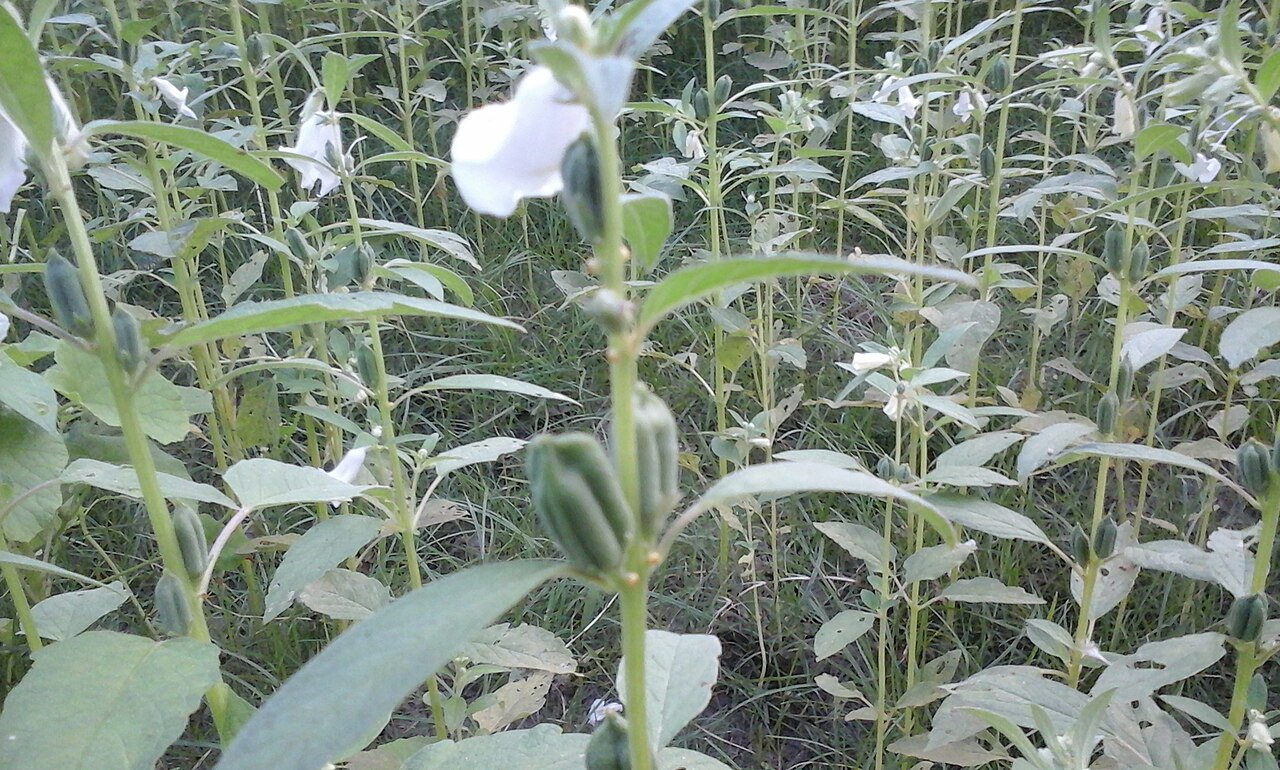
Sesame is catching on in the Jamuna char lands of Kazipur in Sirajganj. This season the upazila has 500 hectares under the crop against a target of 490, most of it farmed by char growers, and about 542 tonnes are expected once it is cut.
The silty char soil gives a good sesame yield for little work. Green sesame stretches across the chars, and in many places it is already ripe; harvesting starts within days. Farmers expect 5 to 6 maunds a bigha.
Abul Hossain, Abdus Sobhan and Altab Hossain of Panagari said more sesame has been planted on the chars than before because it is easy and profitable. Joynul Hossain of Chargirish village said high-yielding seed on his one bigha has done well and he hopes for 5-6 maunds a bigha, with sesame selling at Tk 3,000 to 3,500 a maund. He would plant more with government support.
For many farmers who lost everything to Jamuna erosion, sesame has become the crop to recover with. Locals hope that if the weather holds and the harvest comes in, char growers will get back on their feet.
Upazila agriculture officer Shariful Islam said sesame is an oilseed that was once grown very little in the country and is now gradually increasing. It grows on less fertile land and needs little cost or labour. The Department of Agricultural Extension is helping growers in several ways, and he expects the area to grow further.
In a country that imports much of its edible oil, oilseeds spreading on less fertile char land add to farm incomes and to the domestic oilseed supply.
The report was filed for Krishi Shomoy from Kazipur, Sirajganj, by T M Kamal.
Photo: A sesame field in Bangladesh, Niriho khoka / Wikimedia Commons (CC BY-SA 4.0)
Source: Krishi Shomoy

Comments
(0)