
The government is working on a carbon credit framework to cut emissions and deal with the effects of climate change, state minister for environment, forest and climate change Sheikh Faridul Islam has said. He also pointed to wider use of solar power, the closure of polluting brick kilns, the spread of electric vehicles and a programme to plant 250 million (25 crore) trees.
He spoke on Tuesday, 13 October, at a meeting with representatives of the European Union and several European countries in the ministry's conference room at the Secretariat, Banglanews24's senior correspondent reported. The meeting was part of an EU outreach programme on clean energy and climate priorities ahead of the COP31 summit. It was chaired by acting secretary Dr Fahmida Khanam and attended by Tobias Biermann, head of the EU's green economy section, and officials from the German, Danish and French embassies.
The state minister said the framework matters for attracting investment in cutting and removing carbon. It must set clear rules for approving projects, measuring and reporting emission cuts, independent verification, and preventing the same reduction from being counted twice.
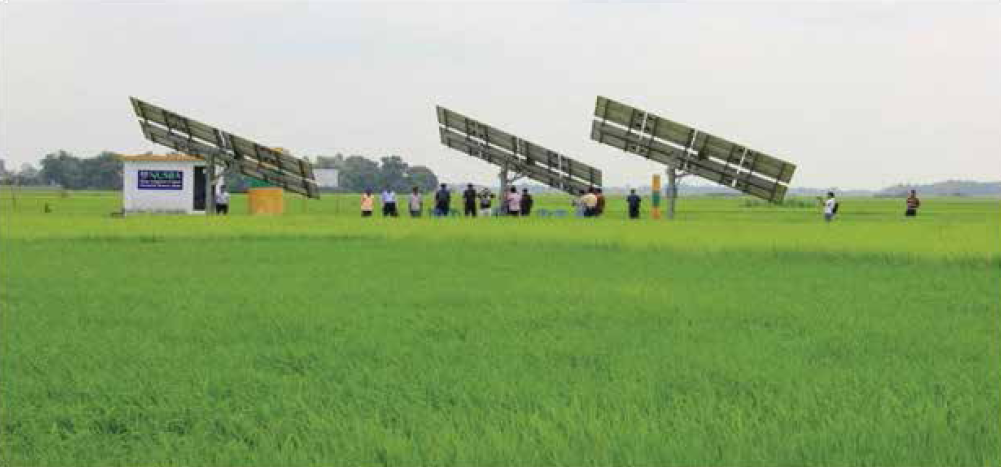
The part that touches farmers is irrigation. Alongside rooftop solar on homes, factories and public buildings, he said, the country should use the scope to expand solar-powered irrigation in suitable areas, reducing reliance on conventional fuel. He stressed quality technology, finance, skilled workers and regular maintenance for solar power to spread.
On air pollution he called for closing illegal and harmful brick kilns and enforcing environmental rules, saying the government is working to promote eco-friendly blocks and alternative building materials. Construction dust, vehicle emissions and waste management also need a joint effort, he said.
On the 250 million tree programme, he said planting saplings is not enough: care, protection and survival rates are the real test. The right species should go in the right place, with priority for native species, in forests, on the coast, along roads and on institutional and community land, involving local people, schools, young people and the private sector.
Noting that rising risks of floods, cyclones, heavy rain, heatwaves and salinity are putting pressure on agriculture, water and livelihoods, he stressed disaster preparedness, early warning, coastal protection, afforestation and water management, and urged partners to turn international cooperation into practical action ahead of COP31.
Photo: Power Division, Government of Bangladesh / Wikimedia Commons (CC BY-SA 4.0)
Source: Banglanews24


Comments
(0)