
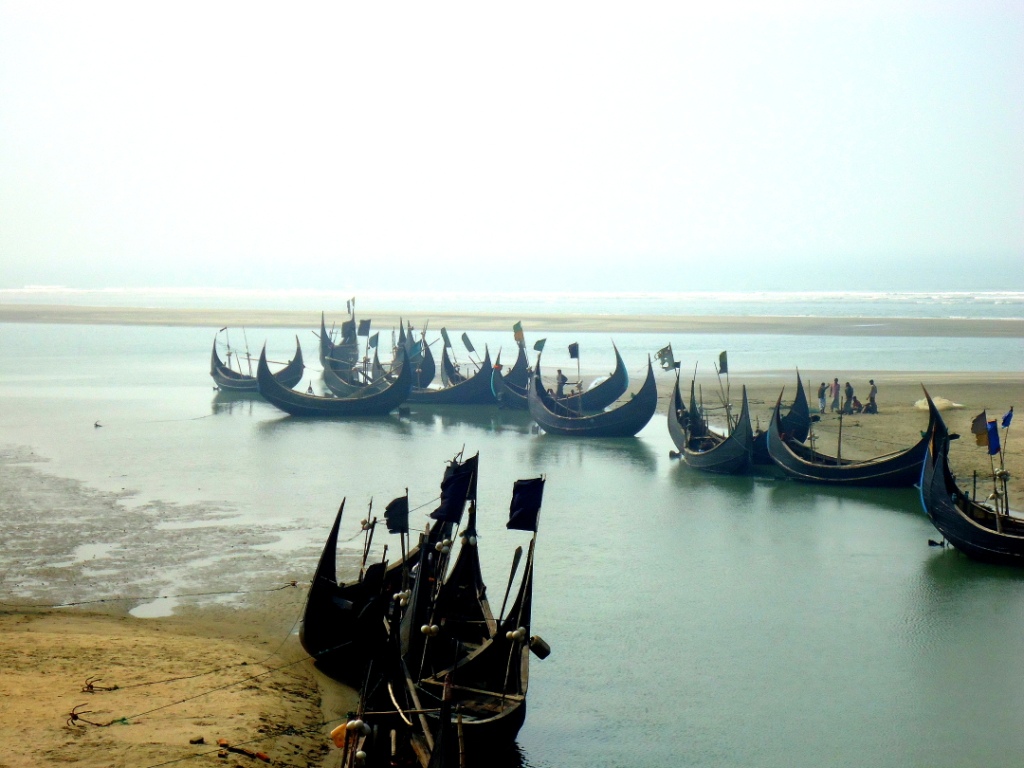
Fishers in the Bay of Bengal say their nets now bring up plastic along with fish, and polythene turns up inside the fish they cut. Research backs them up: recent studies by the Bangladesh Oceanographic Research Institute (BORI) found microplastics in the gills and digestive tracts of about 77 to 82 percent of sea fish off the Cox's Bazar coast, Protidiner Bangladesh reports.
Fisher Abu Zafar told the paper at the Cox's Bazar fish landing centre that on 5 October his crew cut open a sea pangas to cook on board and found pieces of polythene in its stomach. "Now plastic comes up whenever we cast a net," he said. "We find plastic in the mouths and stomachs of fish."
Abu Sharif Md Mahbub-E-Kibria, head of BORI's environment, oceanography and climate department and a senior scientific officer, said commercial fish from the north-western Bay of Bengal each carried an average of seven or more microplastic particles. Much of it comes from synthetic fibres shed by old nets and clothing, and from polythene and polypropylene. Pollution on Bangladesh's coast is higher than in many countries, he said.
When fish swallow plastic, he explained, it can block their digestive tracts, impair nutrition and eventually kill them. Plastic can also absorb heavy metals such as cadmium, lead and nickel from seawater, which may build up in fish and reach people through the food chain. He called for awareness among fishers, safe disposal of old and abandoned nets, and modern waste management and recycling in coastal towns.
A BRAC baseline survey estimates that 34.5 tonnes of plastic reach the sea and beaches at Cox's Bazar every day because of poor waste management. H M Faridul Alam Shaheen, joint convener of the Cox's Bazar unit of the green group Dhoritri Rokkhay Amra (DHORA), said tonnes of plastic pile up on the banks of the Bakkhali, Matamuhuri and Naf rivers and flow to the sea. Khandaker Mahmud Pasha, deputy director of the Department of Environment in Cox's Bazar, said the department's studies have named Cox's Bazar a plastic pollution hotspot and that work is under way to stop polythene shopping bags.
The report also recalls earlier findings: a study published in September 2021 found microplastics in 73 percent of the fish tested, in 15 local species bought in markets, and an April 2024 study by Jashore University of Science and Technology found 106 microplastic particles per gram of dust in Dhaka. Bangladesh became the first country to ban polythene bags in 2002, but their use never really stopped. WWF estimates that plastic pollution kills about 100,000 marine animals a year and that, without action, the sea could hold more plastic than fish by 2050.
Photo: Fahad rezoan / Wikimedia Commons (CC BY-SA 4.0)
Source: Protidiner Bangladesh

Comments
(0)