
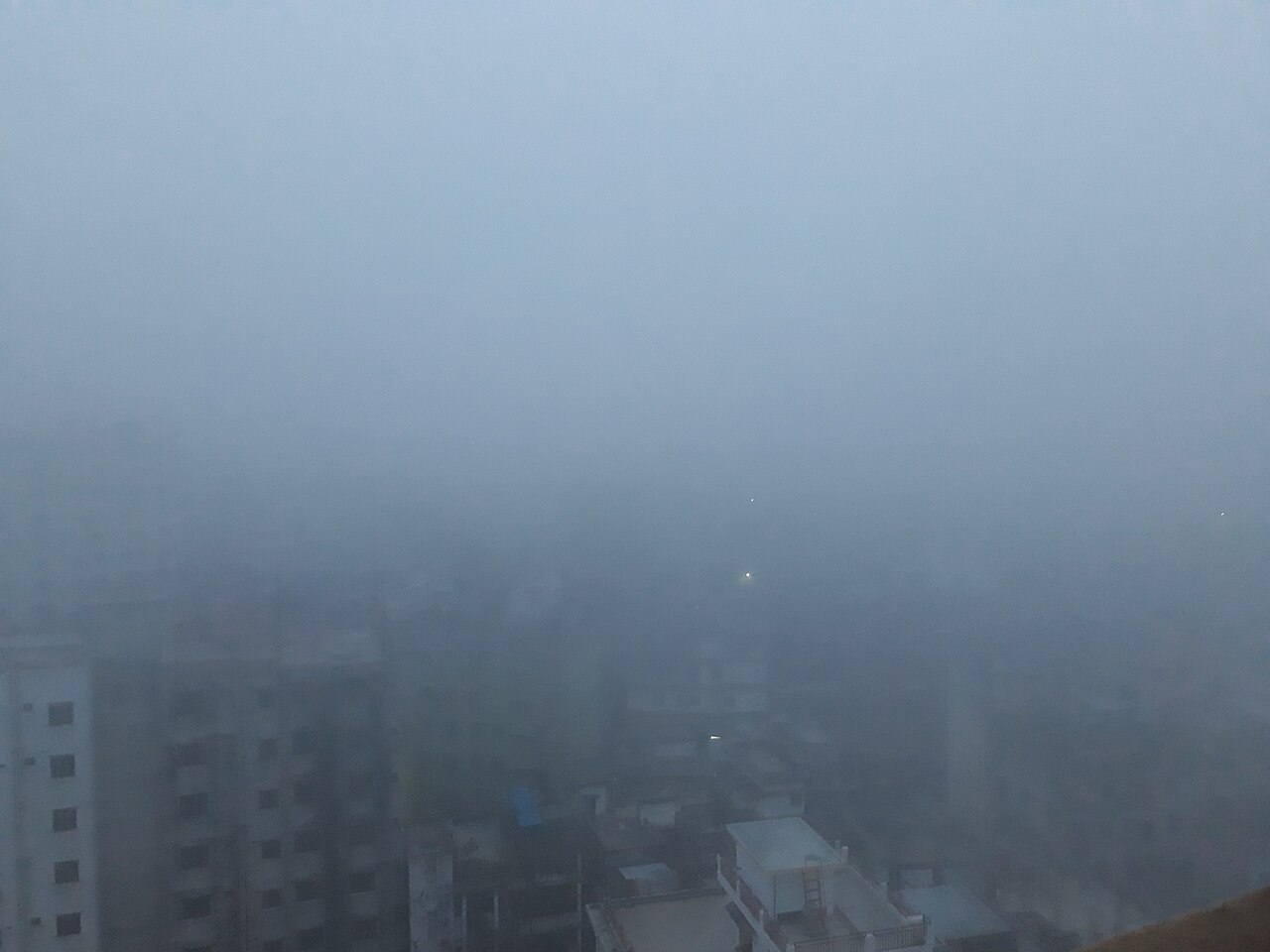
Dhaka has cooled after last week's heatwave, but its air has not improved. On Saturday evening, 7 November, the Switzerland-based IQAir ranked Dhaka the third most polluted city in the world with an air quality index of 164, in the unhealthy band, behind Kuwait City and Kolkata.
Among the city's monitoring points, the worst reading was 186, near the Bangladesh Institute of Development Studies (BIDS) in Agargaon. Baridhara Park Road followed at 168, Pragati Sarani in Badda and Becharam Deuri at 167, Baridhara Lakeside and Dhanmondi at 161, Gulshan Lake Park at 160, Eastern Housing in Banani at 156 and the Grace International School area of Gulshan 2 at 151. Every one was in the unhealthy range: 151 to 200 is unhealthy, 201 to 300 very unhealthy and above 300 hazardous.
Experts say neighbouring areas add to the pollution: smoke from clay stoves and burning waste in the Korail slum can drift into Gulshan and Banani, pollution from Kamrangirchar can reach Dhanmondi, and dust from digging on Pragati Sarani can raise levels in Baridhara.
Professor Ahmad Kamruzzaman Majumder, dean of science and a professor of environmental science at Stamford University Bangladesh, said the humid air over the lakes lets PM2.5 and PM10 particles bind with water vapour and hang in the air. In winter a temperature inversion puts cold air below and warm air above like a lid, so smoke and dust cannot rise.
Dr Mohammad Enayet Hossain, associate professor of soil, water and environment at Dhaka University, said rows of tall buildings block the natural flow of air, an effect known as the urban canyon, trapping polluted particles near the ground and multiplying local pollution.
Barrister Omar Sadat, president of the Gulshan Society, blamed smoke from private cars and unfit vehicles and said action against such vehicles would cut pollution. Shawkat Ali Bhuiyan (Dilon), president of the Banani Society, said the law requires protective measures on construction sites but they are not enforced.
Siddhartha Shankar Kundu, deputy secretary (environmental pollution control 1) at the environment ministry, said regular work on air pollution was under way, a committee existed, and its coming meeting would set the next policy and steps. The report is by Banglanews24's news desk.
Photo: Ei Holo Avik / Wikimedia Commons (CC BY-SA 4.0)
Source: Banglanews24

Comments
(0)