
Farmers and villagers along the Kat River in South Africa's Eastern Cape say the river they drink from, irrigate with and water their animals at has been steadily degraded over the past two decades, mostly by sewage discharged straight into it, according to researchers at Rhodes University's Institute for Water Research.
The 152-kilometre river rises in the Hogsback and Katberg mountains and joins the Great Fish River. It supplies 13 villages of up to 2,500 people each, and its water is used for drinking, cooking, livestock and smallholder and citrus farming. It also gives the villages fish, reeds, wood, sand and medicinal plants, and its banks are used for swimming, religious ceremonies and spiritual practices.
The researchers worked with residents to mark on large maps how they used the river and how those uses had changed since 2000, and they interviewed 54 commercial farmers, smallholder farmers and non-farming households, as well as members of the Kat River Catchment Forum. People said pollution had left them with less water and of poorer quality, fewer reeds and almost no fish. Eighty percent said the water, fish, reeds, wood, sand and medicinal plants the river provides are very important to their well-being. Changes in water quality and the loss of reeds began about 15 years ago; the loss of fish, medicinal plants and sand is more recent. The study recorded what people reported and did not test the water.
Broken infrastructure makes it worse. Some residents said they drink untreated river water because their taps are often dry; in Seymour village the only communal tap was broken, so people carried water from the river in buckets and sometimes shared it with livestock. "No, the water is not safe, but we drink it like that," one participant said. Long periods of low flow and frequent floods have also eroded the banks and moved the sand that people used for building.
The researchers say the fix starts with basic infrastructure: municipalities need to repair the pumps, reservoirs, communal taps and irrigation channels whose failure leaves households exposed in drought, and to maintain wastewater systems so that sewage stops reaching the river. Participants named litter, sewage, agricultural pressures and poor waste management as the main pollutants, and the authors call for stronger monitoring and enforcement, with farmers, businesses and communities keeping waste out of the water.
They also want commercial farmers, subsistence farmers and non-farming households at one table, since each depends on the river differently, and several participants asked for fairer representation of small-scale farmers in how its water is managed.
The study was written for The Conversation by Esther Ahuoiza Seriki, a doctoral student; Chika Felicitas Nnadozie, head of the Centre for Environmental Water Quality; and Nelson Odume, director of the Institute for Water Research, all of Rhodes University, and republished by Food for Mzansi.
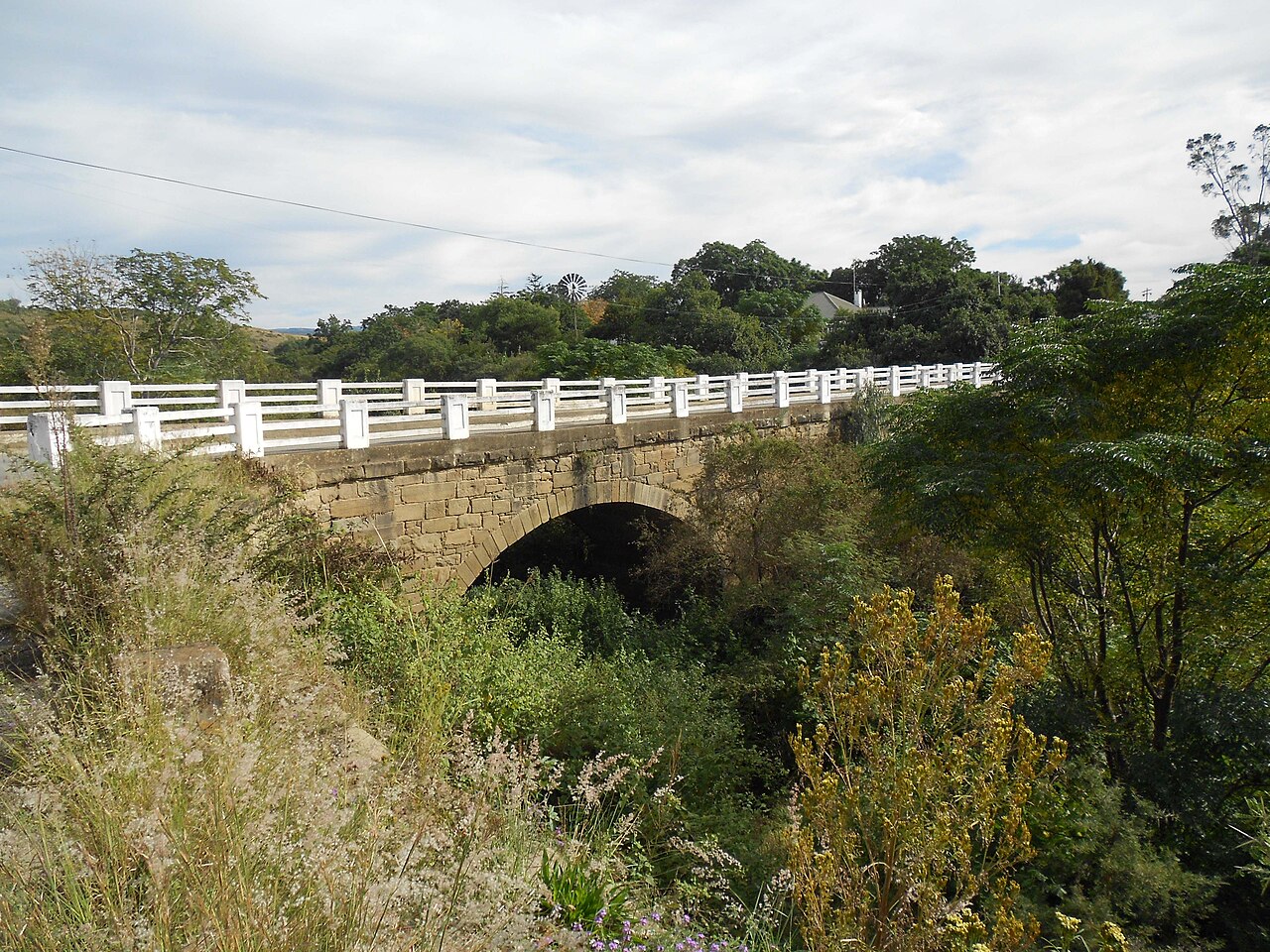
Photo: Lugerda / Wikimedia Commons (CC BY-SA 3.0). The Victoria Bridge over the Kat River at Fort Beaufort.
Source: Food for Mzansi

Comments
(0)