
Asia must harness agricultural biologicals to make its farming more resilient and regenerative, former Philippine agriculture secretary Dr William Dar told the Asia Biologicals Summit 2026 in Singapore last week, but he said the products will succeed only if farmers trust them and gain from them.
Dar, a former director general of the International Crops Research Institute for the Semi-Arid Tropics (ICRISAT) and now a senior adviser to the ASEAN Business Advisory Council Philippines, described climate change, soil degradation, water scarcity, biodiversity loss and rising production costs as interconnected challenges for a region feeding almost five billion people.
"We need a resilience revolution in Asia's agriculture systems, one that makes our farming systems more productive, regenerative, climate resilient, profitable, and inclusive," he said. This did not mean abandoning modern agriculture, he added, but building on science, improved varieties, digital technologies and sound agronomy.
He set out priorities for policymakers, researchers and industry. The first is clear, science-based regulation with transparent registration and predictable pathways. The second is research and field validation through collaboration, with independent multi-location trials to build confidence in performance. He also called for stronger quality standards on identity, purity, viability, potency, stability, labelling and storage, along with post-market surveillance.
These were, he said, "not a call for indiscriminate promotion or weaker safeguards". Farmers, he stressed, do not adopt technology because it is new but because it is affordable, practical and reliable. A smallholder testing a new product may be risking scarce income for a whole season, and needs quality inputs, sound advice, financing and working markets.
Dar said Asia's ambition should go beyond being a large market for biological products, and that the region should become a global centre for their research, development, validation and manufacturing.
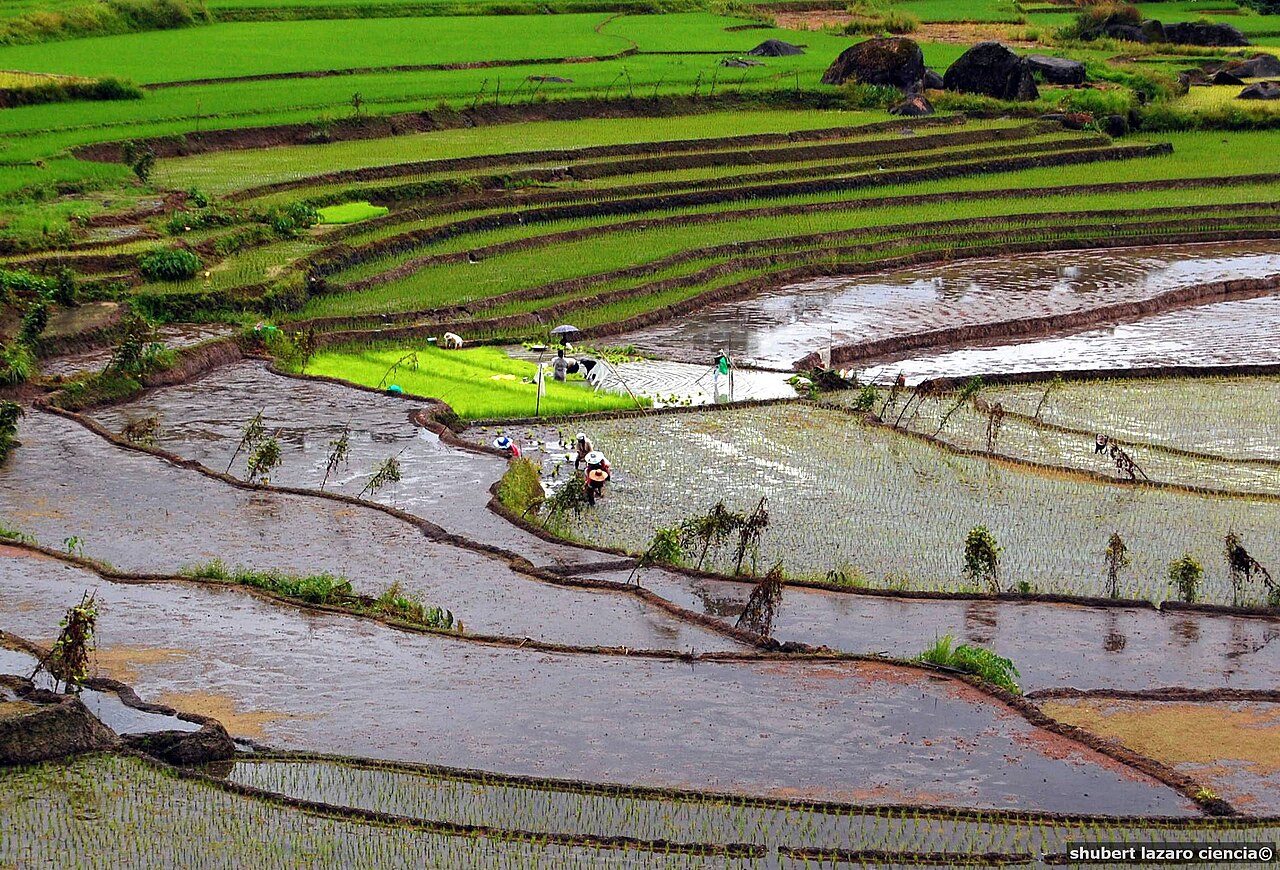
Photo: Shubert Ciencia / Wikimedia Commons (CC BY 2.0)
Source: AgNavigator

Comments
(0)