
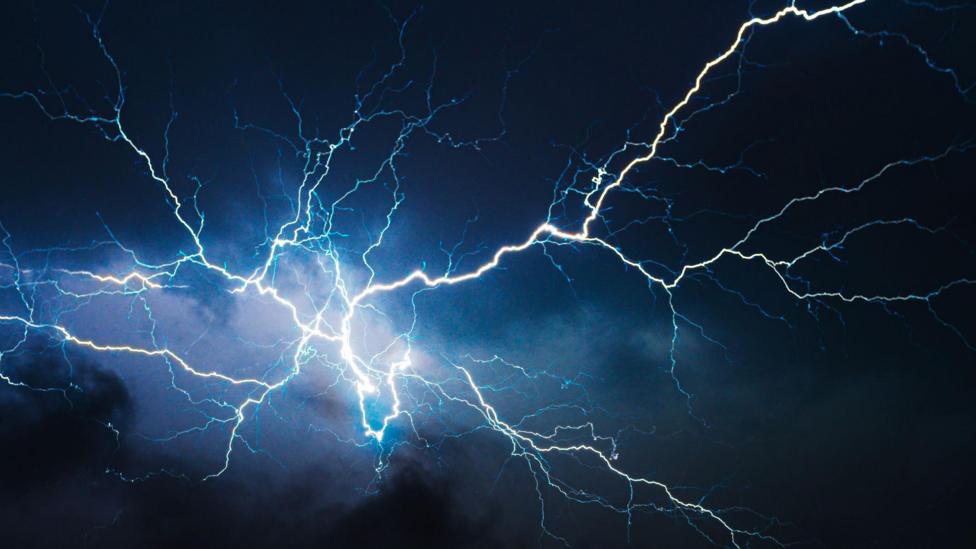
More than three and a half thousand people have died from lightning in Bangladesh over the past decade. The Bangladesh Meteorological Department (BMD) counts 3,658 deaths between 2015 and 2025. Lightning was declared a national disaster in 2016, yet the toll has not stopped: on 26 April at least 12 people were killed in a single day across several districts. Most of the dead are farmers and fishermen caught in the open.
The annual figures ran at 226 in 2015, 391 in 2016, 388 in 2017, 359 in 2018, 401 in 2019 and a peak of 427 in 2020. Since then the trend has fallen: 363 in 2021, 337 in 2022, 322 in 2023, 271 in 2024 and 173 in 2025. Meteorologist Dr Muhammad Abul Kalam Mallik told BBC Bangla that an estimated 28 to 30 people have died so far this year. He credits the decline since 2019-20 to warnings issued two to four hours ahead of a storm, awareness campaigns and preventive measures, but cautions that there is too little data from before 2015 to say whether deaths are now higher or lower than in earlier decades.
Geographically the greatest danger lies in the Sylhet region, and in Sunamganj district above all. The BMD identifies Jamalganj upazila as the single most hazardous area, with the highest number of deaths in the decade. Netrokona, Habiganj, Chapainawabganj, Moulvibazar, Rajshahi, Jashore, Kushtia, Satkhira, Meherpur, Faridpur, Madaripur, Tangail, Kishoreganj, Mymensingh, Bandarban, Rangamati and Khepupara in Barishal also record more strikes than average. Lightning hit 45 districts in 2015 and 64 in 2024, so its reach has widened rather than shrunk.
Mr Mallik gives three reasons for Sylhet's exposure. The region's vast haor wetlands generate enormous quantities of water vapour; humid air from the Bay of Bengal arriving from the south-west is forced upward by the hills to the north-east and condenses into cumulonimbus, the thunder cloud; and dry, hot air from the north-west collides with that humid marine air. Storm systems born over India's north-eastern hills and the Himalayan foothills also cross West Bengal into Rajshahi, Chapainawabganj, Kushtia and Jashore, picking up local moisture and strengthening.
Thirty-eight percent of Bangladesh's thunderstorms occur in March, April and May and 51 percent in the June-to-September monsoon, but, as Mr Mallik puts it, "the violence, the damage and the loss of life are greatest in the thunderstorms of Baishakh." These pre-monsoon storms are the ones locally called kalbaishakhi; they arrive in late afternoon and evening in the west of the country and after dusk in the east. Meteorologist Bazlur Rashid says such a storm begins forming five or six hours ahead and can be identified with certainty two to three hours before it strikes. Thunder clouds sit from three kilometres above the ground up to 10-12 kilometres, and 18-20 kilometres in severe cases; the air in a lightning channel reaches 27,000 degrees Celsius, against about 6,000 degrees at the surface of the sun.
The main cause of death is simply being outdoors. Farmers, fishermen and field labourers stay out through storms, and many areas have no safe shelter nearby. The Directorate General of Health Services advises that indoors is the only safe place; open fields, water bodies and tall trees are dangerous. Anyone caught in a paddy field should crouch on the balls of the feet with fingers in the ears; rubber shoes should be worn if going out is unavoidable; fishing from an uncovered boat should stop during a storm, and those on a river or at sea should shelter under the boat's canopy. A person struck by lightning carries no charge, so they can be moved to safety and treated at once.
Source: BBC Bangla

Comments
(0)