
Many parents think four or five is too young to start reading the qaida (the primer) or the Quran. Writing in Prothom Alo's Islam section, Monzurul Haque argues that at the age when a two- or three-year-old learns to use technology and recognise letters, a child can be eased into the qaida and first Quran lessons; what it takes is a parent's patience, love and consistency.
He addresses three hesitations. To "the child is too small", he answers that teaching does not mean sitting a child down for hours, and that the basic skill of recognising letters and reading unaided comes far more easily in early childhood than later. A parent who cannot read well can turn to an experienced teacher or the mosque maktab, though a parent sitting in on practice at home encourages the child. Lack of time, he writes, is really a question of priorities.
His advice is to teach for ten to fifteen minutes at least four days a week rather than for long stretches every day, starting with as little as five minutes and building up. Small achievements, such as reading a page of the qaida well or mastering a hard new word, can be rewarded with a small gift, a trip to the park or a favourite food.
A child may take two weeks to learn a single word or verse, so he urges parents not to rush. Joining the local mosque maktab or a group class helps a child learn faster from others, and when the child sits down to read, the rest of the family putting away phones and entertainment creates an atmosphere that leaves a deep mark.
He recalls that the Companion Abu Darda organised Quran teaching for children in small groups with appointed teachers at the main mosque of Damascus, and cites the hadith in Sahih al-Bukhari that one who recites the Quran fluently will be with the noble angels, while one who struggles through it receives a double reward (hadith 4937). A child's mistakes are no cause for despair, he writes; learning the Quran should be remembered with love, not fear.
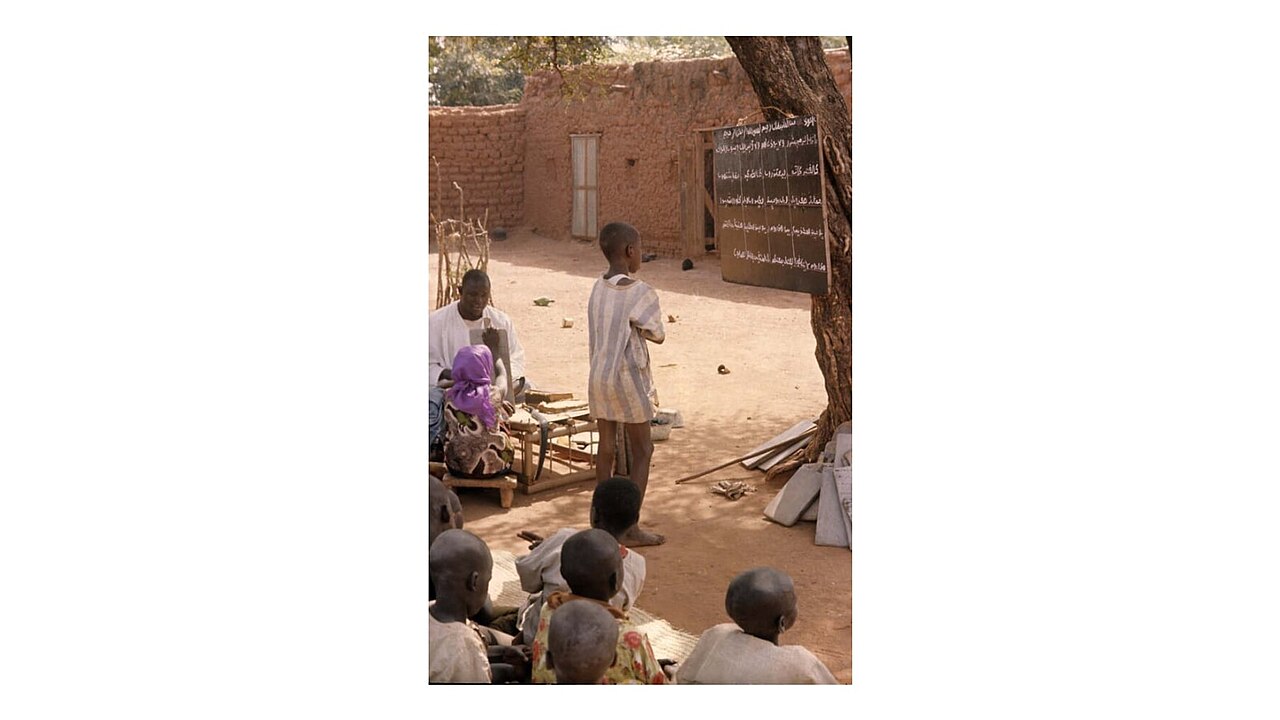
Photo: Jan Broekhuijse / Tropenmuseum / Wikimedia Commons (CC BY-SA 4.0); children at a Quran school
Source: Prothom Alo



Comments
(0)