
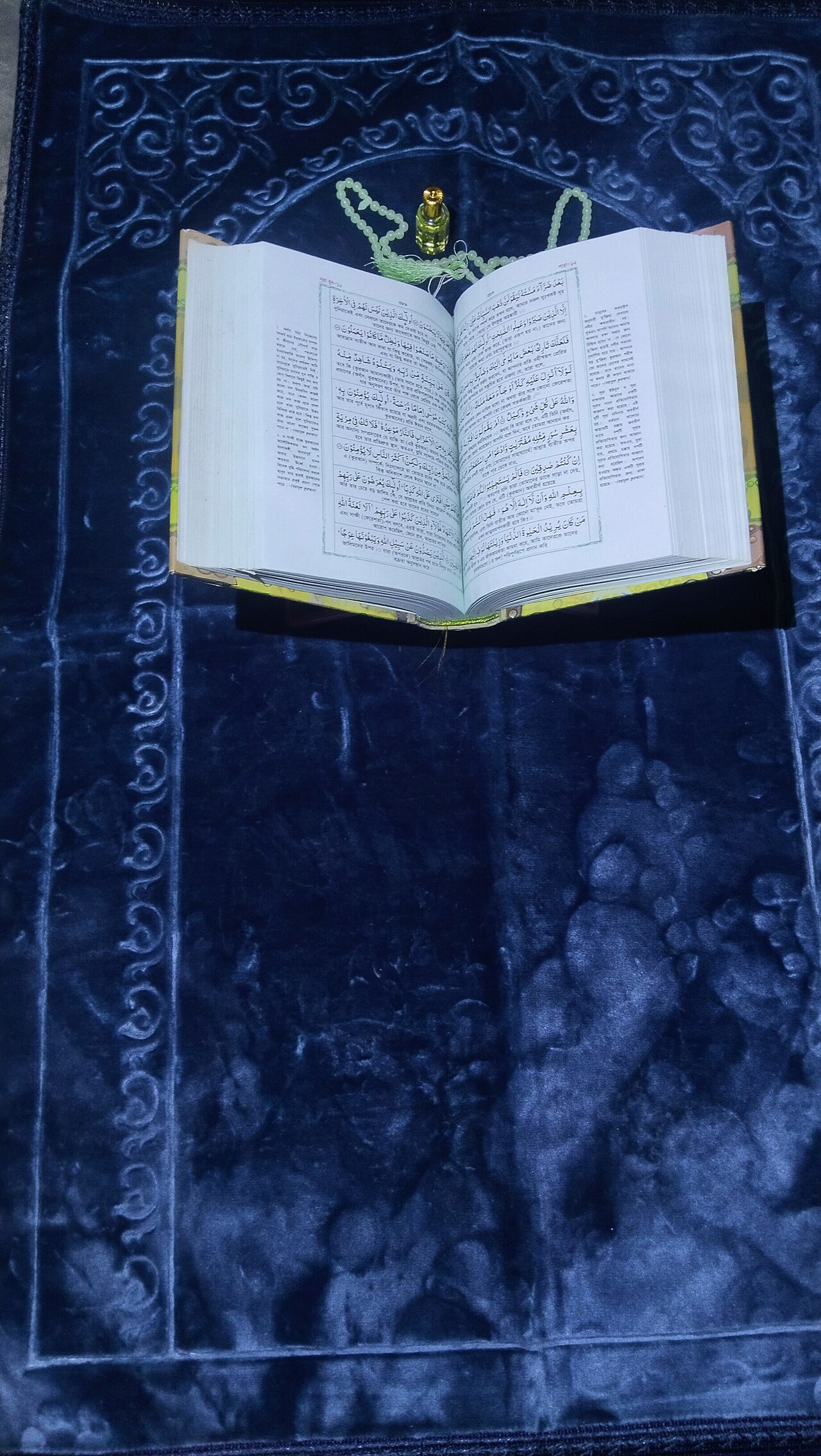
The Quran describes sleep as a means of rest and relief from weariness (Surah An-Naba, 78:9). Prothom Alo's religion desk writes that following certain Sunnah practices from going to bed to waking makes sleep not only physical rest but also a spiritual experience.
It is Sunnah to dust off the bed lightly before sleeping (Sahih al-Bukhari, hadith 6320). The Prophet (peace be upon him) used to lie on his right side facing the qibla (hadith 6311), and he instructed that lamps be put out before sleeping at night (hadith 3280).
As he fell asleep he would say, "Bismika Allahumma amutu wa ahya", "In Your name, O Allah, I die (sleep) and I live (wake)" (hadith 6312). The Quran says Allah takes the souls at the time of their death, and of those that do not die, during their sleep (Surah Az-Zumar, 39:42).
Reciting Ayat al-Kursi before sleep is especially encouraged: it is narrated that whoever recites it at bedtime has a guardian from Allah and no devil comes near him until morning (hadith 2311). Reciting Surahs Al-Ikhlas, Al-Falaq and An-Nas, blowing into the hands and passing them over the body was also one of the Prophet's regular practices (hadith 5017).
On waking he would say, "Alhamdu lillahil-ladhi ahyana ba'da ma amatana wa ilayhin-nushur", "All praise is for Allah, who gave us life after He caused us to die, and to Him is the return" (hadith 6312). Washing, making oneself clean and starting the day with the Fajr prayer then sets a believer up in body and mind for the day's work, the desk writes.
Photo: Rokshana Akter / Wikimedia Commons (CC BY-SA 4.0)
Source: Prothom Alo



Comments
(0)