
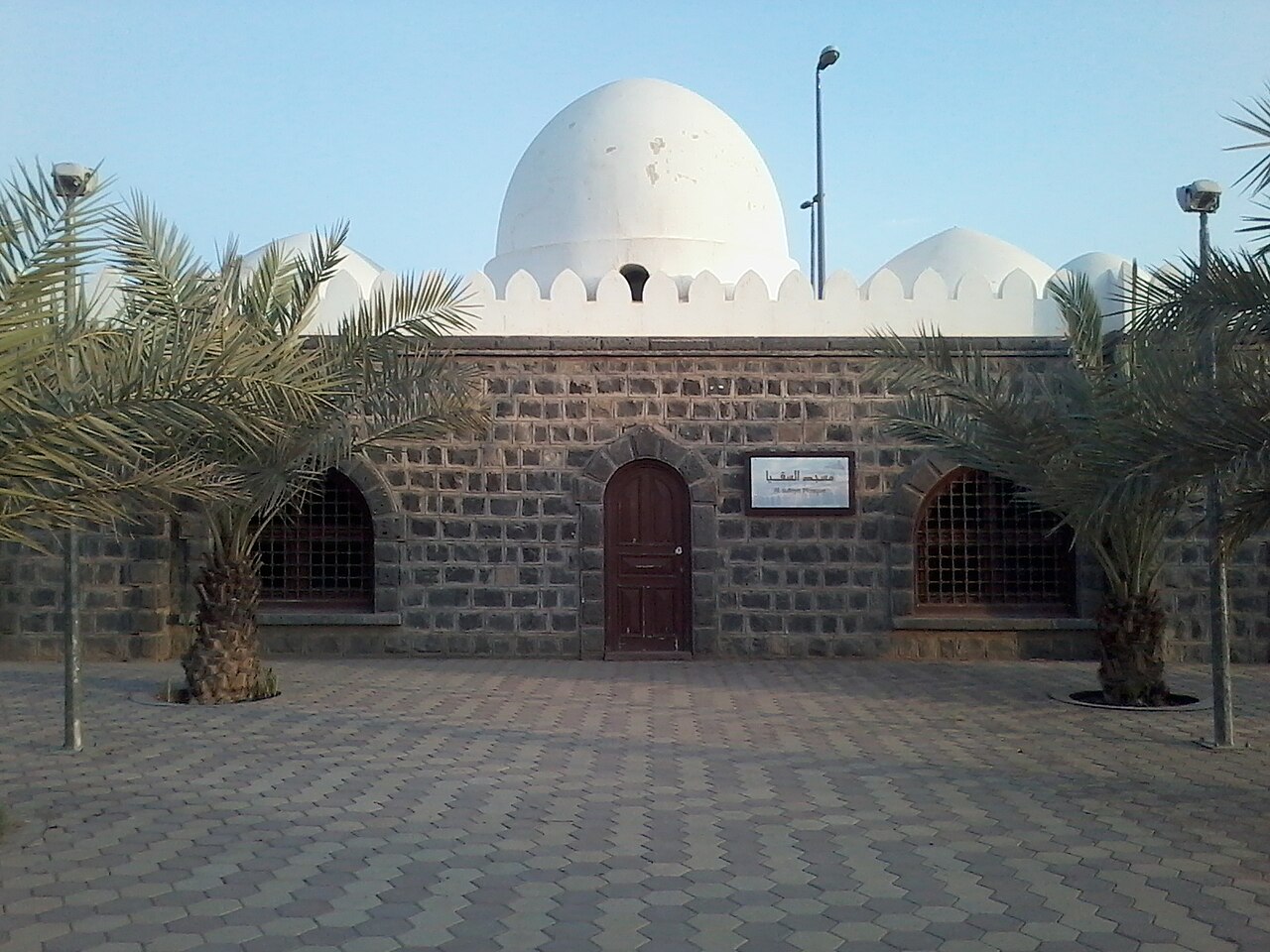
Masjid al-Suqya is one of Madinah's historic mosques, linked to the Prophet Muhammad's (peace be upon him) march to the Battle of Badr. Barta24's Islam desk sets out its history.
The Battle of Badr between the Muslims and the Quraysh of Makkah was fought in 624 CE, in the second year of the Hijrah. According to historical accounts, after leaving Madinah the Prophet (peace be upon him) halted at Suqya, prayed there with his companions and reviewed their preparations. Some who were too young were sent back, and he prayed for mounts, clothing and food for the rest.
It is reported that here he also prayed for blessing on the people of Madinah, their livelihood, food and trade, and the accounts of Suqya are tied to the establishment of Madinah as a safe and sacred city.
The mosque takes its name from the Suqya well beside it, recorded as the property of the companion Sa'd ibn Abi Waqqas (may Allah be pleased with him); the Prophet is reported to have used its water on the march to Badr. According to the 2023 annual report of Saudi Arabia's Pilgrim Experience Program, a Persian restored the well in 778 AH, which is why it was also known as Bir al-Farisi, the Persian's well; it was restored again under King Fahd bin Abdulaziz in 1423 AH (2002).
The mosque stands near Madinah's old Anbariyya, or Hejaz Railway, station. It is small, with three domes on its roof, and is thought to have been built by Umar ibn Abd al-Aziz as governor of Madinah under the Umayyad caliph al-Walid ibn Abd al-Malik.
Under Saudi Arabia's Vision 2030 programme for preserving historic mosques, the mosque and the area around the well have recently been restored.
Photo: Imam Khairul Annas / Wikimedia Commons (CC BY-SA 4.0)
Source: Barta24
Comments
(0)