
The Quran and authentic hadith describe certain people for whom the angels pray and seek forgiveness. Saki Mahbub, an assistant teacher at Nadir Hossain Girls' High School in Rajbari, brings these deeds together in an article on Prothom Alo's religion page.
The first is going to sleep in a state of purity, after wudu. The Prophet (peace be upon him) told believers to perform wudu as for prayer before going to bed and to lie on the right side (Sahih Bukhari, hadith 247), and a narration in Sahih Ibn Hibban (hadith 1051) says the angel with such a person asks forgiveness for him when he wakes. The second is sitting in wudu after a prayer, waiting for the next one (Sahih Bukhari, hadiths 445 and 647). The third is praying in the first row (Sunan Abu Dawud, hadith 664), and on the right side of the row (hadith 676). The fourth is standing close together in congregation and filling the gaps in the rows (Sunan Ibn Majah, hadith 995).
Sending blessings (durud) on the Prophet is another. Verse 56 of Surah al-Ahzab commands it, and in Musnad Ahmad (hadith 15689) the angels pray for the one who sends blessings for as long as he does so. Visiting the sick is also on the list: in Sunan al-Tirmidhi (hadith 969), 70,000 angels seek forgiveness for someone who visits a sick person in the morning or the evening.
The remaining deeds are teaching people what is good (Sunan al-Tirmidhi, hadith 2685); praying for a fellow Muslim in his absence, to which an appointed angel answers "Amin, and the same for you" (Sahih Muslim, hadith 2732); and giving something in charity every day as one can afford (Sahih Bukhari, hadith 1442).
These are simple deeds of everyday life, the writer says, and practising them is the way to the angels' prayers and their pleas for forgiveness.
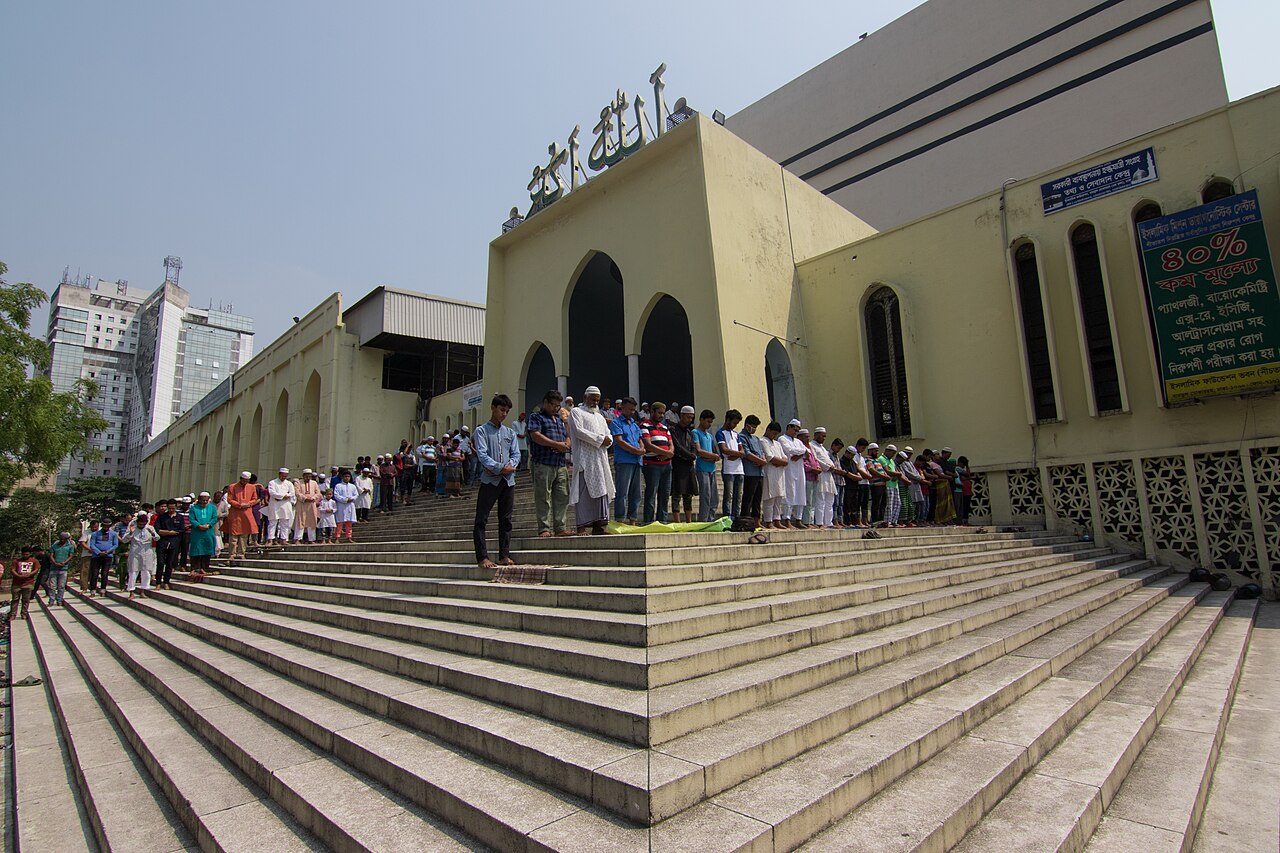
Photo: Azim Khan Ronnie / Wikimedia Commons (CC BY-SA 4.0)
Source: Prothom Alo



Comments
(0)