
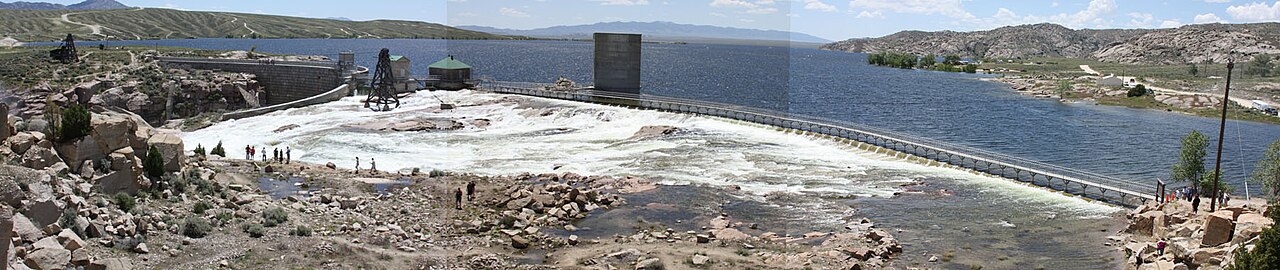
Farmers and ranchers in the western US Plains will be watching whether this autumn and winter bring enough precipitation to ease drought and recharge rivers after a large-scale snow drought in the 2025-26 winter, DTN ag meteorologist Bryce Anderson writes. The lack of winter moisture showed up in chronic dryness through the spring and summer.
The North Platte River, which runs mainly through Wyoming and western Nebraska and depends on Rocky Mountain snowmelt, illustrates the problem. The US Bureau of Reclamation put April-July runoff at only 183,000 acre-feet, 21% of the 30-year average. According to the Reservoirs.EARTH data platform, the main irrigation reservoirs, Seminoe and Pathfinder, held 412,000 acre-feet on 27 September, almost 270,000 acre-feet less than a year earlier, and Pathfinder is at its lowest point for the time of year since monitoring began in 2021.
"An 'average' or above average would be great and help fill the reservoir," said University of Nebraska Extension educator Gary Stone of Scottsbluff, noting that the 30-year average snowmelt runoff is 891,000 acre-feet.
So far this autumn the North Platte headwaters in north-central Colorado have had little precipitation; Jackson County is in moderate to extreme drought, and recent heavy rain in the southwestern and central Plains largely missed the central and northern Rockies.
Forecasts linked to the strong El Niño lean towards a wetter winter. DTN's long-range forecasts call for mostly above-normal precipitation through the rest of autumn and the first third of 2027, which would improve runoff for the North Platte and other rivers fed by the Rockies. How much falls as snow will be watched closely.
Photo: U.S. Bureau of Reclamation / Wikimedia Commons (public domain)
Source: DTN / Progressive Farmer

Comments
(0)