
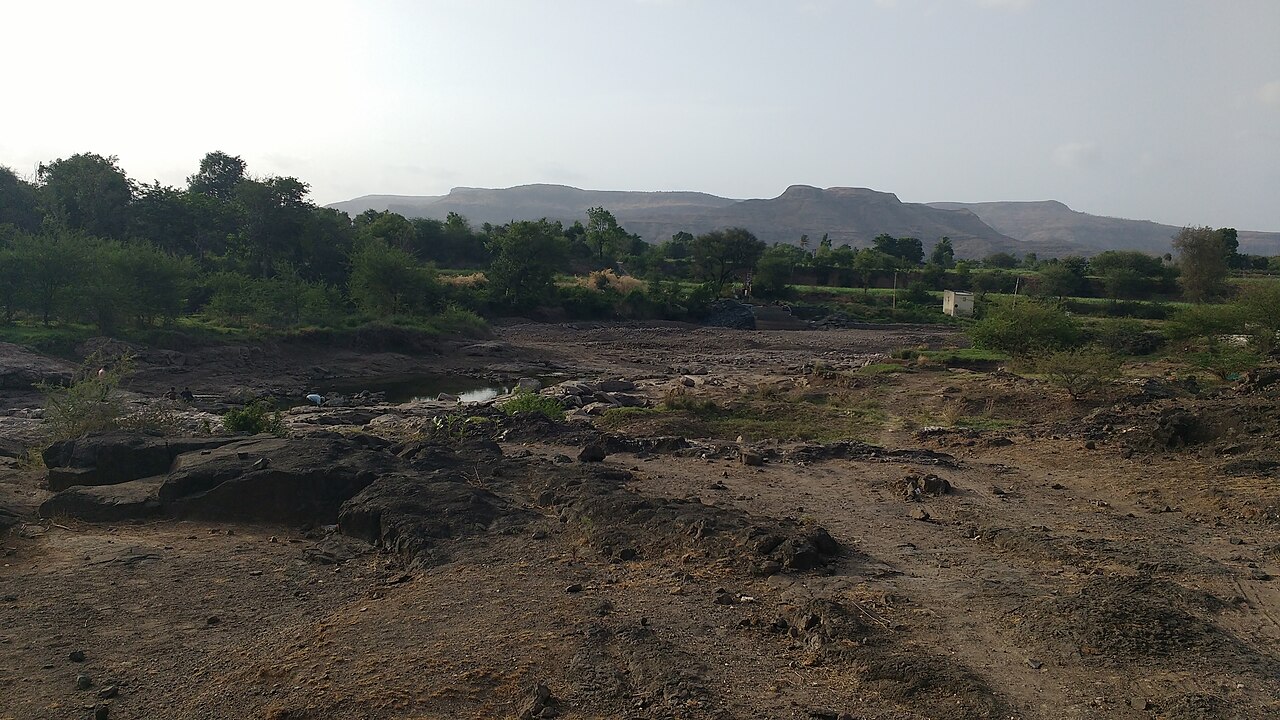
India's southwest monsoon ended 13% below the long-period average, a national figure that understates conditions on the ground, Down To Earth reports. On 29 September, with the deficit near 12%, Union Agriculture Minister Shivraj Singh Chouhan said there was "no major crisis at the national level", while acknowledging regional problems. Yet IIT Gandhinagar's India Drought Monitor shows 70.6% of the country under dry or drought conditions, with drought persisting in parts of Maharashtra, Karnataka, Rajasthan, Andhra Pradesh and Telangana.
Three states have formally declared drought. Karnataka, which had its worst southwest monsoon in 55 years with a 35% deficit, declared 101 taluks on 27 August and reached 217 of its 240 taluks by 2 October; a central team is assessing damage. Maharashtra declared 265 of 358 talukas on 25 September; the state was about 19% below normal, but Marathwada was around 40% short, and Solapur and Beed about 58% and 51%. Andhra Pradesh declared 388 mandals in 21 of 28 districts on 2 October after a 53.4% deficit between June and August. Telangana (about 17-18% short) and Rajasthan (22%) are assessing crop losses.
For farming families the result is failed crops, lost income and mounting debt after a season of high input costs, and in the worst areas fodder shortages are forcing distress sales of cattle.
The national deficit is smaller than in the worst droughts of 1987 and 2002 (both 19%) and close to 2015 (14%), but the pattern differed: this year June was 40% short, July recovered to 1% above normal, and August fell 16.3% below. Under the Drought Manual, states declare drought after weighing rainfall, dry spells, crop condition, vegetation, soil moisture and hydrology, with a Kharif deadline of 31 October, though early declarations are allowed.
Down To Earth argues that severe drought despite a moderate national deficit, in an El Niño year, points to a structural vulnerability that persists despite decades of investment in water conservation, watershed development and drought-proofing.
The report was written by Shagun for Down To Earth.
Photo: Vinay Kanawade / Wikimedia Commons (CC BY-SA 4.0)
Source: Down To Earth

Comments
(0)