
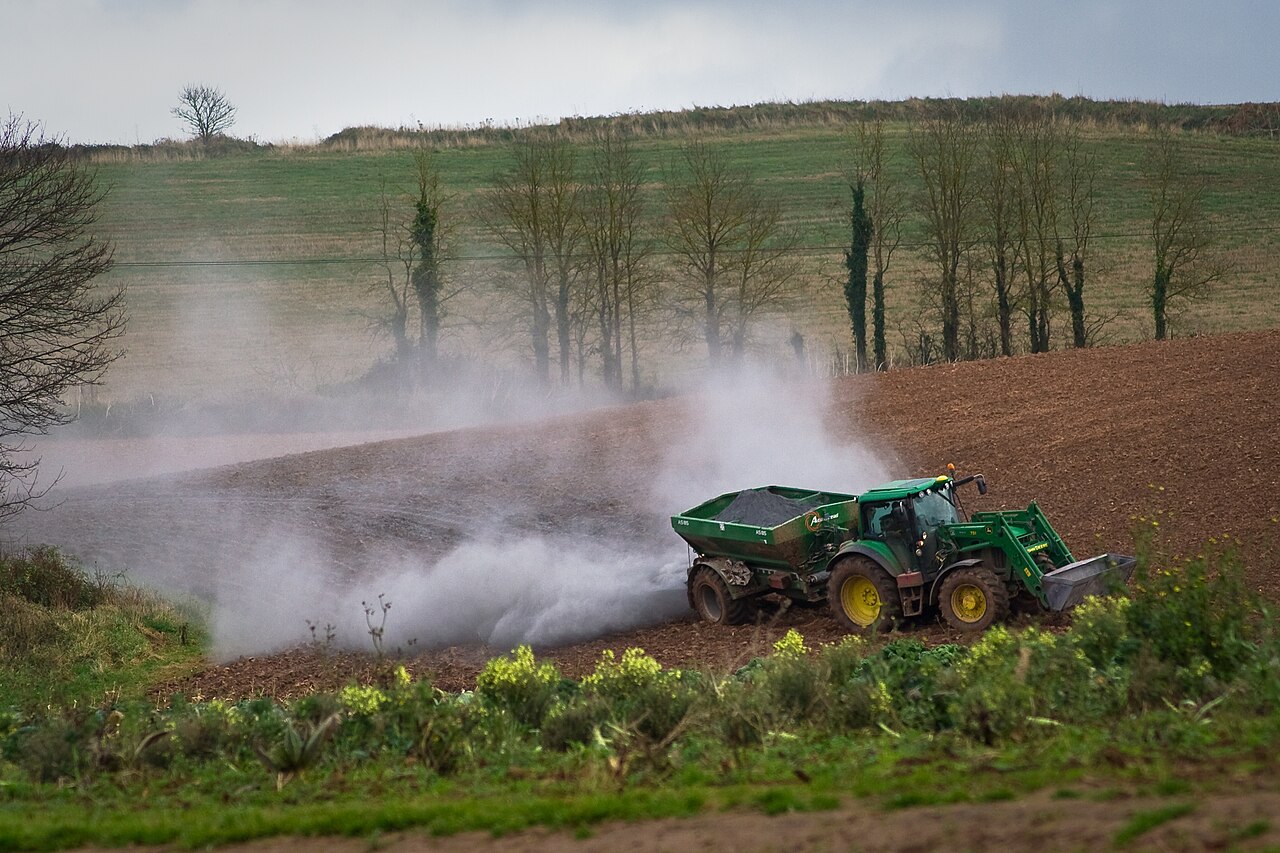
Spreading lime on acidic fields, a practice farmers already use to raise soil pH, could also help plant roots survive and recover from heatwaves, according to a University of Nottingham study published on 15 November in Nature Communications. The work, done with Ghent University and the VIB Center for Plant Systems Biology in Belgium, identifies soil pH as an overlooked factor in how roots respond to extreme heat.
The team, including Dr Aneesh Lale and Dr Rahul Bhosale, grew plants in soil columns, some treated with calcium carbonate, the compound used in agricultural liming, and some left acidic. After 10 days at a steady 21 degrees Celsius the plants were given one day of heat stress and then two days to recover at 21 degrees. The plants were then uprooted and washed so that root growth and damage could be imaged directly.
Heat affected the roots differently depending on pH. Moderate warming in neutral soil raised levels of a reactive molecule called superoxide in root tissue, which the study links to continued growth. More severe heat in acidic soil instead raised hydrogen peroxide, which held back root growth and slowed recovery. Raising the pH reduced the hydrogen peroxide build-up and improved both root and shoot recovery, and the researchers found that the pH change itself, rather than the calcium in the lime, appeared to drive the benefit. They traced the difference to plasma-membrane H+-ATPases, pumps that help control a cell's internal pH, switched on or off by two signalling proteins named TOT3 and TOI5.
There is an important limit. The experiments used Arabidopsis thaliana, a small weed used as a laboratory model plant, so the benefit has not yet been measured in wheat, maize or any other crop growing in a real field. The authors present it as a new mechanism to test further, not a ready recommendation, and the team is now extending the work to other species, including commercial crops, and to field conditions.
Roots are the part of the plant most exposed to soil temperature, and heat damage to them can limit water and nutrient uptake long after a hot spell has passed. Liming is already routine in many cropping systems, mainly to make nutrients such as phosphorus more available. Bhosale, associate professor of functional genomics at Nottingham, called soil management "a potentially valuable tool" for adapting farming to climate change, and Lale said liming could create conditions "more favourable for root growth and recovery during periods of extreme heat". The researchers note that UK temperatures first passed 40 degrees Celsius in July 2022.
Photo: Mark Robinson / Wikimedia Commons (CC BY 2.0)
Source: Global Agriculture



Comments
(0)