
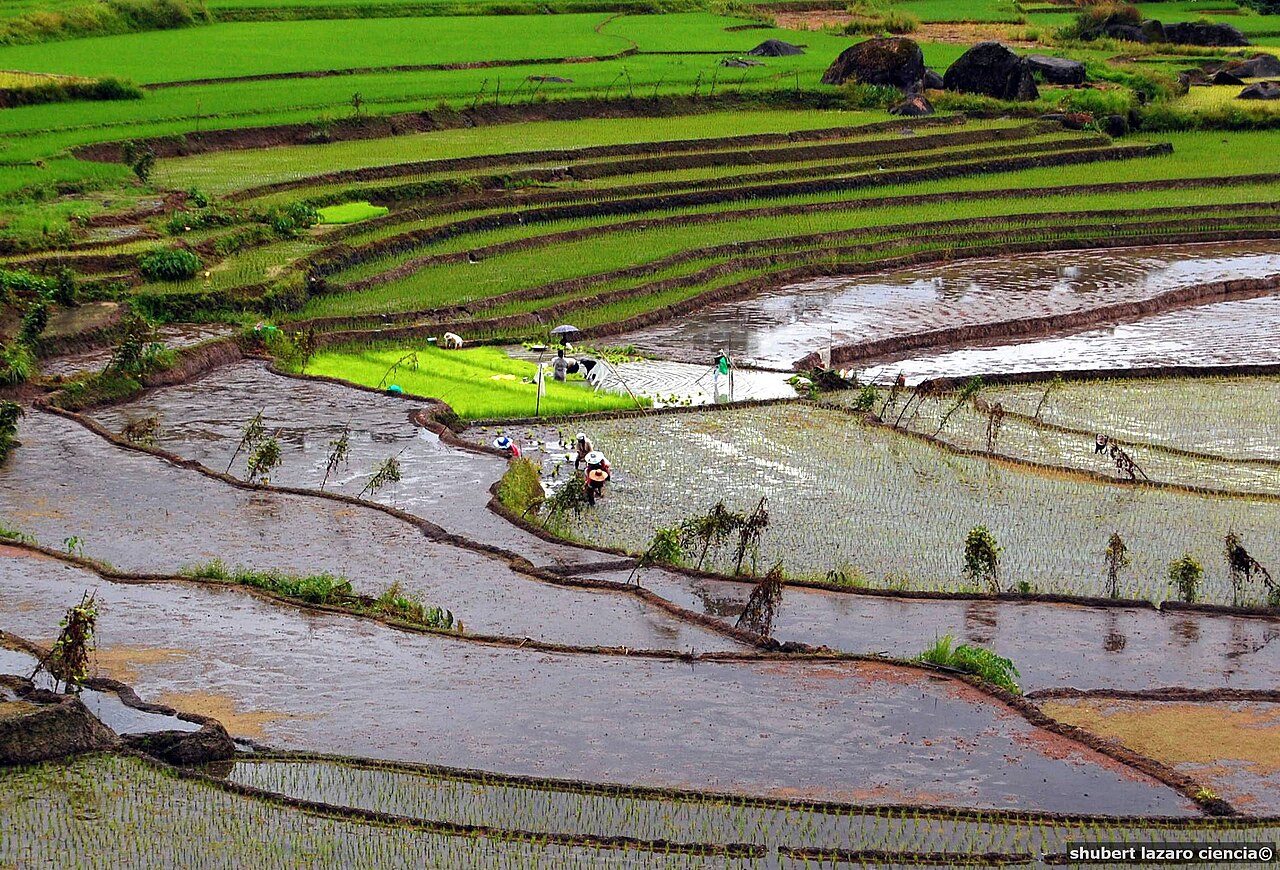
Rice breeders in Southeast Asia want to stop working alone. At the ASEAN Agrifood Convening, held on 17 and 18 November at the International Rice Research Institute (IRRI) headquarters in Los Baños, the Philippines, country representatives backed a proposal for a regional breeding network and signed an aide-memoire endorsing a technical working group to take it forward. The Philippines, Vietnam, Indonesia, Thailand, Myanmar, Lao PDR and Cambodia took part.
The network would work in three ways: shortening breeding cycles through shared research pipelines, faster generation of new plant lines and testing across several locations; building breeding capacity, particularly in Cambodia, Lao PDR and Myanmar; and coordinating varietal release and seed rules so that a suitable variety can reach farmers across national borders.
Joint breeding would target the problems the region shares: tolerance to flooding, drought, salinity and heat, and resistance to blast, bacterial blight and planthoppers. Varieties suited to water-saving and low-emission practices such as alternate wetting and drying (AWD) are also on the list. Grain quality would follow local taste, from jasmine and fragrant rice in Thailand and Cambodia to premium export rice in Vietnam, along with high-zinc and low-glycemic-index types. Rice is the starting point; maize, potato, cassava and sweet potato may follow.
Shrinking budgets are part of the reason. "None of us has all the resources we would like, but the region has different strengths, environments, research capabilities, and experiences that can complement one another," said IRRI Research Director Michael Quinn. IRRI Director General Yvonne Pinto said cooperation has to link crop improvement with seed systems, research capacity, policy and investment, while CGIAR Breeding Partnerships Lead Biswanath Das called for a stronger role for national partners and less duplication.
Delegations set out their rice priorities to 2035 and agreed five areas for joint work: climate-resilient varieties, wider use of modern breeding technology, better seed production and distribution, sustainable rice production, and improved grain quality, postharvest handling and market access. Ralph Ceniza of the Philippine Department of Agriculture's National Rice Program said the test of the network is whether farmers get better varieties, steadier yields under climate risk and higher incomes.
Vietnam has already committed to the working group. Ngoc Thach Tran, Director of the Cuu Long Delta Rice Research Institute, said his country strongly supports a network that begins with rice and expands to other crops. The convening was organised under the CGIAR Breeding for Tomorrow Science Program, and Das said CGIAR would support the initiative within its capacity.
Photo: Shubert Ciencia / Wikimedia Commons (CC BY 2.0)
Source: IRRI
Comments
(0)