
Carbon farming could become a new source of income for India's smallholders, but high transaction costs, scattered plots, outdated land records and the cost of proving the carbon gains stand in the way. That is the argument of Suman S., Director of Climate Action and Rural Livelihoods at Dr. Reddy's Foundation in Hyderabad, in a column for Rural Voice. The views are the writer's own.
The writer starts from India's net-zero 2070 commitment and its new domestic Carbon Credit Trading Scheme (CCTS), with national guidelines for measurement, reporting and verification (MRV). Farm practices that store carbon or cut emissions are listed: crop residues, reduced tillage, cover crops and biochar to raise soil organic carbon; trees grown among seasonal crops; alternate wetting and drying (AWD) in paddy to cut methane; and site-specific fertiliser planning to curb nitrous oxide, a gas the column puts at roughly 273 times the warming potential of carbon dioxide.
The obstacles, in the writer's account, are practical. A holding averaging under 1.1 hectares cannot pay on its own for validation, satellite audits, soil tests and registration, so farms must be grouped. Farmer producer organisations look like the natural vehicle, but the column argues that carbon projects need a dedicated workforce working to deadlines, which sits poorly with an FPO's commercial mandate. Carbon revenue per hectare is modest and arrives years after practices change, so public and blended finance are needed alongside it.
Land records are singled out. Large parts of the country have not been resurveyed since soon after independence, the writer says, and many plots are still registered in the names of long-dead ancestors, which makes it hard to show who owns the carbon. Laboratory soil carbon tests are slow and costly to repeat across millions of small plots, India lacks extension workers trained in geo-tagging and satellite-assisted field checks, and most farmers have no plain explanation of what a carbon contract commits them to. Rules on how farm credits will interact with the CCTS, the voluntary market and Article 6 of the Paris Agreement are also still unsettled.
As a model, the writer points to the foundation's own Action for Climate and Environment (ACE) programme. It uses local "Lead Farmers" as extension agents and plans to train village youth and women for geo-tagging, baseline surveys and digital field audits. In Andhra Pradesh and other areas, every sapling planted under its agroforestry work is geo-tagged so that survival and biomass can be checked, and AWD in rice is combined with biochar. The column says the programme, covering tens of thousands of farmers, has shown water savings, lower chemical use and higher net profit per acre, though it gives no figures.
The column concludes that pooling small farms, standard digital MRV, clear rules and a trained ground workforce, backed by blended finance, could let India build a fair model for farm carbon removal.
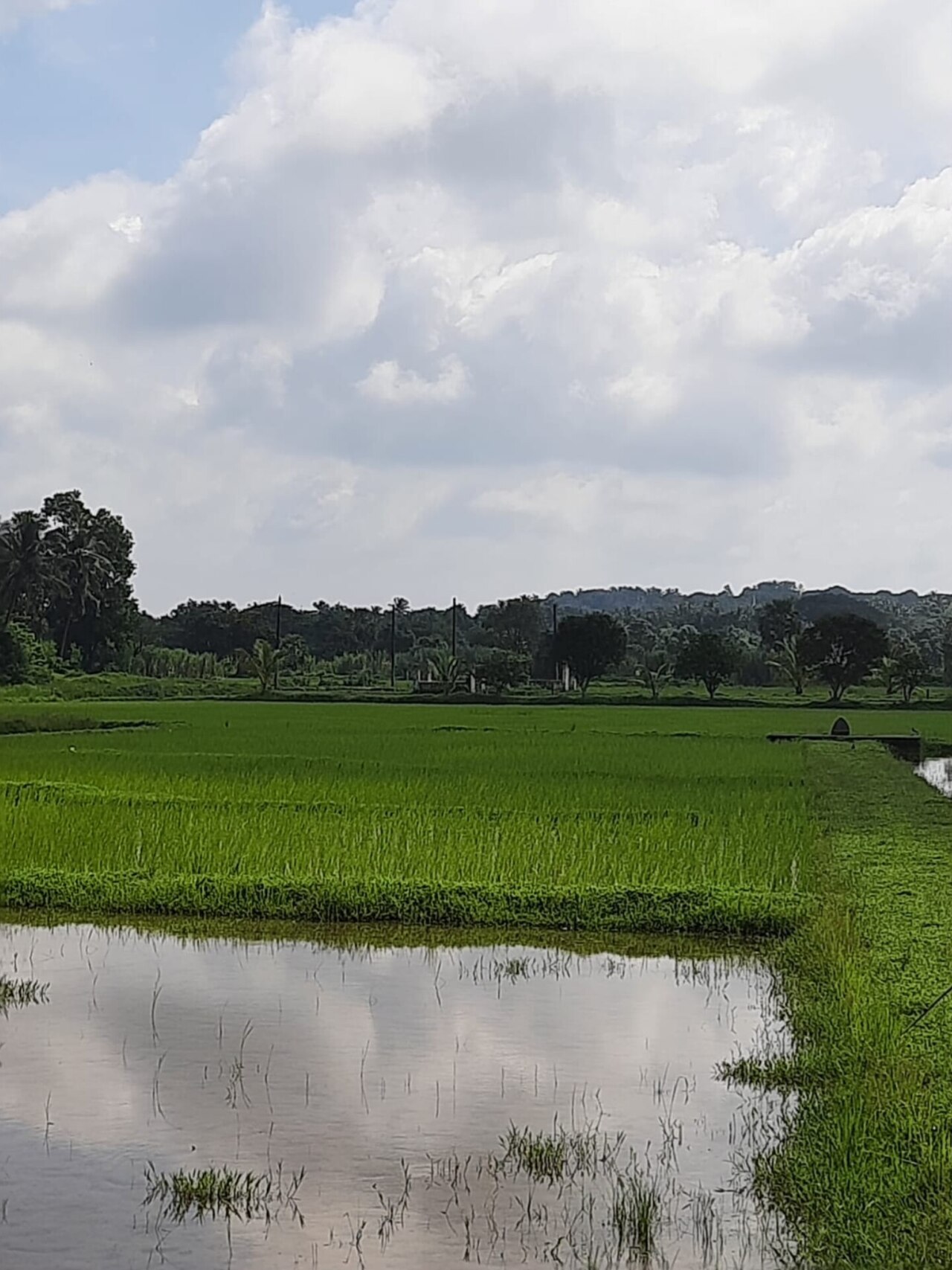
Photo: Prathvi Acharya / Wikimedia Commons (CC BY 4.0)
Source: Rural Voice

Comments
(0)