
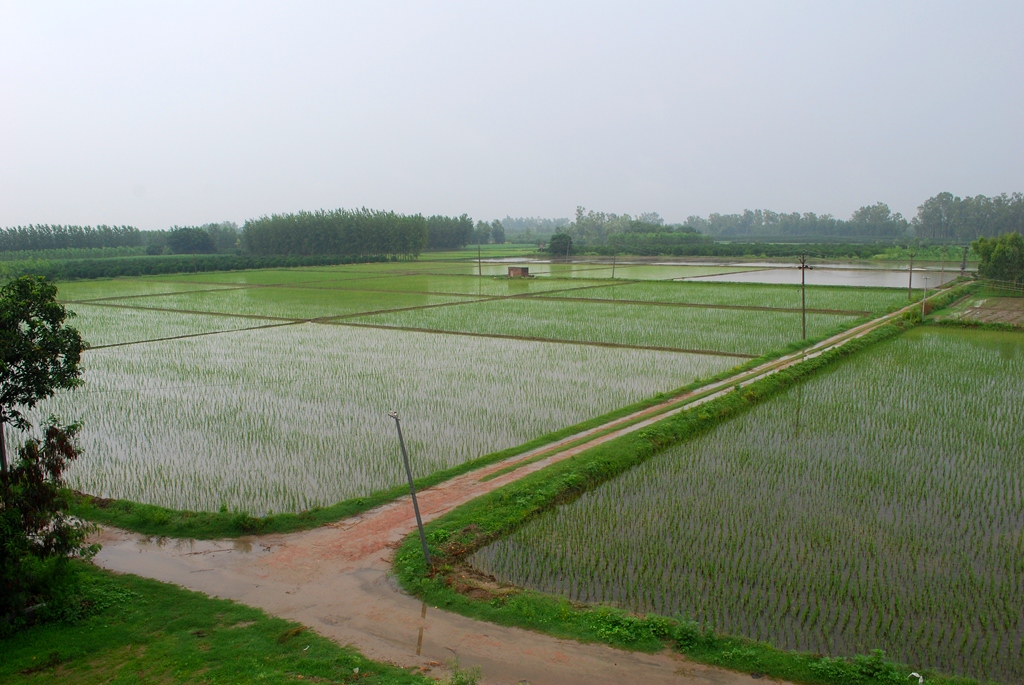
Farmers in Punjab and Haryana who changed how they grow rice and wheat in 2019 began receiving carbon credit payments last month, most of them between Rs 3,000 and Rs 15,000, writes Umang Agarwal, chief operating officer for carbon at Grow Indigo, in a signed column in Rural Voice. The views are the writer's own.
Agarwal says a few thousand farmers in the company's Aadi project sowed rice seed directly instead of transplanting it into flooded fields, left rice straw in the field instead of burning it, and sowed wheat with no or reduced tillage. Most did it for practical reasons: less water, less labour and no October fight with straw. The first credits covered 2019 to 2022 and were issued only in January 2026, which he calls a turning point because no project under Verra's VM0042 methodology had issued credits from smallholder farms anywhere before. In Aadi, 75% of net carbon revenue goes to farmers.
He explains that farm credits come from two sources. One is emissions avoided: direct-seeded rice or letting fields dry between irrigations releases less methane, and using less diesel or urea also cuts emissions. The other is carbon removed and stored in soil when roots and straw stay in the field and the soil is disturbed less. Avoided methane is permanent, while soil carbon can be lost again with heavy ploughing or burning, so soil carbon projects ask farmers for long commitments.
Smallholders were left out for years, he writes, because proving what happened on thousands of small, differently farmed plots was slow and costly, because soil carbon builds slowly and must pass audits and registry reviews, and because buyers doubted farm carbon could be measured well. Rules that let developers group thousands of small farms into one project, satellite images that show plot by plot when a field was sown, flooded, tilled or burnt, and soil samples and crop models have changed that.
Agarwal says the long wait is the main problem, because few farmers switch on their own when the first seasons bring weeds, uncertain yields and unfamiliar machines. Rice methane is quicker to measure and more certain than soil carbon, which is why the company's newest project, Kanika in Telangana, is built around it. A second route, the ClearHarvest sourcing programme, pays farmers a premium from crop buyers when the crop is sold, with each reduction counted only once.
He stresses that carbon will not replace crop income or minimum support prices, and urges farmers to ask before signing what share of the money they get, what the agreement says and how they will know credits were issued. Grow Indigo now has four registered projects under two standards across seven states.
Photo: Sanyam Bahga / Wikimedia Commons (CC BY-SA 3.0)
Source: Rural Voice
Comments
(0)