
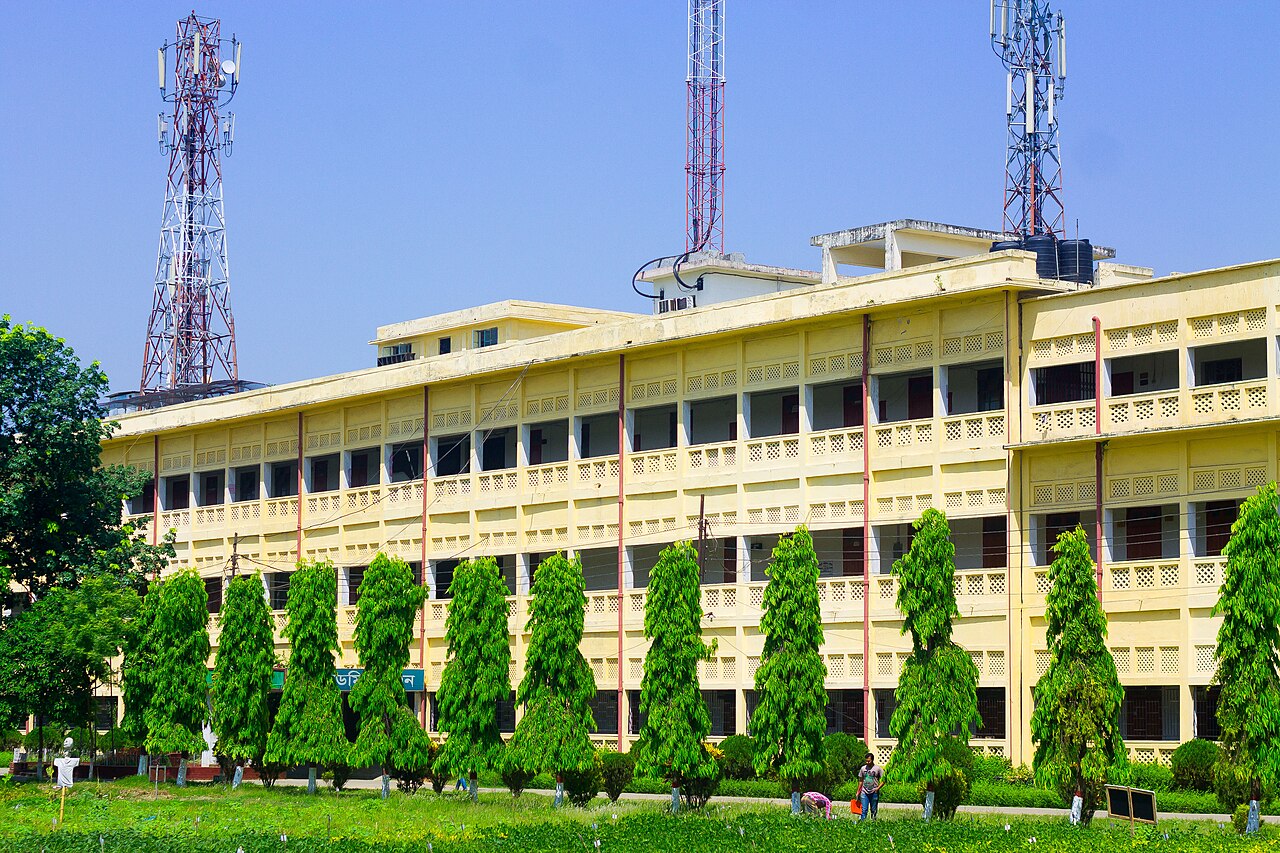
Teachers and students of Sher-e-Bangla Agricultural University in Dhaka are worried by plans to build a new secretariat on the old trade fair ground at Sher-e-Bangla Nagar, and have long demanded that the historic research land be returned to the university. In a column on Amar Desh's op-ed page, Muhammad Tahajjat Ali proposes an international urban agriculture research centre there instead.
He recalls the history: the Dhaka Farm was founded in 1908 on about 403 acres at Tejgaon, and on 11 December 1938 the Bengal Agricultural Institute was established there at the initiative of A K Fazlul Huq. Urbanisation and government building have since shrunk that research land until the university's main campus is about 87 acres. By comparison, he notes, the Indian Agricultural Research Institute in New Delhi covers about 1,250 acres, and Tokyo University of Agriculture runs several campuses and research farms.
His proposed "International Centre for Urban Agriculture, Food and Environmental Research" would study rooftop farming, vertical farming, safe food production, pesticide residues, soil and water pollution, the urban heat island, rainwater harvesting, urban forestry and AI-based farm technology, with experimental plots, a medicinal plant collection, ponds and demonstration rooftop gardens where schoolchildren and city residents could learn hands-on. He suggests working with FAO and UN-Habitat.
A large green research site, he argues, would help a Dhaka struggling with air pollution, heat, waterlogging and a lack of green space to lower temperatures, absorb rainwater and protect biodiversity. For large-scale field research he proposes a separate university campus or experimental farm 50 to 100 km from Dhaka, and he asks that the secretariat be planned elsewhere around the capital, with government offices gradually decentralised.
He appeals to the prime minister to settle the university's claim after checking the history of the ground's ownership and use, and to form an expert committee for the research centre.
The writer is Muhammad Tahajjat Ali; the column appeared on Amar Desh's op-ed page. The views are the writer's own.
Photo: Jubair1985 / Wikimedia Commons (CC BY-SA 3.0)
Source: Amar Desh

Comments
(0)