
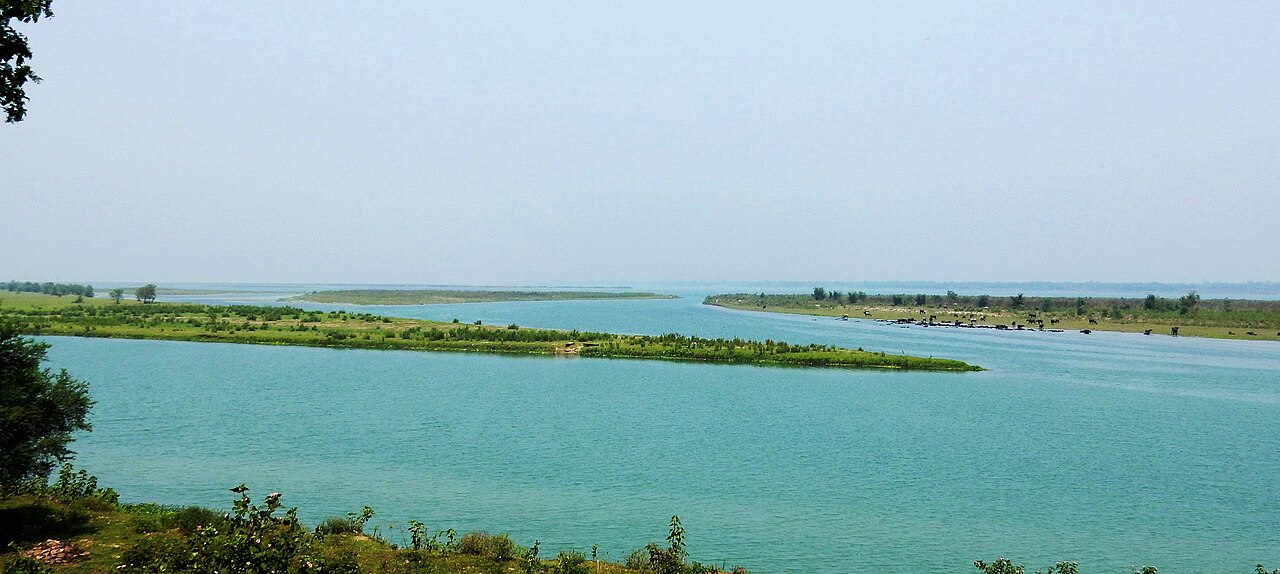
The Ganges water-sharing treaty between Bangladesh and India, signed on 12 December 1996, completes 30 years on 12 December 2026. In a column in Ittefaq, Dr Abdul Wadud argues that Ganges water is tied to Bangladesh's agriculture, food security, environment, biodiversity and the livelihoods of millions, so the lack of visible progress on renewal or a new treaty is a serious worry.
The treaty is based on the river's flow at India's Farakka Barrage and covers the dry season from 1 January to 31 May, with a special guarantee of 35,000 cusecs for Bangladesh in three set ten-day periods between March and May. Its achievements, he writes, were a long-term written framework, data sharing at Farakka and Bangladesh's Hardinge Bridge, and a joint committee. Its weaknesses: no overall guaranteed minimum flow, the guarantee clause of the 1977 agreement not carried over in the same form, and a sharing formula based on average flows from 1949 to 1988, which needs reassessing after climate change and upstream withdrawals.
He links reduced dry-season flow in the Padma to problems with irrigation, navigability, salinity in the south-west, fisheries and biodiversity, and to silting in the Gorai river. But he cautions that it would not be scientifically sound to blame all of this on Farakka alone; climate change, other upstream withdrawals and river management within Bangladesh also count, and people in West Bengal and Bihar face floods and erosion of their own.
On progress, he notes that India's Lok Sabha was told on 13 February that formal talks had not begun; on 24 September water resources minister Shahiduddin Chowdhury Anee said Bangladesh wants a new treaty with a guarantee clause rather than a simple renewal; on 29 September India's foreign ministry said technical talks continue through the Joint Rivers Commission; and on 2 November state minister for foreign affairs Shama Obaed Islam said the prime minister had formed a committee for the talks. As of 22 November, no final terms or signing date had been announced.
For a new treaty he proposes a realistic dry-season minimum flow based on new scientific data; daily figures on how much water reaches Farakka, how much India takes and how much it releases; joint measurement at Hardinge Bridge and other key points; monsoon flood forecasting; environmental flow; and time-bound dispute settlement. He also urges basin-wide agreements for the Teesta and the other of the 54 rivers the two countries share.
The writer, Dr Abdul Wadud, is described by Ittefaq as the originator of "Fikamli theory", a former university teacher, researcher and political analyst. The views are the writer's own.
Photo: Debmalyap / Wikimedia Commons (CC BY-SA 4.0)
Source: Ittefaq

Comments
(0)