
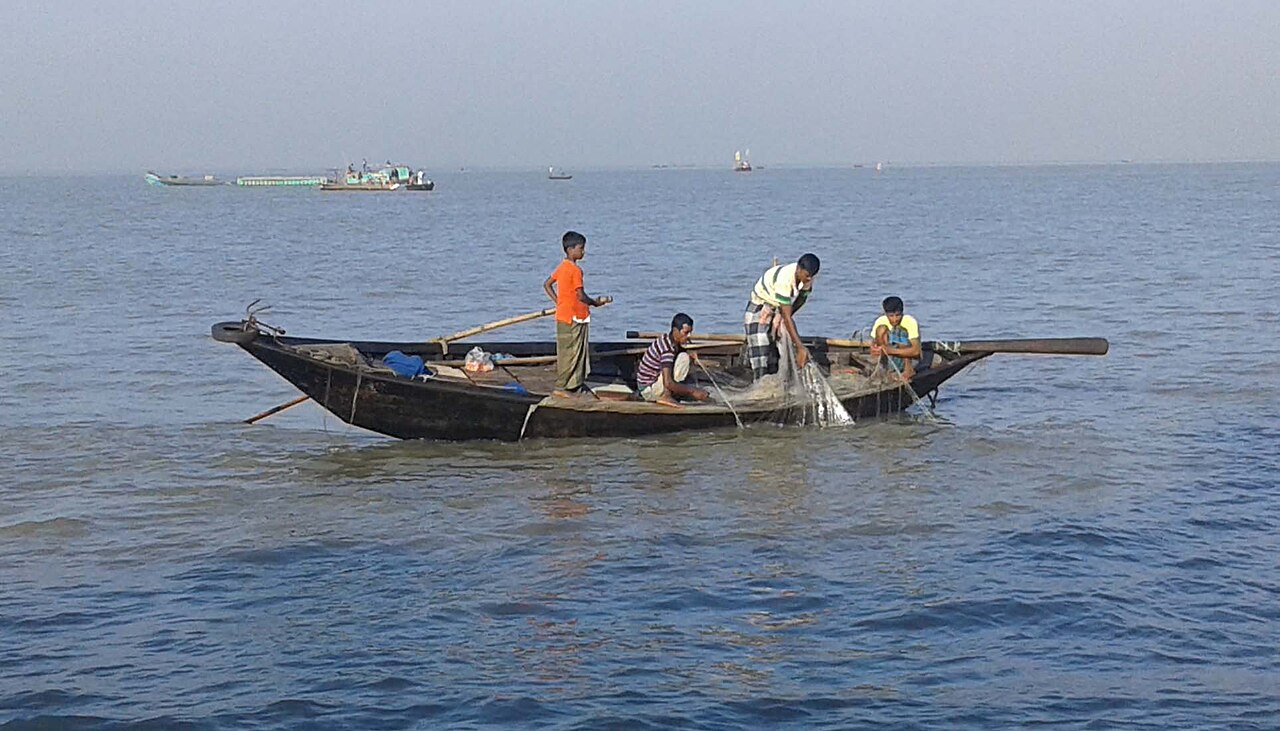
Writing for World Fisheries Day on 21 November, columnist Shafiqul Islam Khokon argues that rising output of farmed fish and the health of the fish in rivers and the sea are not the same thing, so production figures alone cannot show the state of the country's fisheries. If the biodiversity of rivers, canals, beels, haors and the sea is not protected, he warns, food security, the economy and fishers' livelihoods will suffer.
Department of Fisheries figures cited in the column put total fish production in 2023-24 at 50.18 lakh tonnes: 29.78 lakh from closed waters, 14.11 lakh from inland open waters and 6.29 lakh from the sea, with about 59 per cent now farmed. Hilsa production fell in the same year from 5.71 lakh to 5.29 lakh tonnes, about 7.83 per cent. More recent figures he cites put hilsa at about 4.2 lakh tonnes in 2025-26, some 26 per cent below the 2022-23 peak, and a report published in October found the marine catch down 16.57 per cent over five years.
In the writer's view, rising water temperatures, erratic rain, drought, floods and storm surges are directly affecting where fish live and breed; a study published on 30 April 2026, using data from 1978 to 2022, found a negative link between changes in temperature and rainfall and fish production. Industrial waste, sewage, plastics and pesticides are polluting rivers, while badly planned embankments, roads, culverts and sluice gates block fish moving from rivers onto floodplains.
The column cites the UN Food and Agriculture Organization's The State of World Fisheries and Aquaculture 2026: world production of aquatic animal foods reached a record 195 million tonnes in 2024, 103 million of them farmed, so that aquaculture's share passed 53 per cent for the first time. FAO projects that with high carbon emissions the catchable fish biomass in various regions could fall by more than 10 per cent by 2050. According to the Department of Fisheries yearbook, about 12 per cent of Bangladesh's people are directly or indirectly involved in fisheries.
The writer proposes seven steps: restore rivers, canals, beels, haors and floodplains and stop encroachment and pollution; ensure industrial waste is treated; protect breeding grounds and sanctuaries and police the killing of brood fish and fry and the use of banned nets; carry out regional research and regularly monitor water temperature, salinity and dissolved oxygen; assess marine stocks and fish the deep sea sustainably; give fishers alternative work, easy credit, insurance and legal recognition for those lost at sea; and conserve native species alongside aquaculture, since ponds cannot bring back the lost biodiversity of rivers and haors. None of this will work, he writes, without the active involvement of fishers.
Writer: Shafiqul Islam Khokon, columnist. The views are the writer's own.
Photo: AsikBinRahim / Wikimedia Commons (CC BY-SA 4.0)
Source: Daily Bangladesh

Comments
(0)