
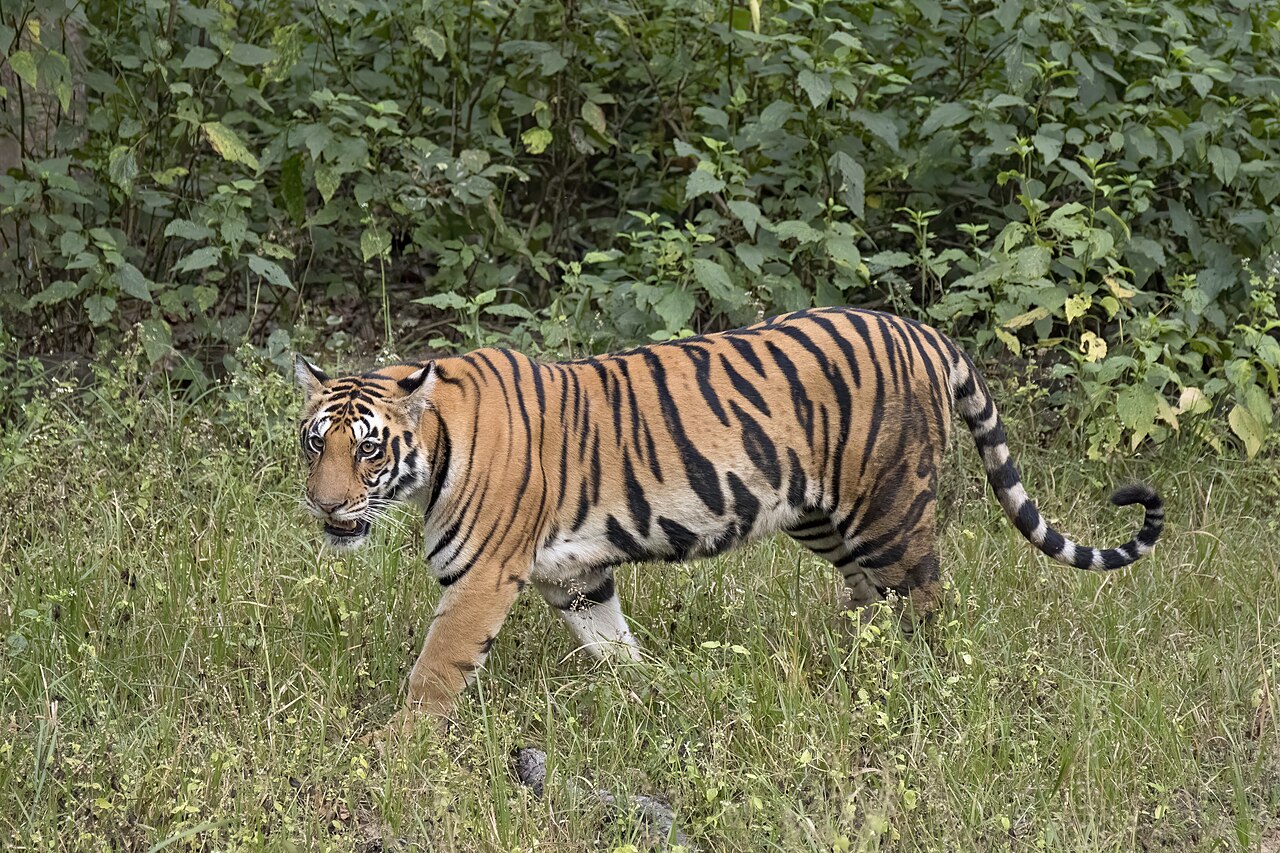
Monitored wildlife populations worldwide have fallen by an average of 73% over five decades, according to the World Wide Fund for Nature's (WWF) Living Planet Report 2026, released on 8 October and produced with the Zoological Society of London, Down To Earth reports. The report tracked trends across 5,790 vertebrate species between 1970 and 2022.
Freshwater populations fell most, by 85% on average, followed by land species (69%) and marine species (59%). Habitat loss and degradation were the most frequently reported threats, followed by overexploitation, climate change, pollution, invasive species and disease, which the report links to wider problems in global food, energy and financial systems. In Asia and the Pacific, monitored populations declined by 49%. "The declines registered by the LPI and other biodiversity indicators cannot be reversed by conservation efforts alone," the report says.
India is cited as a conservation success. The 2022 All India Tiger Estimation put tigers at 3,682; greater one-horned rhinoceroses exceed 3,300; common leopards number an estimated 13,874; Asiatic lions rose from 674 in 2020 to 891 in 2025; and the first nationwide snow leopard assessment counted 718. India's first range-wide river dolphin survey, over 8,507 km of 28 rivers in 2021-2023, estimated 6,324 Ganges river dolphins. Ravi Singh, chief executive of WWF-India, called the report "both a stark reminder of the scale of the biodiversity crisis and a message of hope".
SP Yadav, director-general of the International Big Cat Alliance, said India holds about 70% of the world's wild tigers, with numbers rising about 6.1% a year, and credited government funding, scientific planning and technology. Others were more cautious. Wildlife scientist YS Jhala said India lacks strategies for species living mostly outside protected areas, such as the Great Indian bustard, Indian wolf and foxes, while Qamar Qureshi of the Wildlife Institute of India warned that growing populations of big cats and other mammals are adding to human-wildlife conflict, which falls hardest on poorer communities.
The report was written by Jayanta Basu for Down To Earth.
Photo: Charles J. Sharp / Wikimedia Commons (CC BY-SA 4.0)
Source: Down To Earth


Comments
(0)