
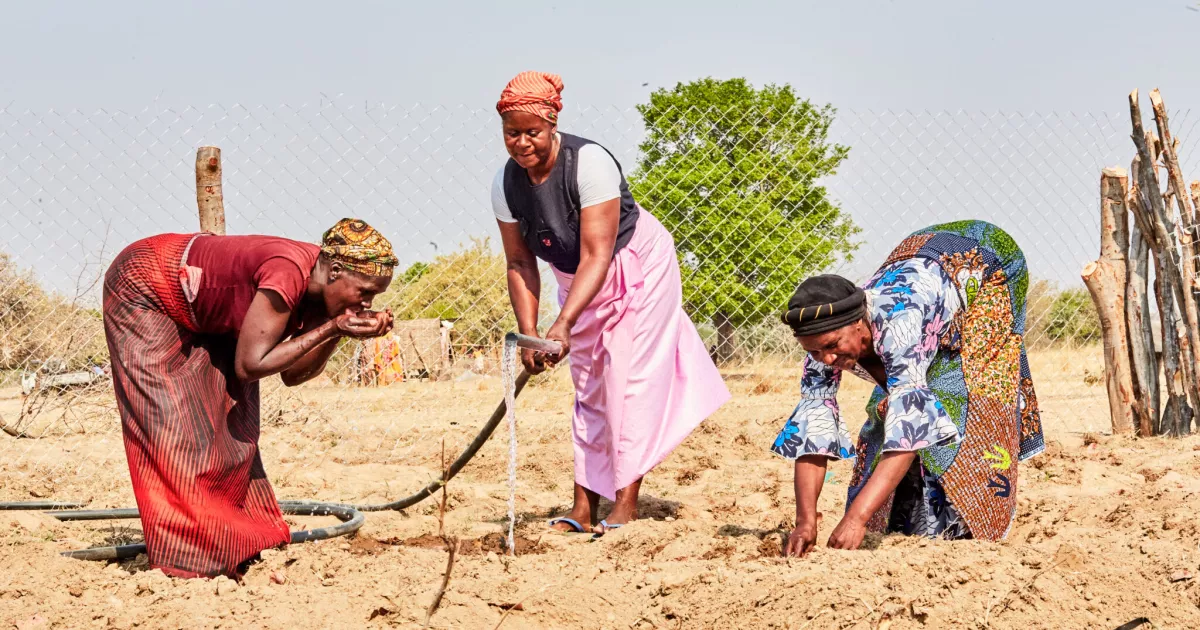
Drought is shaped as much by decisions as by weather: who can get water, how it is allocated, whether institutions act on warnings and whether communities have the resources to prepare. That was the message of Water Governance for Drought Resilience, the first webinar in a new series from the CGIAR Multifunctional Landscapes Science Program, held on 30 July 2026 with nearly 70 participants.
The featured speaker, Dr Mohsin Hafeez, Strategic Program Director for Water, Food and Ecosystems at the International Water Management Institute (IWMI), drew on examples from Africa and Asia to argue that drought is not a single event. Meteorological, agricultural and hydrological drought interact, and the effects reach incomes, food security, ecosystems and social stability.
"Early warning and forecasting are one thing, but what action can we take? What anticipatory action can we take?" Dr Hafeez asked. He set out three connected pillars of integrated drought management: monitoring and early warning; vulnerability and impact assessment; and preparedness, response and mitigation, shifting the emphasis from reacting after losses to knowing who is at risk and acting early.
Examples included drought monitoring and decision-support systems used across South Asia and in East and Southern Africa, such as Zambia; locally led drought planning with communities; and district-level contingency plans covering crops, livestock, fisheries and other livelihoods. Information, the session concluded, is only useful when institutions can interpret it, communities can access it and money is available to act on it.
On the farm, technology has to fit local conditions. Dr Hafeez cited water accounting and digital decision tools, rainwater harvesting, managed aquifer recharge, wetland protection and farmer-friendly soil-moisture sensors. In Tanzania, sensor-supported irrigation trials reported average water-use reductions of 60 per cent alongside higher crop yields and water productivity. In Pakistan, simple colour-coded soil-moisture sensors helped farmers decide when and how much to irrigate.
The webinar also examined how water is allocated among agriculture, cities, industry and ecosystems through the Water-Energy-Food-Environment nexus, and how lessons might be adapted in Latin America and the Middle East. Global agreements can set direction, the presentation noted, but national laws, river-basin institutions, local plans, budgets and enforcement determine what changes on the ground: nothing cascades by itself.
The session was convened ahead of the 17th Conference of the Parties to the UN Convention to Combat Desertification in Ulaanbaatar, Mongolia, from 17 to 28 August 2026, where drought resilience, water and land restoration were prominent. Dr Hafeez closed with a simple line: "A little water goes a long way."
Source: CGIAR

Comments
(0)