
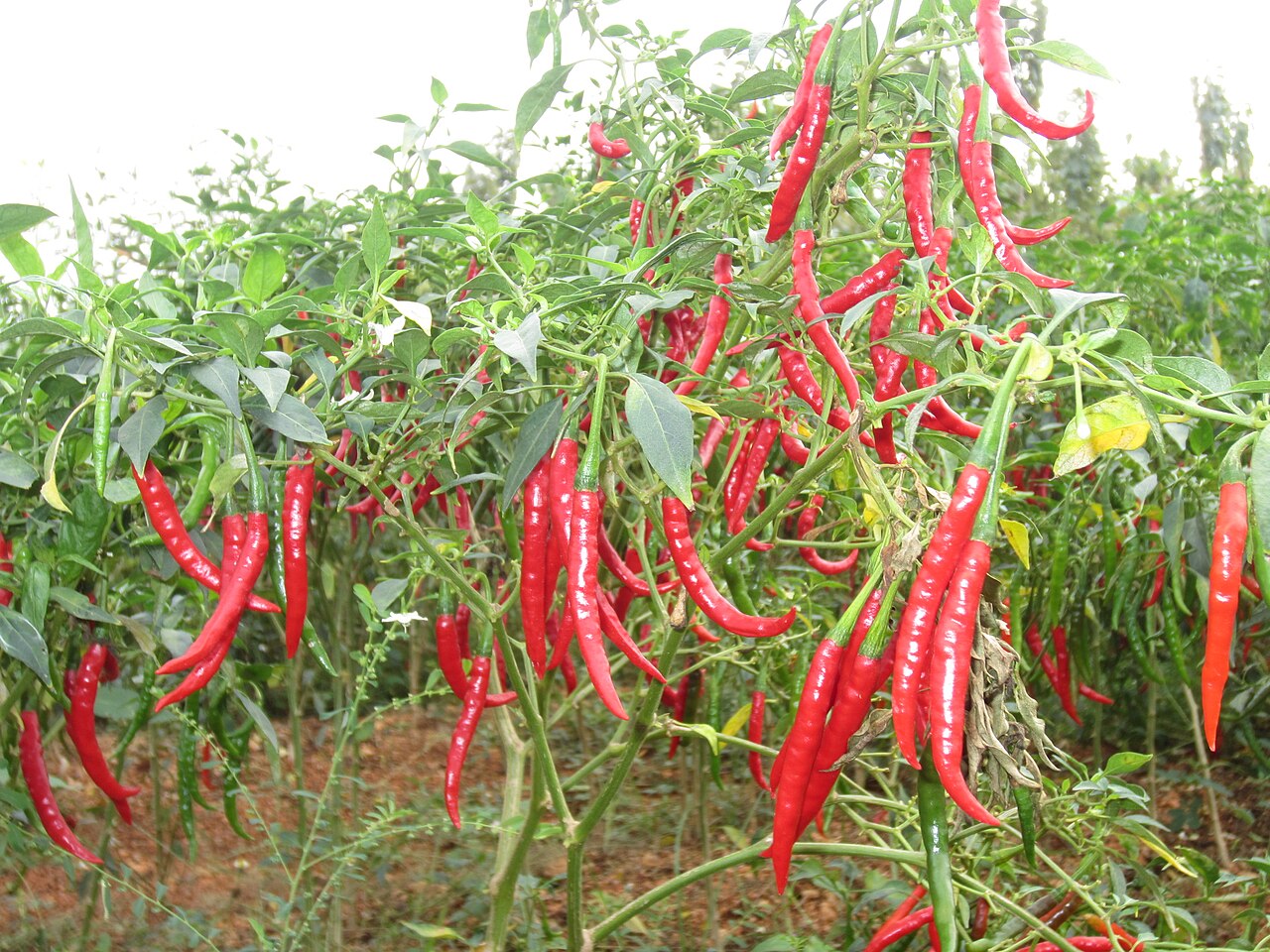
Hot peppers may help clean metal-contaminated farm soils without making the crop unsafe to eat, a study at Kentucky State University suggests, Farms.com reports. The work was led by graduate researcher Basanta Neupane in the Chemistry and Environmental Toxicology Laboratory under George F. Antonious, a professor of agriculture.
Heavy metals do not break down in the environment and can build up in soils over time from natural processes and human activity. One way to manage them is phytoremediation, using plants to absorb or lock up pollutants. "We wanted to understand how different soil treatments influence the movement of metals into hot peppers," Neupane said, "looking at the crop's potential to absorb those metals and measuring what accumulates in the part people eat."
In field trials in Kentucky, the team grew Georgia Flame hot peppers in soils treated with commercial fertiliser, vermicompost, sewage sludge, chicken manure, horse manure or nothing, some with biochar, a carbon-rich material made by heating biomass with little oxygen. The plants took up cadmium, nickel, copper and zinc, and biochar combined with other amendments increased the uptake of some metals.
The key result was that metal concentrations in the harvested peppers stayed below the permissible limits used in the study. The researchers stress that this holds only for this crop, these soil treatments and these conditions, and covered one growing season; they call for longer studies across changing weather and seasons, including effects on growth and yield.
"Each study helps us better understand the relationship between soil management, crop performance, and environmental quality," Antonious said. The project was supported by USDA's National Institute of Food and Agriculture.
Photo: Sreeni.kaki / Wikimedia Commons (public domain)
Source: Farms.com



Comments
(0)