
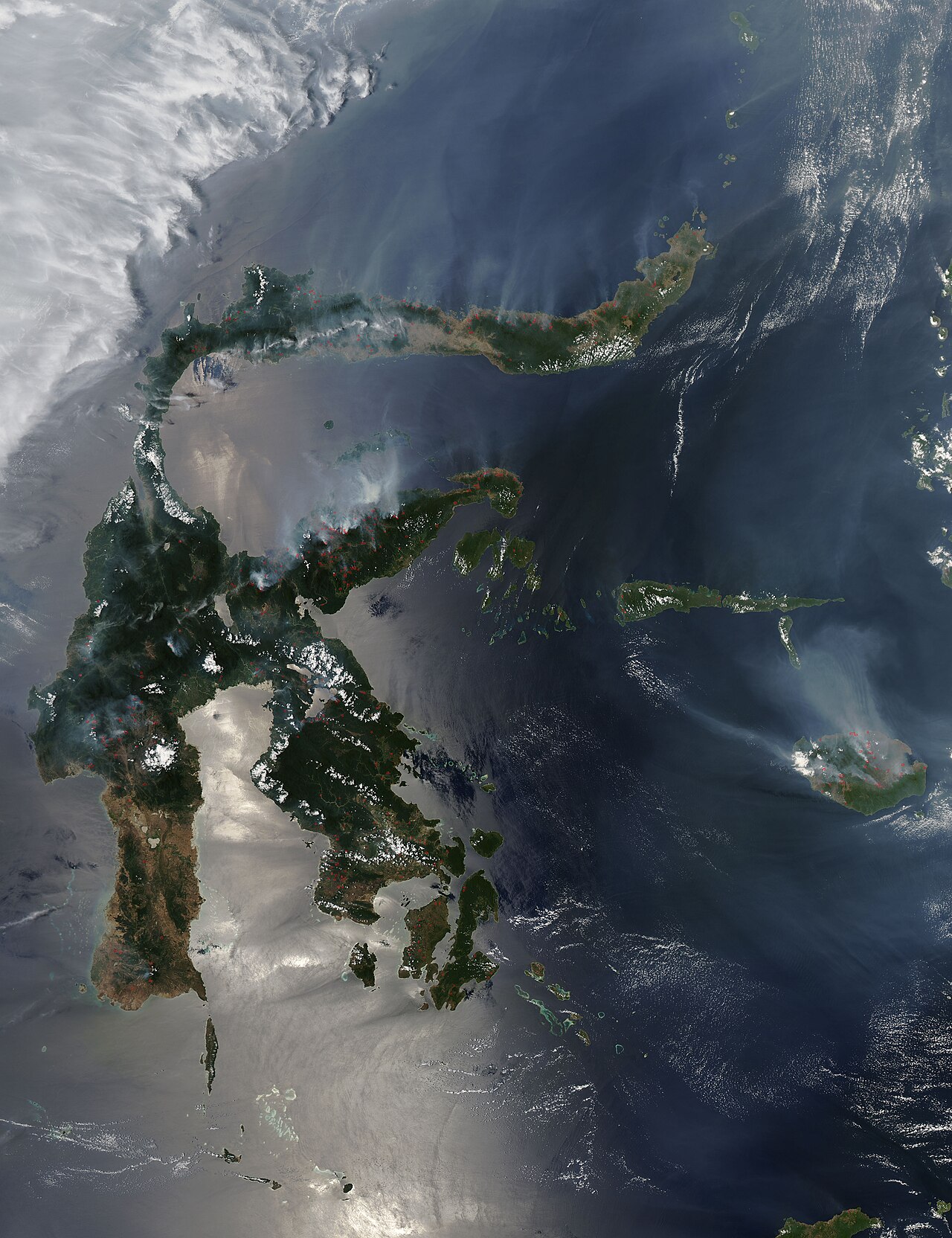
Months of fires in Indonesia have spread haze across the region and sharpened the question of whether palm oil and timber companies can be held responsible for the fires and the pollution. According to deforestation monitor Nusantara Atlas, about 2 million hectares have burned this year. The AFP report from Bangkok was carried by BSS and published by Naya Diganta.
Fires are routine in Indonesia's dry season, but this year a strong El Nino and the drought it brought made them severe. Experts say years of deforestation and the draining of peatland for farming have put areas once at low risk in the path of fire. Besides forest and peat, the fires have spread into palm oil and timber plantations linked to the supply chains of multinational companies.
The environmental group WALHI said its map of high-confidence hotspots, built from NASA fire data, places about 50 percent of them inside companies' concessions, land granted for a fixed term. A report this month listed 40 timber and palm oil concessions ranked by the number of hotspots detected. 'This is a structural problem. It happens because of these companies' activities and practices,' said Umi Ma'rufah, a WALHI campaigner on forests and plantations.
Singapore has served 'preventive measures notices' on 10 companies under its Transboundary Haze Pollution Act, requiring fire control and prevention plans on their land; companies that do not comply could face fines and other legal action. Senior Minister K Shanmugam told reporters this was not simply a natural event but a problem created by companies' pursuit of profit.
Some of the companies accused deny responsibility. Singapore-listed palm oil producer First Resources said a fire that began outside its boundary later spread into land managed by the group. Asia Pulp and Paper argued that a fire on a supplier's concession does not mean the land was set alight deliberately or by the concession holder. David Gaveau, founder of Nusantara Atlas, said satellite images sometimes show a fire starting inside a concession and sometimes spreading in from outside, but cannot show whether it was deliberate or accidental.
Experts say fire has been used in the past to clear land illegally for planting, by large concessions and by small local investors alike. Some areas once allowed smallholders to clear land with fire, but this year the government has cracked down on that practice too. Azam Hawari, a lawyer with the environmental law group ClientEarth, said companies can be liable even when a fire is accidental or spreads from outside, and can also be held responsible for draining peatland.
Photo: Satellite image of Indonesian fires in 2015, Jeff Schmaltz, MODIS Land Rapid Response Team, NASA GSFC / Wikimedia Commons (Public domain)
Source: Naya Diganta

Comments
(0)