
Draped in plastic bottles, mugs and buckets, plastic plates or electronic waste, all collected from the sea, twelve volunteers dressed as "waste men" walked onto Cox's Bazar beach at Sugandha Point at about 8am on Wednesday, 28 October, to carry a message about sea pollution to tourists.
A march against plastic and pollution set out from Laboni Point that morning with more than 200 students, environmental activists and members of civil society. The waste men walked the beach telling visitors: "The beach is our priceless asset. Enjoy its beauty, don't throw rubbish everywhere. Be careful with plastic."
Cox's Bazar deputy commissioner Md. A. Mannan led the march. At least 1 million tourists visited Cox's Bazar in the last ten days, he said, and hundreds of thousands are still in town; their plastic is polluting the sea, and the campaign is meant to make them aware of it.
Jamal Uddin, a director of the organiser, Bidyanondo Foundation, said many visitors leave rubbish on the sand, and plastic in particular spreads into the sea. There are plenty of bins on the beach, but many people do not use them; the twelve men and women were dressed in waste to show how much harm plastic does to the environment and wildlife.
On 12 October a 50-foot sculpture made of waste, also built by Bidyanondo, was unveiled at Sugandha Point, and hundreds of people visit it every day.
Bottles and food packets piling up on the beach and washing into the sea threaten marine life, and with it the coast's fish and fishers. The organisers say tourists, traders and everyone involved must keep the beach clean.
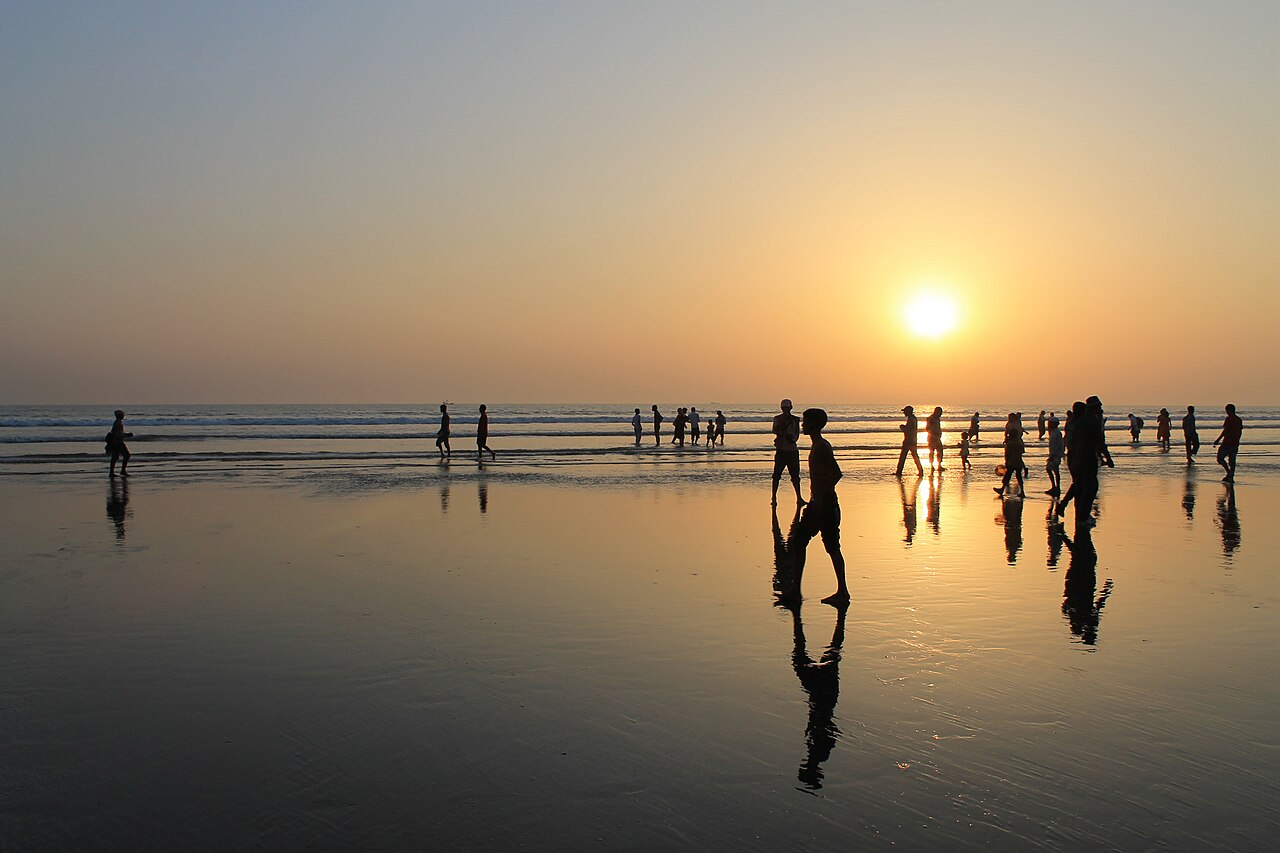
Photo: Cox's Bazar beach at twilight, Tanweer Morshed / Wikimedia Commons (CC BY-SA 3.0)
Source: Amar Desh



Comments
(0)