
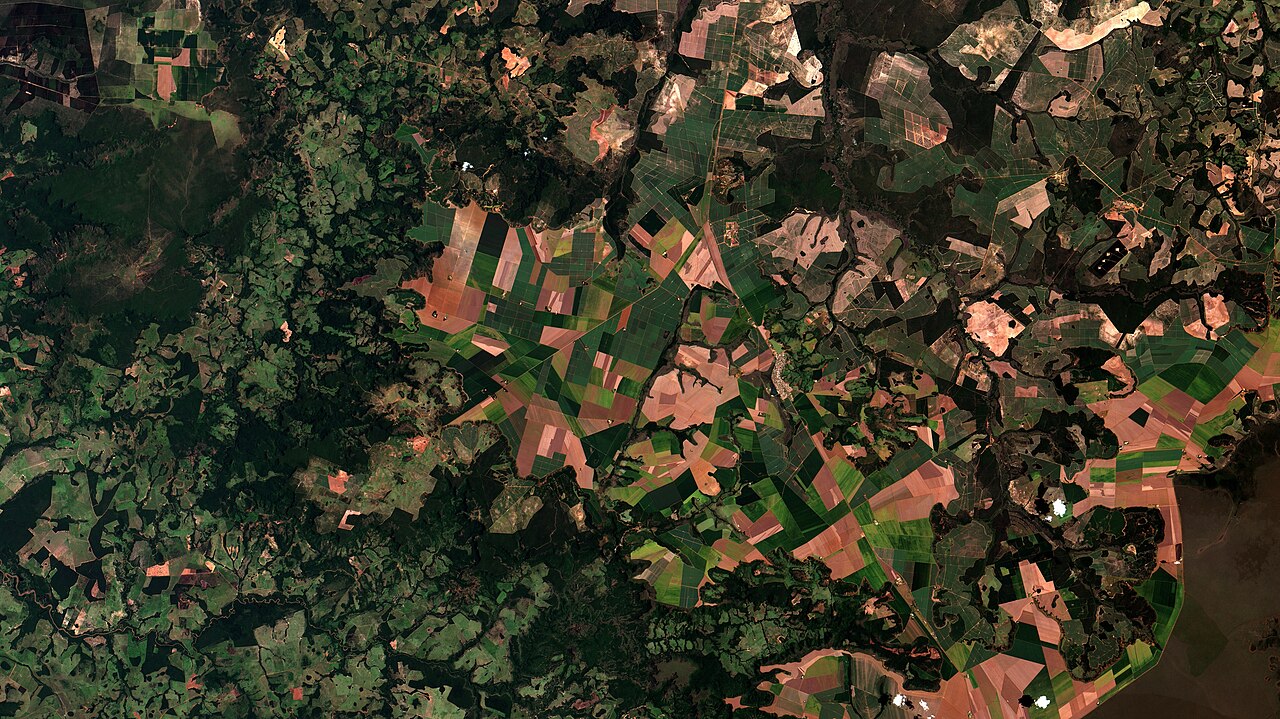
Brazil's soybean industry is worried that the European Union's anti-deforestation regulation, known as the EUDR, will cut its soymeal exports to the bloc, while Argentina's crushers say they are better placed to meet the rules and ready to take the business.
Brazil is the EU's biggest supplier of soybean meal for animal feed, with about half of the bloc's imports last year, according to the European Feed Manufacturers' Federation (FEFAC). It exported a record 23.3 million metric tons of soymeal in 2025. From 30 December, importers into the EU must prove that their products are not linked to deforested land, and face heavy penalties if they cannot.
FEFAC has warned that the traceability requirements could shut out up to 4 million tons of Brazilian soymeal, roughly 17% of total exports. Its latest assessment gives Brazil a "medium" risk rating and says Mato Grosso and other states face "structural and logistical hurdles" in building fully compliant supply chains. Argentina and Paraguay were rated "low" risk, and FEFAC projects that nearly all of Argentina's soymeal in the first half of 2027 will meet the rules.
Geography is a large part of the difference. Dante Romano, research manager at the Rosario grains broker Max Agro, said farmers in central Brazil are more than 2,000 kilometres from the ports and their grain often moves between trucks, barges and trains, which makes it hard to trace. Argentina's main soy lands lie no more than 350 kilometres from the Rosario port hub, and much of Brazil's central and northeastern farmland was opened up on cleared ecosystems in recent decades, while the Argentine Pampas have been farmed for over a century.
Buffon, president of the Brazilian soy growers' association Aprosoja, said the law unfairly targets Brazil and that restoration work is under way in some regions even as new cropland is developed. "Brazil's environmental problems are much smaller than the size of our agriculture," he said.
In Argentina, Gustavo Idigoras, president of the CIARA-CEC grain exporters and crushers chamber, put Brazil's possible losses at 5 million to 6 million tons and said: "We can easily fill that gap." He pointed to the VISEC system, which tracks soybeans and beef from production to export and is fully operational. Argentina is already the world's largest soymeal exporter, shipping about 27 million metric tons last year, about a quarter of it to Southeast Asia. Romano said Brazil may in turn sell more to other markets as Argentine volumes are diverted to Europe.
Paraguay's CAPPRO crushing chamber said the country also has "favorable structural conditions" for the rules, since a 2004 law bans clearing forest for farming in its Region Oriental, where most of its soy is grown. The shift comes as the EU and Mercosur, whose members include Brazil, Argentina, Paraguay and Uruguay, work under a provisional free-trade agreement reached in May. The Cattle Site's report, by Melanie Epp, draws on Reuters.
Photo: Coordenação-Geral de Observação da Terra/INPE / Wikimedia Commons (CC BY-SA 2.0)
Source: The Cattle Site

Comments
(0)