
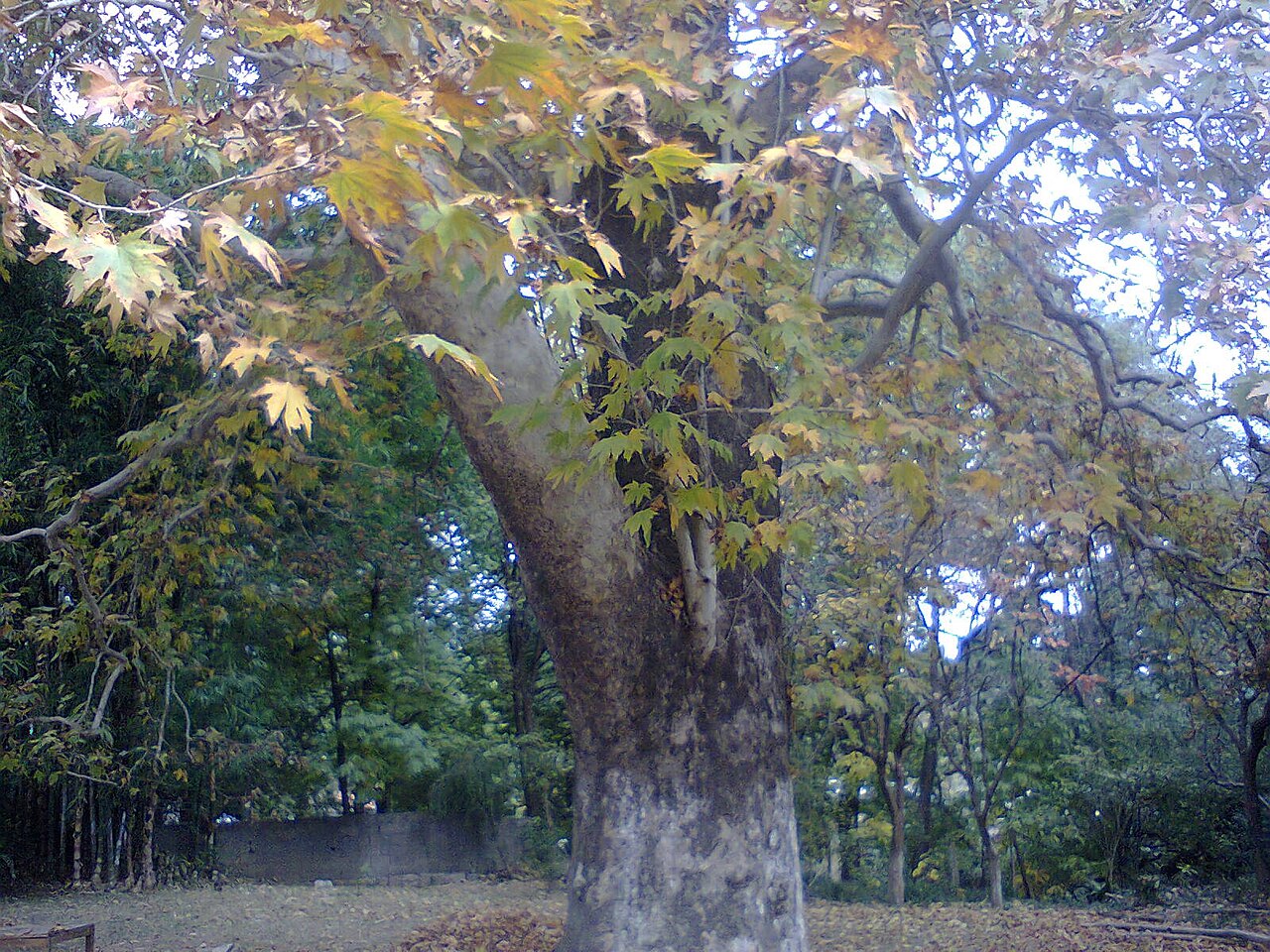
At this time of year the leaves of Kashmir's chinar trees turn from green to yellow, then deep red and purplish red across the valley. Kolkata's Ei Samay has published a photo story on the science behind it.
As days shorten and temperatures fall before winter, the chinar prepares to shed its leaves, drawing the nutrients it needs back into its trunk and roots so it can grow again in spring. The green chlorophyll in the leaves breaks down, revealing carotene and xanthophyll, which give the leaves their yellow and orange.
The deep red comes from anthocyanin. Scientists say that when sugars build up in the leaves in autumn, sunlight and cold air trigger this pigment, which gives chinar leaves their deep red and purple shades.
The chinar's bond with Kashmir is old. Mughal emperors planted it from Srinagar's Nasim Bagh across the valley, and chinar leaves appear in the designs of Kashmiri shawls and carpets.
Neglect and felling once put these historic trees at risk. In early 2025 the Jammu and Kashmir administration launched 'Tree Aadhaar', giving each chinar a unique number and mapping it by GPS geo-tagging. Digital records of the age, height, health and location of more than 28,560 trees now exist, helping to stop illegal felling.
Reported by Rahit Paramanik for Ei Samay.
Photo: A chinar (oriental plane) tree in autumn, Rangbaz / Wikimedia Commons (CC BY-SA 3.0)
Source: Ei Samay

Comments
(0)