
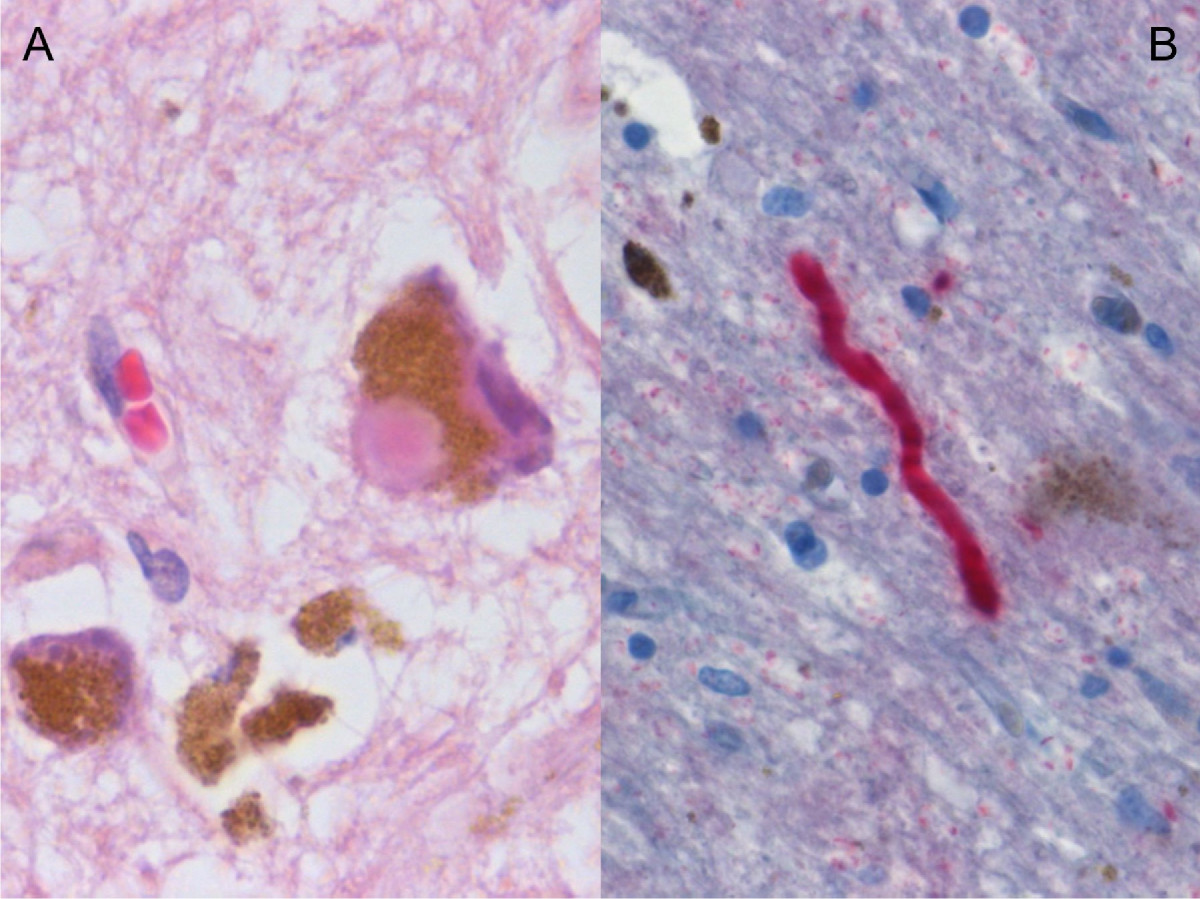
Can a virus leave a molecular imprint in brain cells after the infection has cleared, and could that be linked to Parkinson's disease? Indian scientists have found an important clue: a particular structure in the RNA of viruses such as influenza and the coronavirus can accelerate the abnormal clumping of the protein alpha-synuclein. Anirban Ghosh and Aishwarya Mitra report the study in the Kolkata daily Ei Samay.
The research was carried out at the Centre for Cellular and Molecular Biology (CCMB) in Hyderabad, under the Council of Scientific and Industrial Research (CSIR), led by scientist Swasti Raychaudhuri with Anchal Jain as first author; researchers from IIT Kharagpur also took part. The paper was published in Elsevier's journal Cell Reports.
A hallmark of Parkinson's is clumps of alpha-synuclein in brain cells, known as amyloid. The team focused on a viral RNA structure called the RNA G-quadruplex (RG4). Experiments with H1N1 influenza RNA showed that this structure binds alpha-synuclein and speeds up amyloid formation. RG4s in the genomes of SARS-CoV-2 and Japanese encephalitis virus may do the same.
Cells have their own defence. An RNA helicase protein called DDX39A moves from the nucleus to the cytoplasm during infection and can unwind the viral RG4s, slowing both viral replication and amyloid formation. Raising DDX39A in COVID-infected neurons reduced amyloid build-up. But when RG4s increase during infection, the balance can shift and open the way to amyloid formation.
The researchers stress that not every viral infection leads to Parkinson's, and that the study does not establish a direct causal link between viruses and the disease. It shows one possible way the relationship between RNA, alpha-synuclein and DDX39A changes inside cells during infection.
Neurologist Animesh Kar says earlier studies had suggested a higher risk of Parkinson's after viral infections without explaining how; this work offers a possible biological mechanism. The researchers hope the pathway may point to new ways of preventing and treating Parkinson's.
Photo: Werner CJ, Heyny-von Haussen R, Mall G, Wolf S / Wikimedia Commons (CC BY 2.0)
Source: Ei Samay

Comments
(0)