
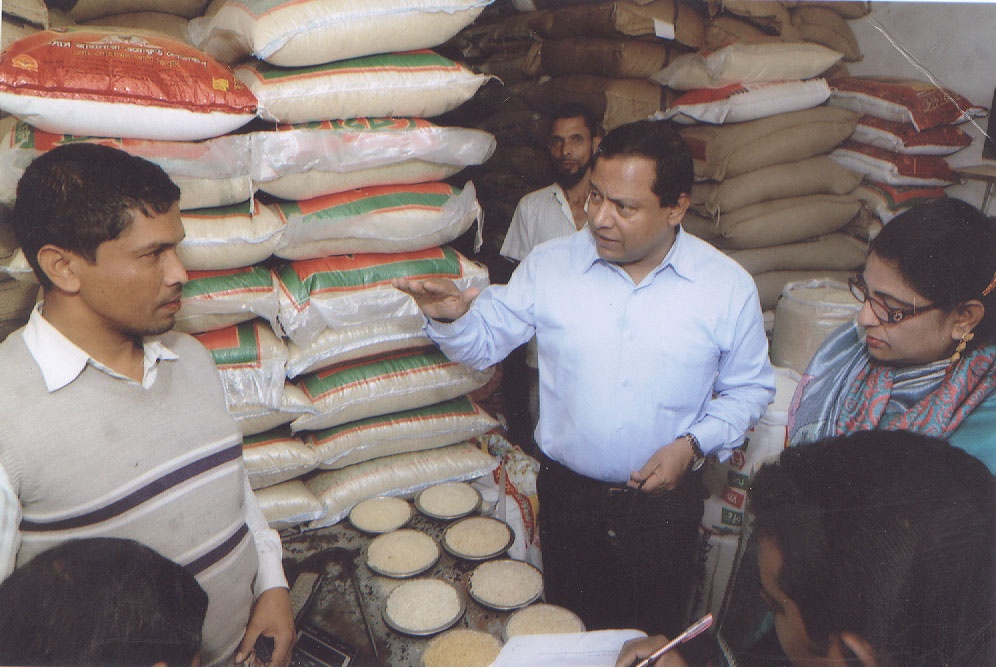
The government has asked the UN World Food Programme (WFP) for financial and technical support to study how much the fortified, nutrient-enriched rice distributed under the state food-friendly programme actually improves people's nutrition. The research could cost about $400,000 to $450,000. The programme now runs in about 300 upazilas, Banglanews24 reports.
Food minister Afroza Khanam made the request on Monday (2 November) at the Secretariat in a meeting with a WFP delegation led by its Bangladesh country director, Coco Ushiyama. Before the programme is expanded, she argued, there must be strong evidence of its real nutritional benefit; reliable evidence would make it easier to widen its reach and make policy.
The minister said laws and rules to expand the fortification of rice and other foods are under consideration, and asked for WFP support on private-sector participation, quality assurance and international experience.
She also called keeping rice in government warehouses in good condition over long periods a major challenge, and asked for WFP technical help to draw up an integrated policy and standard operating procedures (SOPs) for grain storage and long-term stock management. She stressed better coordination between food stocks and social safety-net programmes to cope with floods, drought, heatwaves and earthquakes, and with shocks such as rising world fuel and fertiliser prices.
Ushiyama said WFP's five-year plan will prioritise strategic grain reserves, social protection, improving the nutritional quality of grain and school feeding. Stressing an independent, scientific assessment of fortified rice, she suggested bringing in other development partners and preparing a detailed concept note, and offered to share the experience of Pakistan and other countries.
The meeting also discussed expanding school feeding with food grown by local farmers. For the rice market that could mean a more direct link between farmers, public procurement and nutrition programmes, if the idea moves from plan to practice.
Photo: Press Information Department / Wikimedia Commons (Public domain)
Source: Banglanews24

Comments
(0)