
The United States Department of Agriculture began approaching farmers, ranchers and agricultural landowners in June for a detailed account of the conservation work on their land, in a survey whose findings are meant to shape the country's farm and environment programmes.
The exercise is the Conservation Effects Assessment Project (CEAP) survey, run by the National Agricultural Statistics Service (NASS) with USDA's Natural Resources Conservation Service (NRCS). Nearly 23,000 operators nationwide will receive it.
“Responding to the survey gives farmers the opportunity to provide the most accurate picture of conservation practices on their cropland,” said Joseph Parsons, the NASS administrator. Information from the project, he said, “will help inform programs that benefit producers by protecting the natural resources on which their livelihoods depend.”
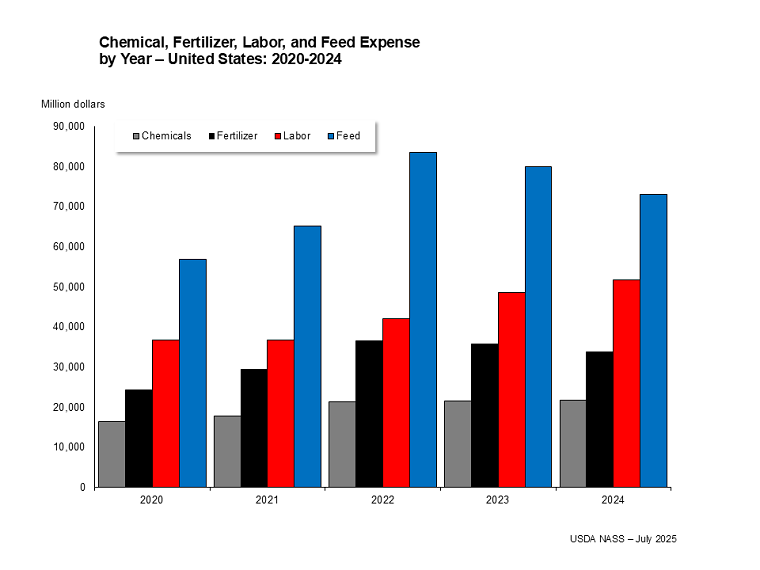
The questionnaire is unusually detailed for a national survey. It asks about farm production practices; applications of chemicals, fertiliser and manure; tillage; the use of irrigation; and the conservation structures and practices already installed on the holding.
The fieldwork runs in three stages. Between June and August 2026, local representatives of the National Association of State Departments of Agriculture visit farms and properties to establish which are eligible. Those that qualify may then be asked to take part between November 2026 and March 2027. NASS afterwards hands the data to NRCS, which analyses it and publishes the findings in its CEAP Cropland Assessments.
Those assessments measure what conservation practices actually achieve on working land, and this round will be the third national and regional set. Information given to NASS is confidential under federal law and is published only in aggregate, so that no individual holding can be identified.
The method is the part worth noting from a distance. Asking a large sample of farmers exactly which practices they use — rather than counting the programmes a ministry has funded — is how the United States measures whether its conservation spending changes anything on the ground, a question every country with a soil or water programme has to answer.
Source: USDA National Agricultural Statistics Service

Comments
(0)