
The United States has probably overtaken the Australian domestic market as the largest destination for Australian beef by volume, Beef Central reports, citing figures from Meat & Livestock Australia (MLA). It may be the first time in history that more Australian beef is shipped to the US than is used at home.
Australian consumers have traditionally taken about 30% of the country's beef production, with one of the three biggest export markets, the US, China or occasionally Japan, in second place. The change has come from a sharp rise in US imports: the American cattle herd has fallen to 70-year lows over three years of drought, with no clear sign of rebuilding, and Brazil and other suppliers have also shipped more.
Australia's exports to the US for the calendar year to 21 October reached 410,000 tonnes, up 50,000 tonnes or 15% on the same period last year, which was already close to a record. Some analysts expect the full-year total to top 460,000 to 480,000 tonnes.
Domestic use is not measured directly; it is estimated as production minus exports, a figure analysts call disappearance. MLA's estimate for the 2025-26 financial year is 565,856 tonnes carcase weight, or 384,782 tonnes in shipped weight at a 68% boneless yield. Exports to the US over the same year to 30 June were 493,419 tonnes. "On that basis, it's safe to assume that in this calendar year, the US will take more volume than the Australian domestic market," an MLA spokesman said, while stressing that the domestic figure is only a proxy for actual consumption.
Nathan Low, MLA's chief marketing and communications officer, said the milestone reflects US demand rather than weakness at home. In the 12 months to 4 October, domestic retail beef value rose 12%, volume 1.1% and price 10.8%. He suggested part of the retail growth comes from consumers eating at home instead of dining out because of the cost of living, which moves sales from food service, where MLA has no equivalent data, into retail.
Beef consumption per head in Australia has declined moderately over the long term as diets have diversified, Beef Central notes, but the latest shift is mainly the result of the surge in trade to the US. The report is by Jon Condon.
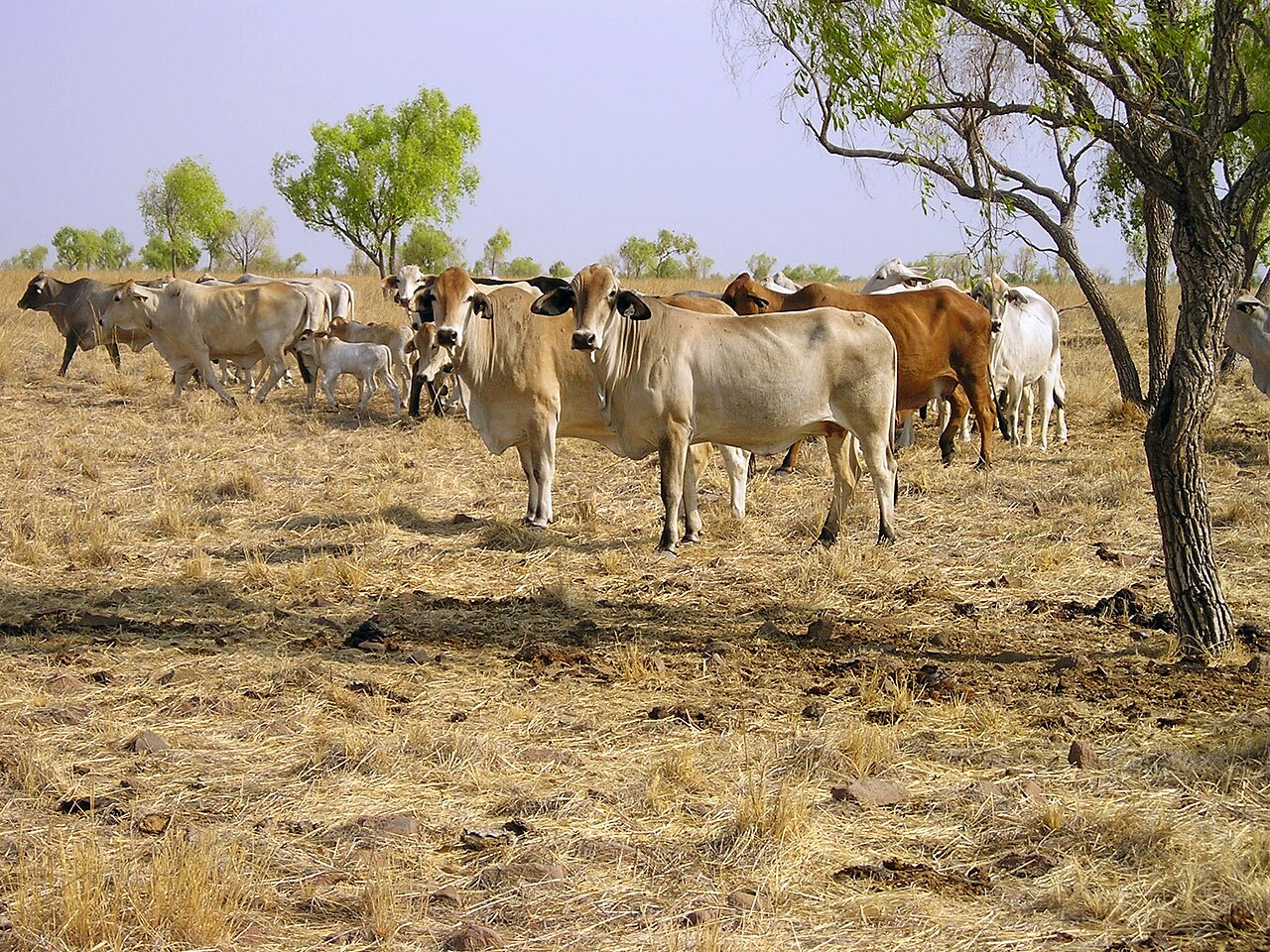
Photo: CSIRO / Wikimedia Commons (CC BY 3.0)
Source: Beef Central




Comments
(0)