
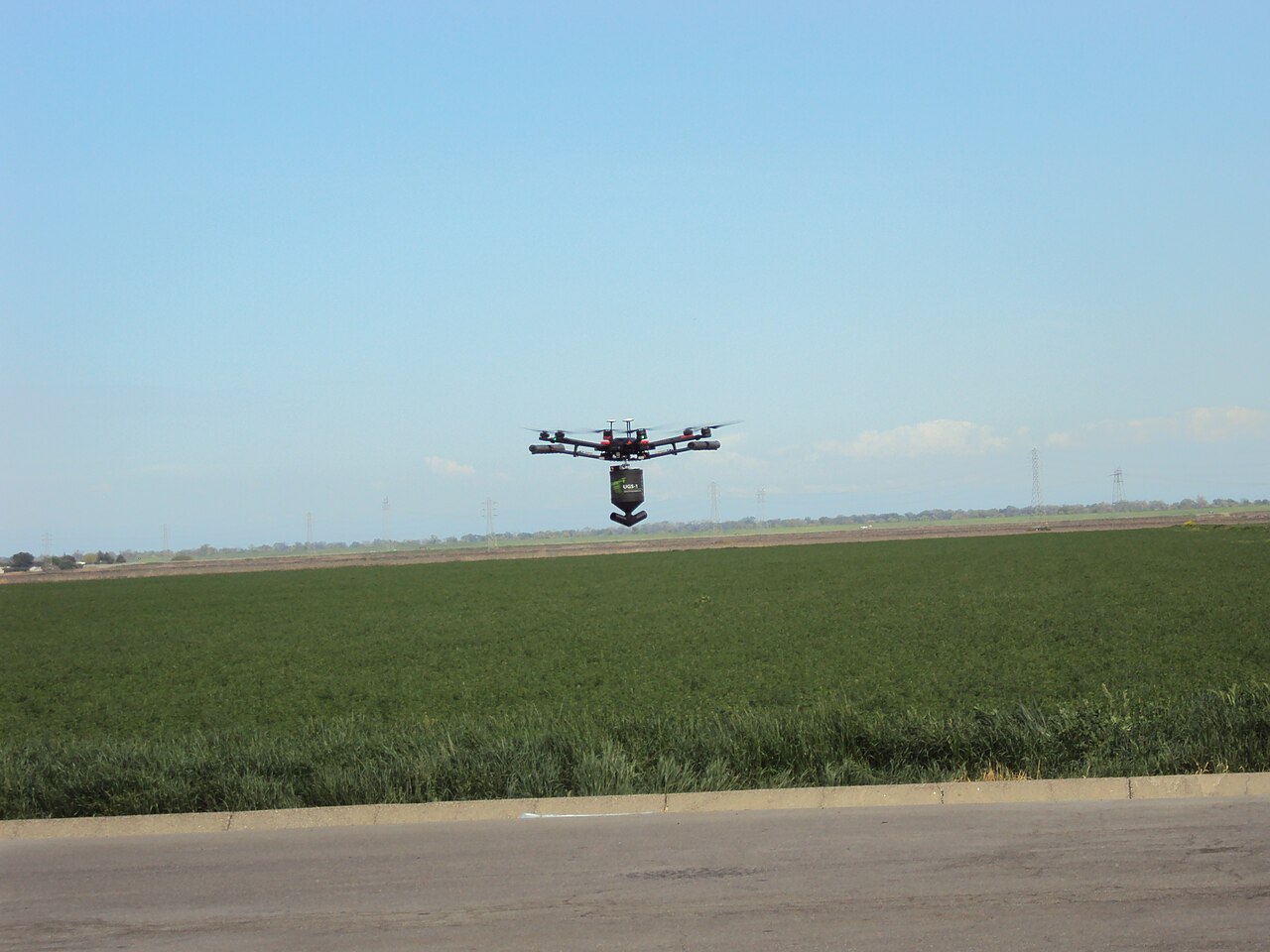
Agricultural drones are spreading fast across US farms: the area treated by drones grew from about 3.7 million acres in 2023 to 10.3 million in 2024 and 16.4 million in 2025, a 59% rise in the last year alone, according to an American Farm Bureau Federation Market Intel analysis by economist Bernt Nelson, republished by Precision Farming Dealer.
The technology is older than it looks. The first commercial farm drone was Yamaha's R-50 unmanned helicopter, released in 1987 to help Japanese rice farmers apply pesticides amid labour shortages. In the US, adoption moved slowly until around 2010, when researchers began receiving federal and state permission to apply pesticides by drone; since then, software and hardware have turned drones from an experiment into a commercial option.
The fleet has grown with the acreage. Federal Aviation Administration data show more than 842,000 commercial or non-recreational drone registrations between 2016 and 2023, and the FAA estimates about 372,000 active commercial drones and 481,000 certified remote pilots in 2026. In 2025 there were 5,500 registered agricultural spray drones, linked to 2,588 operations certified as agricultural aircraft operators.
Drones are not replacing tractors and planes so much as filling the gaps they leave. The analysis says they pay off most in wet fields, rough or steep terrain and irregularly shaped fields, where ground rigs cannot go without compacting soil or damaging crops, and where timely application is critical but aerial applicators are hard to book at peak demand.
They also open new business. Custom spraying, cover crop seeding and crop scouting give farmers, ranchers and entrepreneurs a new source of income, Nelson writes, though success takes technical skill, licensing and business management.
Photo: US Forest Service (drone demonstration, aerial pesticide application training, Davis, California) / Wikimedia Commons (Public domain)
Source: Precision Farming Dealer
Comments
(0)