
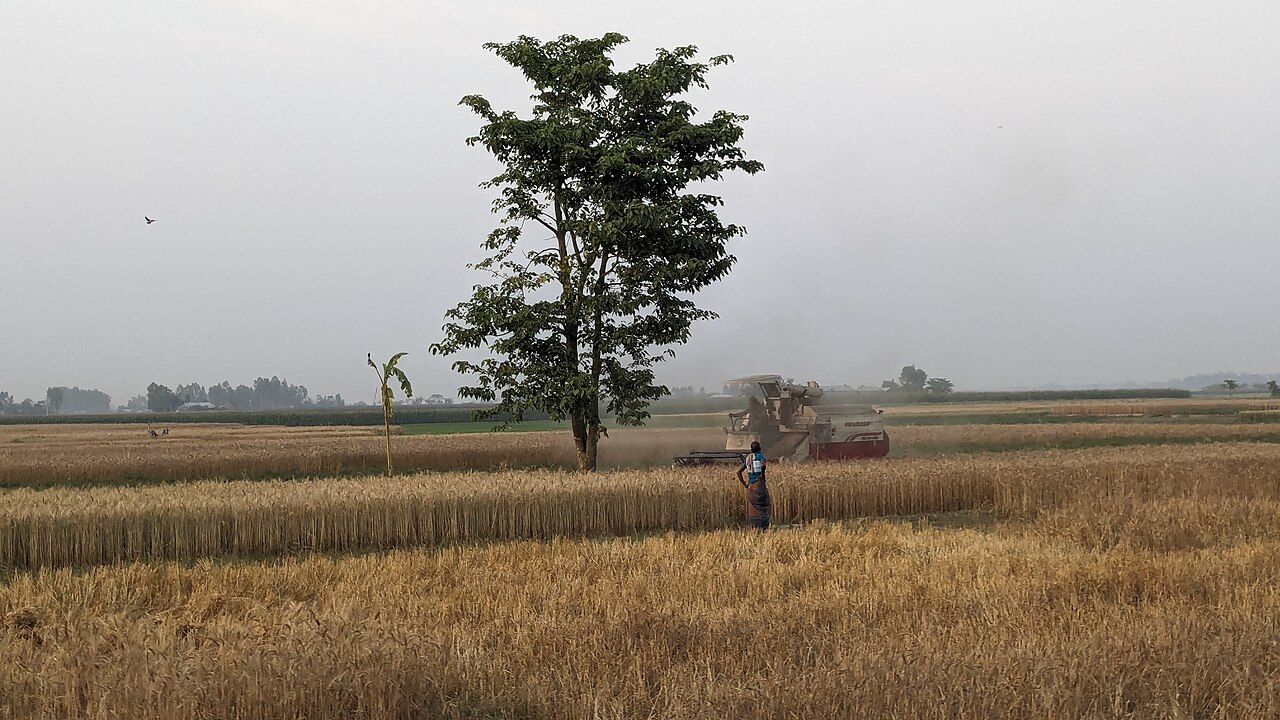
In Bangladesh 90 percent of land is now prepared with power tillers and tractors and about 80 percent of irrigation is mechanised, yet machines harvest only 10 to 15 percent of the rice, against more than 80 percent in China. Citing these Bangladesh Agricultural Research Council figures in a column in Ajker Patrika, Shykh Seraj, director and head of news at Channel i, writes that the country's farm mechanisation is at a turning point. The views are the writer's own.
He begins with the inventors in the field: Shahidul Islam, a young entrepreneur in Manikganj, devised a simple, fast and precise way to cut mulching paper, and Kenu Mistri of Netrokona once built many farm machines by local means. In the age of the fourth industrial revolution, he writes, mechanisation means transforming farming through technology, data and precision.
In the 1990s only 30 percent of land was machine-prepared. A quiet revolution has followed, he writes, but because harvesting lags, labour shortages in the boro and aman seasons expose 6 to 10 percent of crops to post-harvest loss each year, according to the Department of Agricultural Extension. Government and private firms promote combine harvesters, reapers and rice transplanters, but field reports on subsidised machines are disappointing: genuine farmers have been left out, traders have taken machines in farmers' names, and quality has been questioned. A group of farmers in Barguna told him they asked and got nothing, while the man who did get a machine was not a farmer.
From his yearly visits to China's international farm machinery fair, he reports that modern machines work some 300 million hectares there, with GPS-guided tractors, spraying drones and AI-based pest detection, and millions of machines linked by satellite for precision farming. India has about 60 percent mechanisation in land preparation and irrigation, and Nepal has not passed 40 percent.
His central recommendation is that because land is scarce and most farmers are small or medium, subsidies should go to small machines. As a hopeful sign he notes that many private companies now import or build mini combine harvesters and light rice transplanters suited to fragmented plots.
Mechanisation also raises fossil-fuel demand and can hurt rural labourers if there is no other work, so he points to experts' call for 'climate-smart farm mechanisation' that combines renewable energy, efficient irrigation pumps and AI-based advisory services. In the farming of the future, he concludes, technology will matter as much as rain in deciding the fate of a crop.
Photo: Tanvir Rahat / Wikimedia Commons (CC BY-SA 4.0)
Source: Ajker Patrika


Comments
(0)