
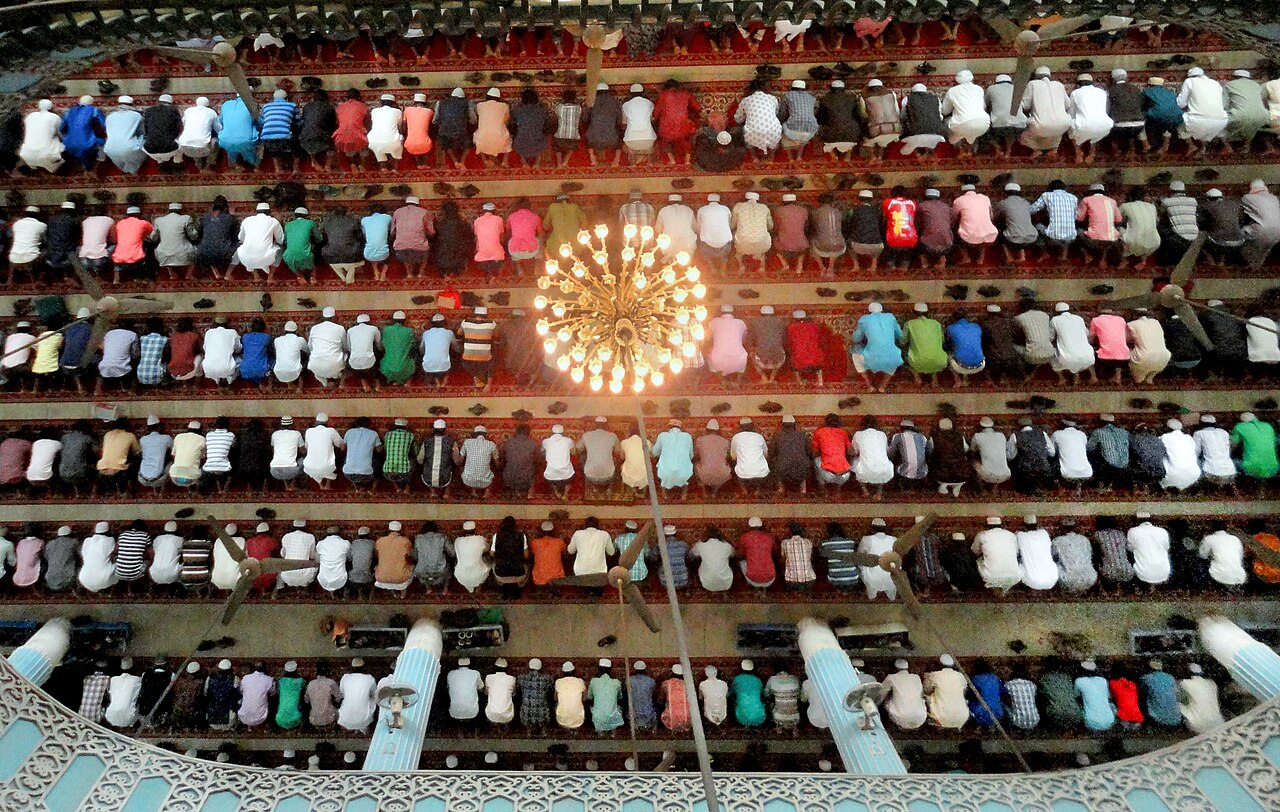
The Prophet (pbuh) was once asked what would most often lead people into Paradise. He replied: God-consciousness (taqwa) and good character. Asked what would most often lead them into Hell, he said: the mouth and the private parts (Sunan al-Tirmidhi, hadith 2004). An article in Ittefaq calls the hadith a short guide to success in the hereafter: one quality concerns the relationship with Allah, the other the relationship with people.
To show where taqwa lies, the Prophet (pbuh) pointed to his chest three times and said, taqwa is here; the same hadith says Allah does not look at faces and wealth but at hearts and deeds (Sahih Muslim, hadith 2564). So no one can judge another's taqwa by their dress. Verse 32 of Surah An-Najm forbids people to claim purity for themselves; Allah knows best who is truly God-conscious.
Because no one knows how much taqwa is in another's heart, the article says, there is no ground for thinking oneself superior on the strength of outward piety or for belittling others. The same hadith says it is evil enough for a person to look down on his Muslim brother.
Good character carries great weight too. The Prophet (pbuh) said the most complete believer in faith is the one with the best character (Sunan Abi Dawud, hadith 4682), and nothing will weigh heavier on the scales on the Day of Judgement than good character (al-Tirmidhi, hadith 2002). He told believers not to think any good deed small, even meeting a brother with a smiling face (Sahih Muslim, hadith 2626).
The first warning in the second half of the hadith concerns the tongue, because people do most harm with words: insults, backbiting, lies, mockery and slander. The Prophet (pbuh) said whoever believes in Allah and the Last Day should speak good or stay silent (Sahih al-Bukhari, hadith 6018).
The second concerns the private parts. As the article explains, physical desire is natural; guarding oneself means fulfilling it in lawful ways and restraining oneself from unlawful ones.
Written by Ittefaq Digital
Photo: Shaeekh Shuvro / Wikimedia Commons (CC BY-SA 2.0)
Source: Ittefaq

Comments
(0)