
A rickshaw bumps your motorbike at a traffic signal, or a near-empty bus idles on purpose in the heat. Moments like these bring a surge of anger, and what we say or do in it often shames us later. In a piece for Prothom Alo's religion page, Muhammad Muhsin Mashkur, a part-time teacher at Dhaka University's Institute of Modern Languages, draws on that experience to set out the Islamic teaching on restraining anger.
Citing a 2009 study by Denson and colleagues in the Journal of Cognitive Neuroscience, the writer says the brain regions linked to reasoning and self-control show unusual activity during anger, which is why decisions taken in anger so often go wrong.
Verse 134 of Surah Al Imran lists among the qualities of the God-fearing that they restrain their anger and pardon people. The phrase used, 'kazimeenal ghaiz', means holding something in, the writer explains: believers will feel anger, as all people do, but must not let it out as a reaction.
The first lesson is that the strong person is the one who controls himself when angry (Sahih Bukhari, 6114). The second is the Prophet's repeated advice to a man who asked for counsel: 'Do not get angry' (Sahih Bukhari, 6116). The third is to sit down if angry while standing, and to lie down if that does not help (Sunan Abu Dawud, 4784). The fourth is that Surah Ash-Shura, verse 37, places forgiving when angry among the qualities of the people of Paradise.
The piece also recalls an account by Anas: a Bedouin pulled the Prophet's thick cloak so hard that it left a mark on his shoulder, yet the Prophet smiled and ordered that the man be given something (Sahih Bukhari, 3149).
The writer's advice: the next time anger rises, stop, wait three seconds before speaking, and sit down or move away if you need to. Whatever is said or done in anger is a burden you carry afterwards.
Writer: Muhammad Muhsin Mashkur, Prothom Alo
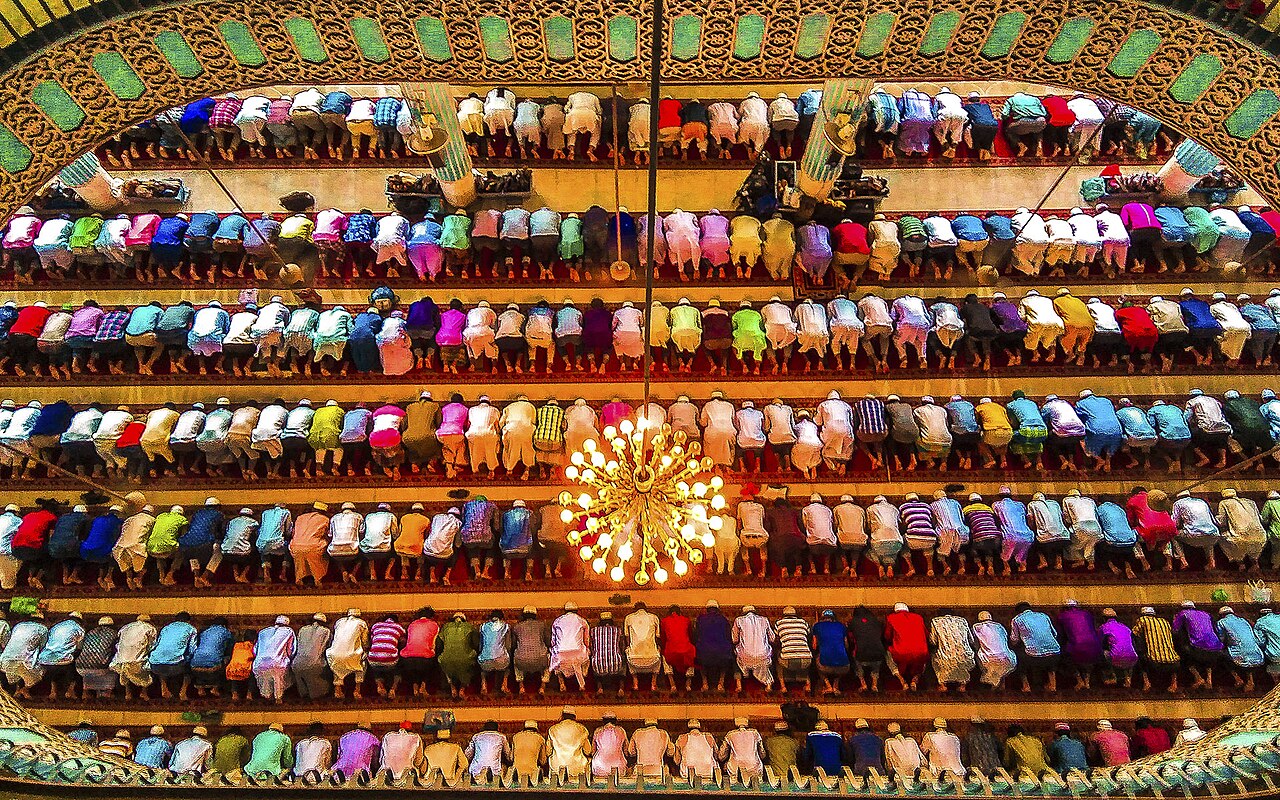
Photo: Ehsanul Siddiq Aranya / Wikimedia Commons (CC BY-SA 4.0)
Source: Prothom Alo

Comments
(0)