
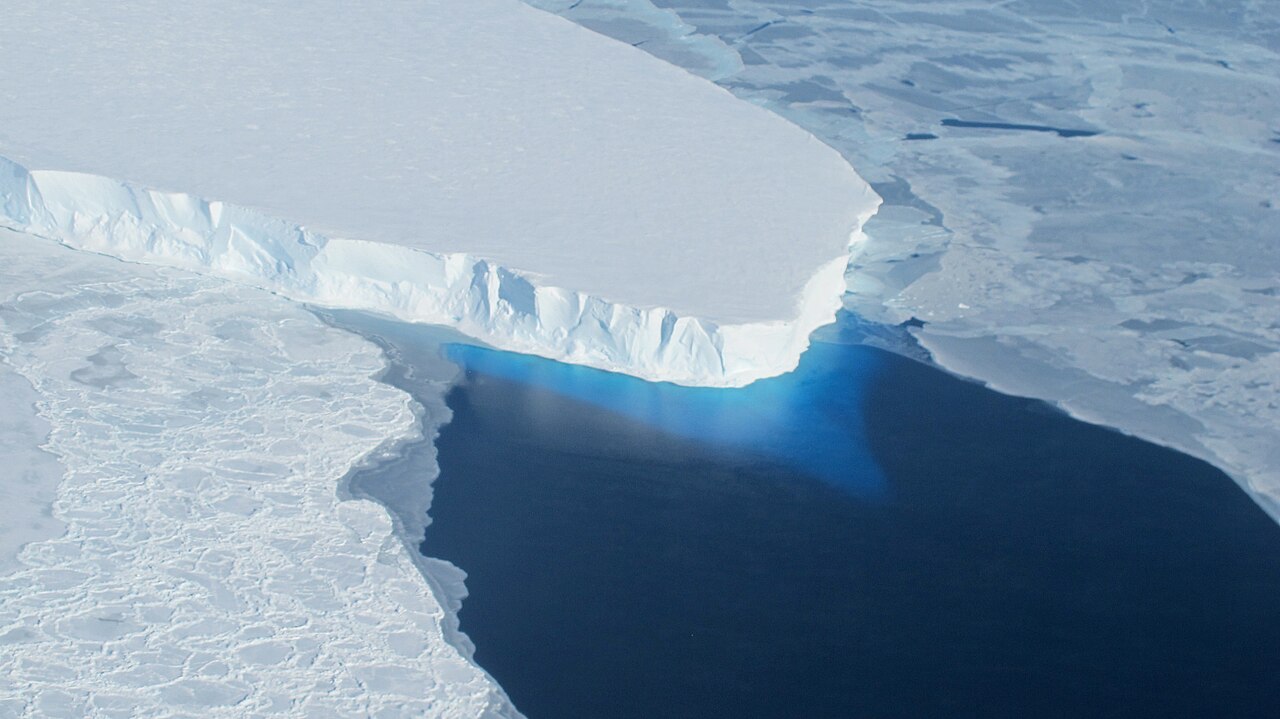
Thwaites Glacier in West Antarctica, often called the Doomsday Glacier, will keep losing ice for at least the next 150 years even under the most extreme ocean cooling imaginable, according to research led by the British Antarctic Survey (BAS), Euronews reported. Its total collapse would add an estimated 65cm to global sea level, and every centimetre of rise exposes around six million more people to coastal flooding.
The researchers switched off ocean-driven melting beneath Thwaites and its neighbour, Pine Island Glacier, in three independent computer models. Pine Island behaved as expected: it stopped melting, thickened and advanced towards its early 20th-century position. Thwaites kept losing ice even without ocean melting, though more slowly as it thinned. The study is published in Geophysical Research Letters.
"These results show that past changes in ocean-driven melting have now committed us to unavoidable future ice loss from Thwaites Glacier," said Dr Rosie Williams, a BAS glaciologist and the lead author. "This ice loss cannot be undone or prevented by simply cooling the ocean."
Co-author Professor Paul Holland said Thwaites began retreating in the 1940s, with ocean warming a major driver, and that the loss will worsen if greenhouse gas emissions are not cut. "We don't yet know if Antarctica's other major glaciers are moving into a state of committed change," he said. The study comes after the world's oceans hit a record daily temperature this summer, with sea surfaces outside the polar regions averaging 21.1C on 22 August. The report was written by Liam Gilliver.
Photo: NASA / Wikimedia Commons (Public domain)
Source: Euronews

Comments
(0)