
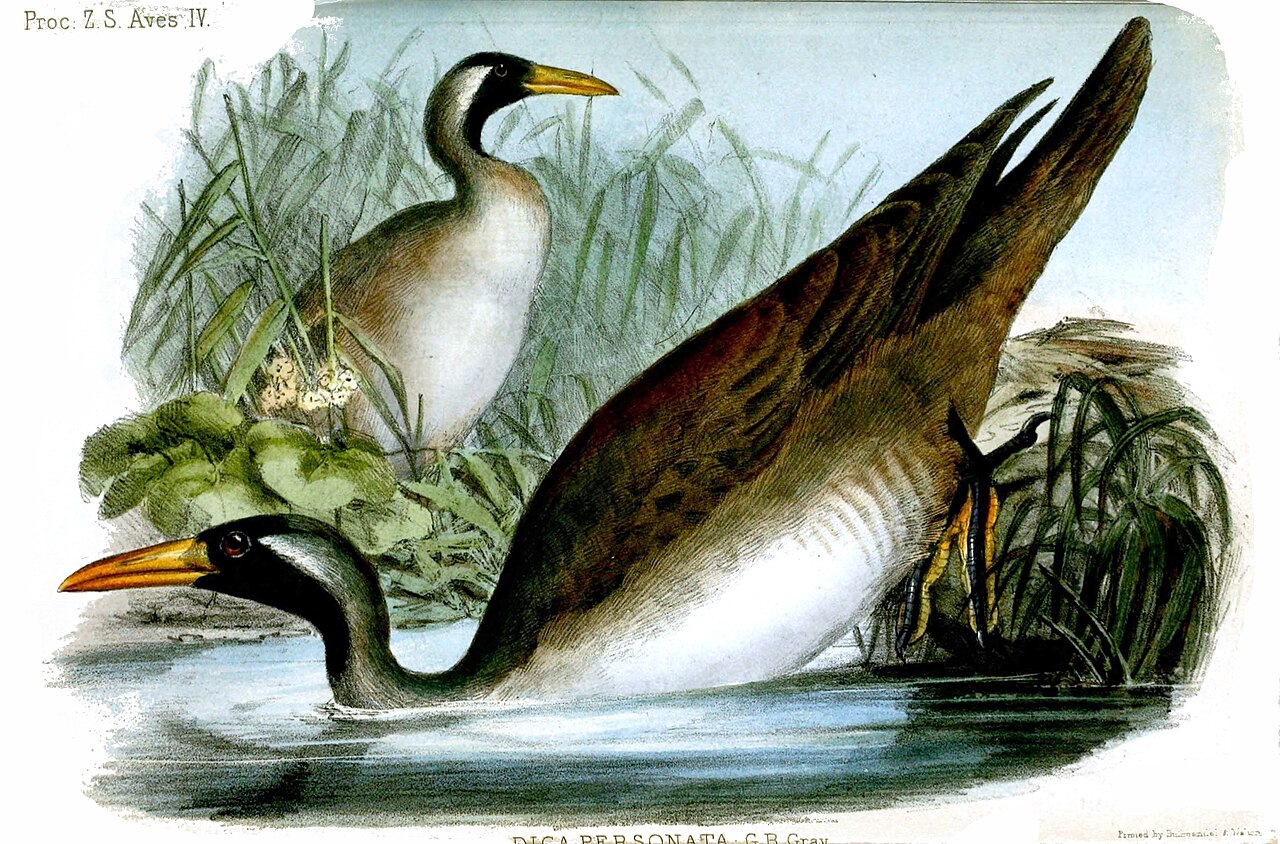
A team of birdwatchers saw a chick of the critically endangered masked finfoot on the first day of a bird survey in the Sundarbans. Writing in Samakal, a bird expert, explorer and photographer on the team said that despite several trips to the forest this year, it was the first time they had seen the bird.
According to the writer, an estimated 50 to 60 masked finfoots are left in the world, surviving only in Bangladesh's Sundarbans and Cambodia's Kulen Promtep sanctuary. If the chick survives, it could delay the species' extinction a little.
The bird once lived along many creeks of the Sundarbans, from the Mrigamari canal in the north to Katka in the south. A patient birdwatcher paddling deep into a creek could see it come down to the mud. As recently as a decade ago, several Bangladeshi researchers watched nests in this part of the forest and wrote papers on them.
Sundarbans fishers called it the duck-bird for its duck-like look; in Bengali it is the bird of the mangrove. Its English name comes from the lobed "fins" on its toes for swimming, and this species is "masked" for the black feathers on its face. Because its toes are not webbed like a duck's, it moves easily along branches when nesting. Of the world's three finfoot species, the African finfoot and South America's sungrebe number in the hundreds of thousands; only the Asian species is heading for extinction.
There is still no firm explanation for its rapid decline. The writer notes that 50 years ago the bird lived in mangroves across East, South and Southeast Asia, and suggests that the destruction of mangroves and other natural resources for development probably disrupted its breeding. Besides shrinking habitat, its food of frogs, crabs, mussels, snails and fish has become scarce. How far climate change has played a part is not yet clear.
With too little time, skill and money in the country to find the causes, the writer fears the masked finfoot may go the way of the pink-headed duck onto the list of extinct animals. Whether it vanishes this decade, he writes, now depends on the interest, commitment and conservation skills of people in Bangladesh and Cambodia.
Photo: Joseph Wolf / Wikimedia Commons (public domain)
Source: Samakal

Comments
(0)