
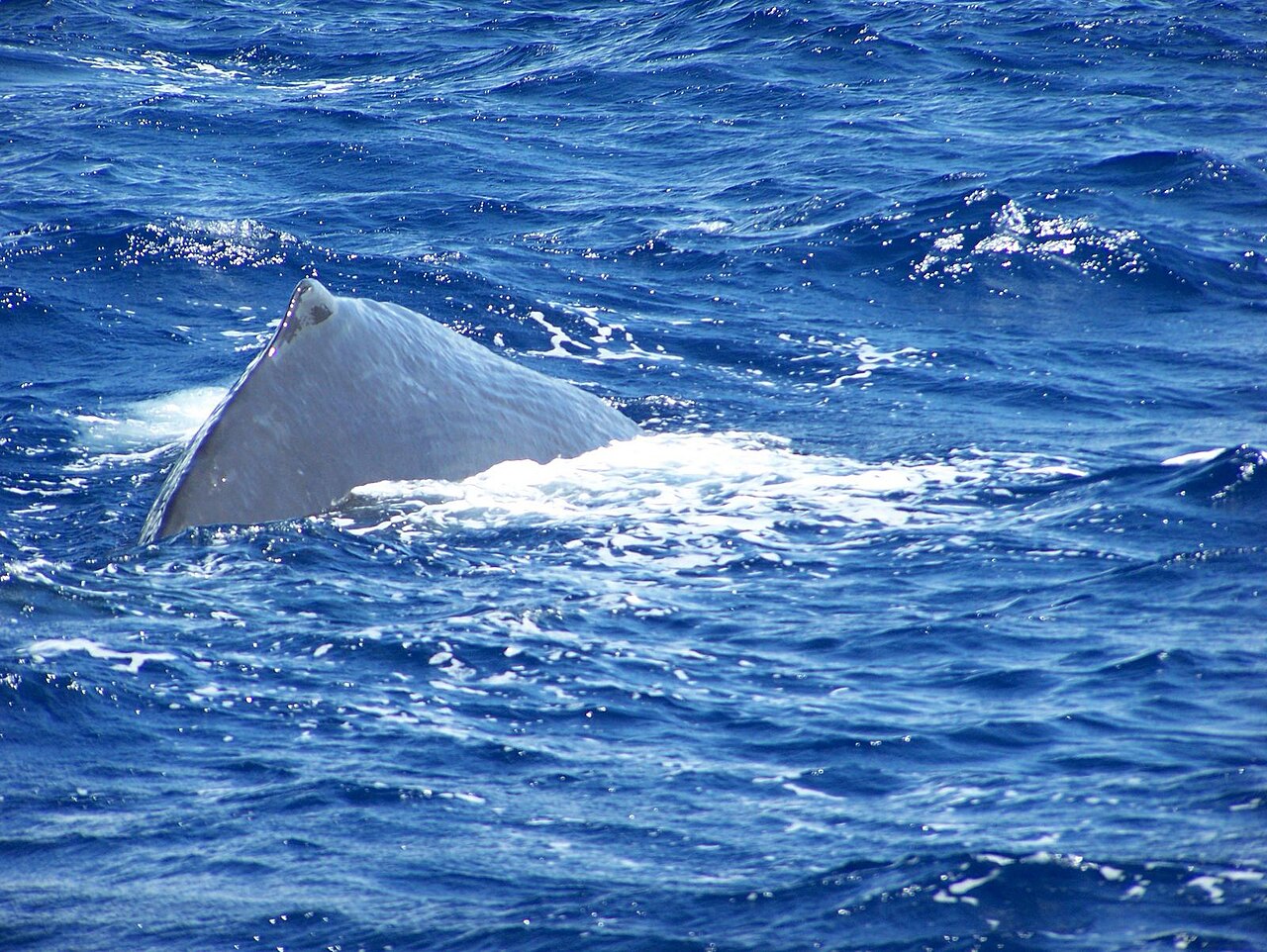
Humans search distant stars for signs of intelligent life while one form of it has lived in our own oceans for centuries, writes Asif, a science speaker and editor of Mohabritto, in a column in Ajker Patrika on recent research into whale communication and on the noise people pour into the sea.
He writes that Project CETI, analysing sperm whale sounds off Dominica, has found that their clicks, or codas, follow set patterns of rhythm, tempo and duration. Citing linguists at UC Berkeley, he says whales change their signals depending on who is listening, and calves babble, imitate and make mistakes before slowly learning the identity coda of their clan.
Drawing on analyses of nineteenth-century whaling logbooks, the column says the strike rate fell by 58 percent within two and a half years of whalers reaching a new sea; the writer reads this as surviving whales passing on warnings to others.
Today, he argues, ship propellers, high-powered military sonar and dynamite blasting have turned the ocean into a prison of noise. For animals that find their way by sound, that din means losing their way, being cut off from their groups and dying early.
As a hopeful sign he points to an agreement among Maori leaders in New Zealand and indigenous leaders of the Cook Islands recognising whales as legal persons. Recalling that Carl Sagan placed humpback whale song on the Voyager Golden Record in 1977, he asks whether humanity has become sensitive enough to hear it. The views are the writer's own.
Photo: Michelle Reback / Wikimedia Commons (CC BY-SA 3.0)
Source: Ajker Patrika




Comments
(0)