
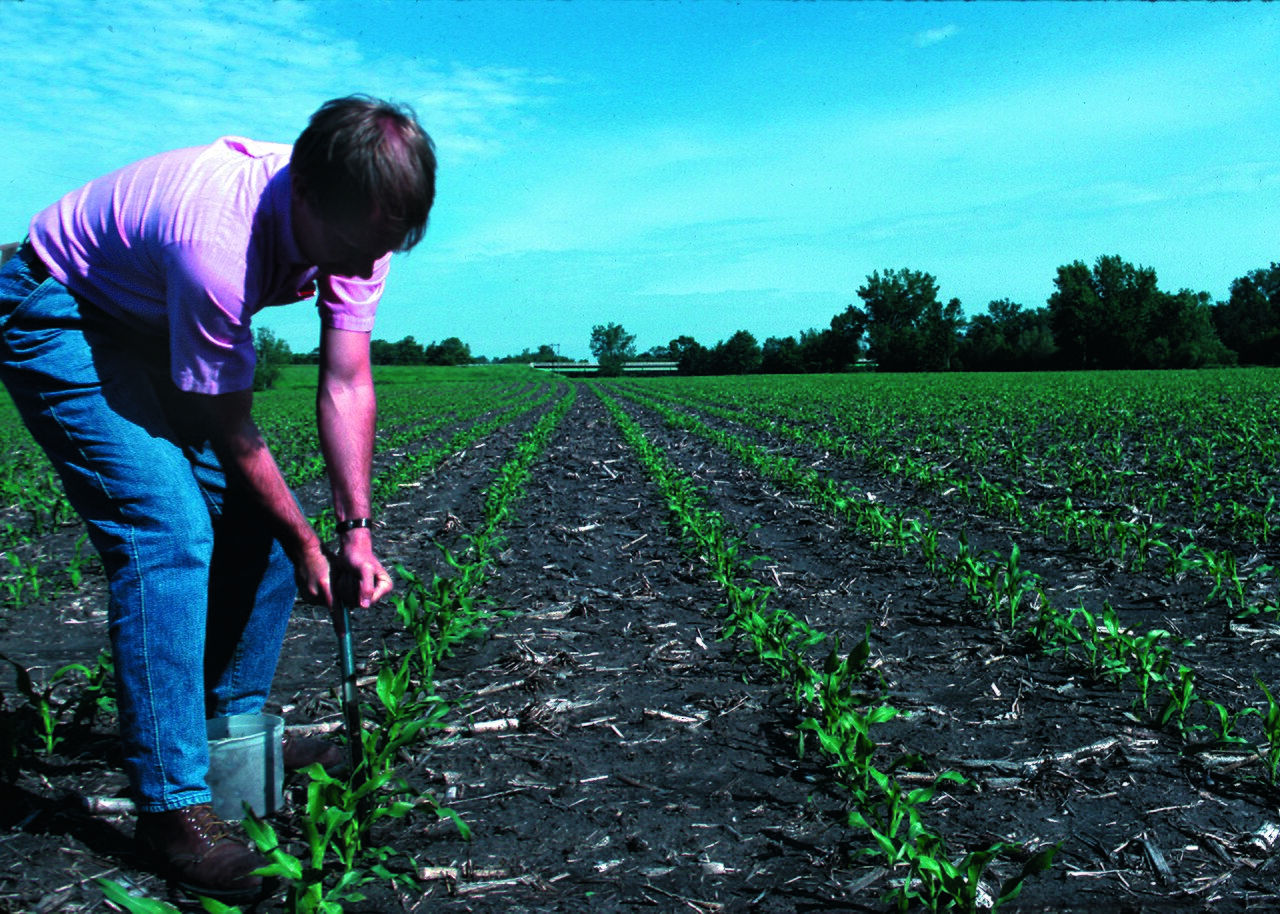
The results of a soil health test can depend as much on when and how deep the sample was taken as on the state of the field, according to research by scientists at the University of Arkansas.
The team analysed soil from ten long-term field trials covering a wide range of practices, including different tillage systems, cover crop programmes, nutrient management strategies and cropping systems. Samples were taken in spring, summer, autumn and winter, and at three depths: 0–5 centimetres, 5–10 centimetres and 10–15 centimetres.
They were scored with two widely used frameworks, the Haney Soil Health Test and Cornell University's Comprehensive Assessment of Soil Health, which measure biological, chemical and physical indicators.
Depth had a strong effect. Surface soil consistently showed more biological activity and higher soil health scores than deeper layers, and measurements generally fell as the sampling depth increased — expected, the researchers said, because crop residues, roots, soil organisms and organic matter are concentrated near the surface.
Season mattered too. Indicators were often highest in summer and winter samples, and several biological measures, including soil respiration and beta-glucosidase activity, varied significantly through the year. The Haney score was especially sensitive to the time of sampling.
The researchers also found that sampling methods affected whether differences between management systems showed up at all: cover crops, conservation tillage or a nutrient plan could look more or less effective depending on when and where the soil was collected.
Their advice is practical: sample at the same depth and in the same season every year. Without that consistency, comparing results between years or fields becomes unreliable, and so do the fertiliser, rotation and conservation decisions built on them.
Photo: Tim McCabe, USDA NRCS / Wikimedia Commons (Public domain)
Source: Farms.com


Comments
(0)