
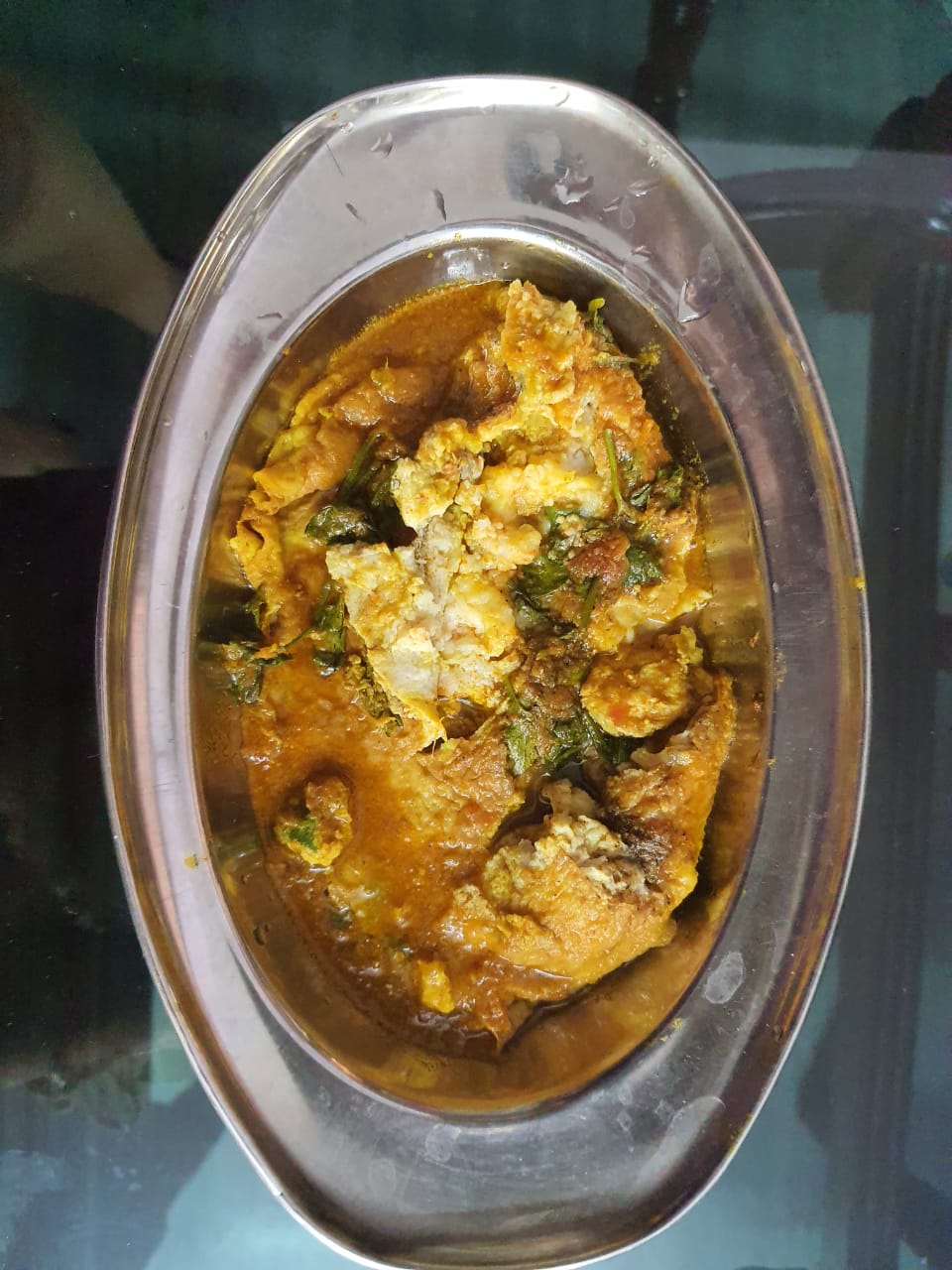
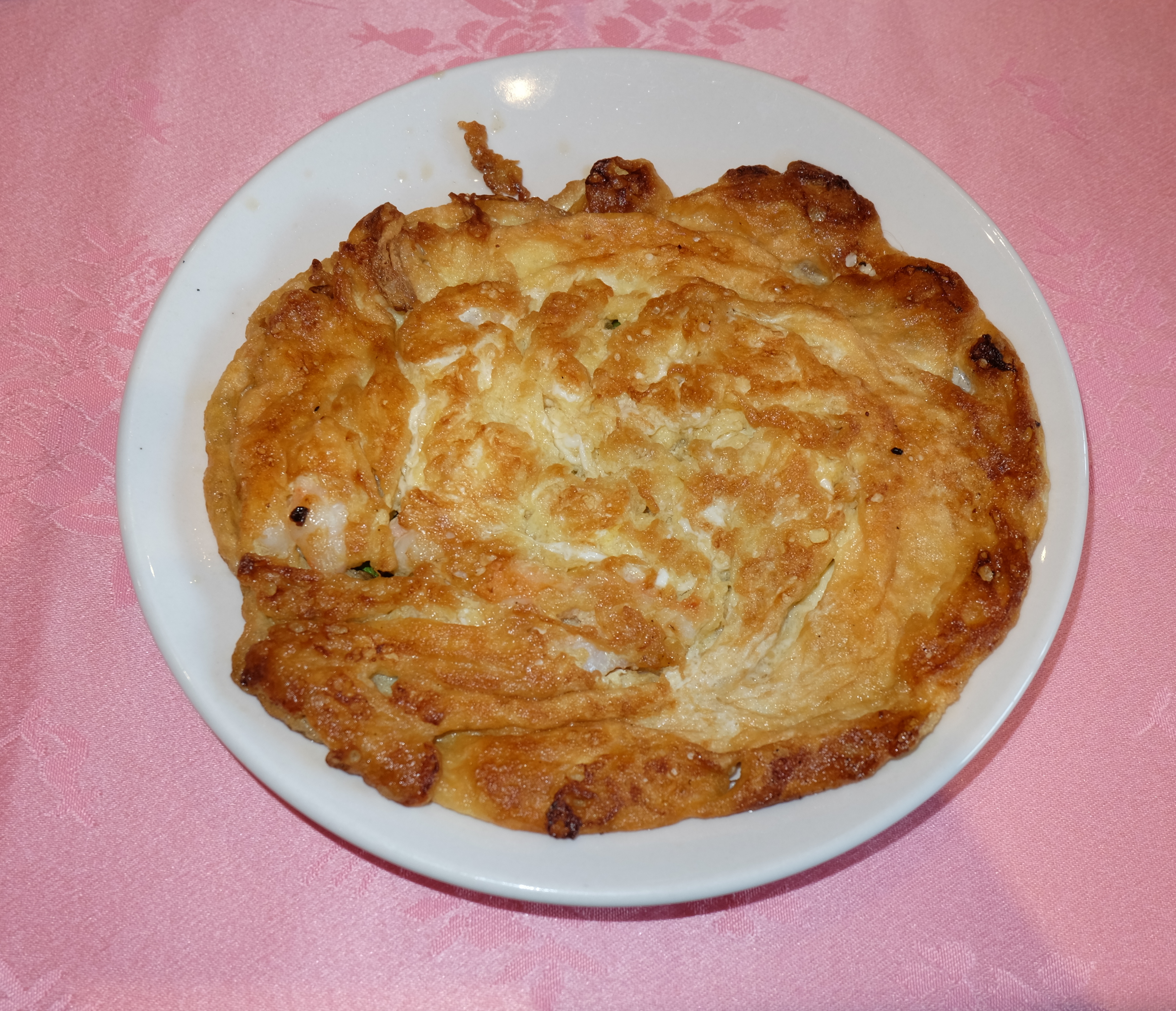
On 18 April 2026 the lifestyle desk of the Bangladeshi news site Jagonews24 published a short home recipe for chingri diye dim bhaja, eggs fried with shrimp. It is a Bengali-style omelette in which half of the shrimp is ground and beaten into the eggs, while the other half is marinated, fried on its own and scattered over the top as the omelette sets. The recipe presented the dish as a way of bringing together two foods that many people already love, fried eggs and shrimp, and noted that it needs only a few ingredients and very little time, which makes it convenient even on a busy day. It is served with hot rice.
This report sets out the recipe as the publisher gave it and places it among the egg dishes of other cuisines. It then explains the two main ingredients from the water and the farm, the shrimp of Bangladesh's rivers, floodplains and coastal farms and the eggs of its poultry sector, with the official figures that were available when the recipe appeared, describes the spices that flavour it, and gives the nutrition, allergy and food-safety points that food and health authorities state for shrimp and eggs cooked at home.
The ingredients in the recipe
Jagonews24 did not print a separate ingredient list. The ingredients below are those named in its method. The publisher gave amounts only for the frying oil and the two spice powders; it did not say how many eggs or how much shrimp to use, which size or kind of shrimp to buy, or how many people the dish serves, so those choices are left to the cook.
- Shrimp, washed and drained, divided into two equal parts
- A little salt and turmeric, to marinate one half of the shrimp
- Oil: 1 tablespoon for frying the shrimp, and a little more for cooking the egg
- Chopped onion
- Chilli powder: half a teaspoon
- Turmeric powder: half a teaspoon
- Eggs
- Chopped coriander leaves, if you like
- Hot rice, to serve
How the dish is made
The method has four stages: preparing the shrimp in two different ways, frying one half, mixing the other half into the eggs, and cooking the omelette slowly with the fried shrimp on top. In the publisher's steps:
- Wash the shrimp well and drain off the water. Set half of them aside and grind them on a stone or in a blender into a paste.
- Mix the other half with a little salt and turmeric and leave them to marinate for 10 minutes. According to the recipe, this reduces the raw smell of the shrimp and improves the taste.
- Heat 1 tablespoon of oil in a pan. When the oil is hot, fry the marinated shrimp for 2 to 3 minutes, until they are lightly crisp. Do not fry them for long, or they may turn tough. Lift them out into a bowl.
- In a large bowl, combine the shrimp paste, the chopped onion, and half a teaspoon each of chilli powder and turmeric powder. Break in the eggs and beat well, so that all the ingredients are evenly mixed.
- Put a little oil in the pan, pour in the egg mixture and cook it slowly over a medium flame.
- When the egg has begun to set, scatter the fried shrimp over it, with chopped coriander leaves if you like, which the recipe says add taste and aroma. When the egg is fully cooked, take the pan off the heat and serve the omelette with hot rice.
The two treatments of the shrimp give the dish its character. The ground half disappears into the egg and flavours the whole omelette, while the fried half stays whole on top. The recipe's own warning is that shrimp fried too long may become hard, which is why it keeps the first frying to two or three minutes. Its last instruction, to take the omelette off the heat only when the egg is fully cooked, matches the advice of the US Food and Drug Administration (FDA), described further below, that eggs should be cooked until both the yolk and the white are firm.
A Bengali omelette in a wider family
An omelette, as the English-language encyclopedia Wikipedia defines it, is a dish made from eggs, usually chicken eggs, fried with butter or oil in a frying pan, commonly with fillings such as vegetables, meat, cheese or onions; the eggs are often beaten with a small amount of milk, cream or water. The dish is believed to have originated in ancient Persia. The French word omelette came into use in the mid-16th century, while earlier forms, alumelle and alumete, appear in the Ménagier de Paris of 1393, and the modern omelette appears in Cuisine bourgeoise of 1784.
In South Asia the omelette is an everyday food. Wikipedia notes that in India eggs are beaten with onions and poured directly on a hot pan with salt and pepper, and that such omelettes are eaten frequently in many households. In Parsi cuisine, pora is an omelette made from eggs, onion, tomato, green chillies and coriander leaves, usually served for breakfast with tea and bread. The Jagonews24 recipe shares the onion and the coriander leaves of these versions, uses chilli and turmeric in powdered form, and adds shrimp in two ways.
Shrimp and egg is also a familiar pairing in other cuisines. In the Philippines omelettes are called torta, and tortang hipon means shrimp omelette; tortang alamang, or tortang hipon, is made with krill or small shrimp. Egg foo young, an omelette dish of Chinese cuisine that originated in the southern coastal province of Guangdong, is prepared with beaten eggs and vegetables such as bean sprouts, bamboo shoots, cabbage, spring onions and mushrooms; when meat is added, the choice offered may be roast pork, shrimp, chicken, beef or lobster. In Chinese Indonesian cuisine the related fu yung hai mixes vegetables with crab meat, shrimp or minced chicken, and in Thailand the traditional omelette, khai jiao, is fried with a little fish sauce and served over steamed rice, much as the Bengali dish is eaten with hot rice.
Which chingri: the shrimp of Bangladesh
Chingri is the Bengali word for prawns and shrimps. According to Banglapedia, the national encyclopedia of Bangladesh, they are crustaceans related to crabs and lobsters, of the order Decapoda, found in all types of water bodies, and they range in size from 2.5 to 30 centimetres. A total of 56 species have been reported in Bangladesh, of which 37 live in salt water, 12 in brackish water and 7 in fresh water. They belong to six families, and the freshwater species are included in the family Palaemonidae.
The Department of Fisheries (DoF) sorts the catch into two groups in its statistics. Its Yearbook of Fisheries Statistics of Bangladesh 2023-24 counts galda, bagda, harina and chaka as big shrimp and prawns, and lists all other small chingri as small shrimp and prawns. In the 2023-24 fiscal year the country produced 260,486 tonnes of shrimp and prawns in total: 67,716 tonnes of galda, 77,624 tonnes of bagda, 12,482 tonnes of harina, 5,422 tonnes of chaka and 97,242 tonnes of other shrimp and prawns. Most of the last group came from open waters, including 46,108 tonnes from floodplains, 14,991 tonnes from rivers and 4,555 tonnes from beels, with another 20,158 tonnes from the sea. The Jagonews24 recipe does not say which kind to use.
Banglapedia gives the habitat and breeding season of the main species. The galda, Macrobrachium rosenbergii, the giant freshwater prawn, lives in rivers, tributaries, canals and river mouths and breeds from January to July; it is the largest in the encyclopedia's table, with an average size of 34 centimetres for males and 26.7 centimetres for females. The bagda, Penaeus monodon, the giant tiger shrimp, lives in the Bay of Bengal and its estuaries and breeds from November to March. The harina, Metapenaeus monoceros, is found in the Bay of Bengal, the Sundarbans and river mouths and breeds throughout the year, with peaks in July and August and in November and December. The DoF yearbook names the chaka as Fenneropenaeus indicus; Banglapedia lists the same species, as Penaeus indicus, in the Bay of Bengal and estuaries, breeding in October and November and again in May and June.
Shrimp in Bangladesh's fisheries and exports
Shrimp is one part of a large fisheries sector. The DoF yearbook for 2023-24 puts the country's total fish production in that year at 50.18 lakh tonnes, of which aquaculture accounted for 59.34 percent. It says fish supplies about 60 percent of the animal protein that Bangladeshis eat, with a per capita supply of 67.80 grams a day against a target of 60 grams, that the fisheries sector made up 22.26 percent of the agriculture sector in 2023-24, according to the Bangladesh Bureau of Statistics (BBS), and that around 12 percent of the population depends directly or indirectly on fisheries for a living.
The same yearbook describes shrimp as one of Bangladesh's major export items. Total shrimp and prawn production, including capture, was 2.60 lakh tonnes in 2023-24, down 3.99 percent on the 271,302 tonnes of the year before. Farms produced 147,824 tonnes, up 2.41 percent; other inland sources 86,393 tonnes; and the sea 26,269 tonnes, against 46,763 tonnes a year earlier. Shrimp and prawn farms covered 262,217 hectares and yielded 564 kilograms of shrimp per hectare, and the same farms also produced 167,563 tonnes of fish such as rui, catla and tilapia, because many farms raise fish alongside shrimp.
Banglapedia describes how the farms grew. Tiger shrimp, the bagda, is cultivated in ghers and ponds on coastal and tidal land in Satkhira, Khulna, Bagerhat and Cox's Bazar, including Chakaria and Teknaf, while the galda is farmed in ponds and paddy fields mainly in Bagerhat, Khulna, Jessore, Patuakhali, Barisal and other districts. Both are raised in monoculture, in polyculture with fish such as mullets, carps and tilapia, and in rotation or together with paddy; in Bangladesh, the encyclopedia says, extensive and improved extensive systems are the ones practised successfully.

Export figures in the yearbook, drawn from the Export Promotion Bureau (EPB) and the DoF's Fish Inspection and Quality Control wing, show how shrimp's place in trade had changed. In 2023-24 Bangladesh exported 77,407.94 tonnes of fish and fishery products worth Tk 4,531.86 crore, 0.91 percent of national export earnings. Frozen shrimp and prawns made up 19,131.35 tonnes worth Tk 2,117.67 crore: 13,049.94 tonnes of bagda worth Tk 1,397.36 crore, 4,042.50 tonnes of galda worth Tk 555.16 crore and 2,038.91 tonnes of other kinds worth Tk 165.15 crore. Twenty years earlier, in 2003-04, the country had exported 42,943 tonnes of frozen shrimp and prawns worth Tk 2,152.8 crore.
Bangladesh's bagda also carries a geographical indication. The newspaper Ittefaq reported on 18 May 2022 that the Department of Patents, Designs and Trademarks had recognised bagda shrimp as a Bangladeshi geographical indication (GI) product, after the DoF applied in May 2019, and that the registration certificate was formally handed over on 24 April 2022; the recognition means that no other country can present bagda shrimp as its own product. The DoF yearbook records the registration under the name Bangladesh Tiger Shrimp. In a report of 18 November 2025, the news agency UNB said that, according to an analysis of EPB data, the country earned 529 million dollars from shrimp exports in the 2015-16 fiscal year, that exports then dropped sharply, and that although they rose by 19 percent in 2024-25 they stayed far below past levels. Professor Asif Wares Newaz of Sher-e-Bangla Agricultural University told UNB that antibiotic use against international standards, white spot disease in bagda shrimp and jelly-pushing had hurt the exports.
Eggs: the other half of the dish
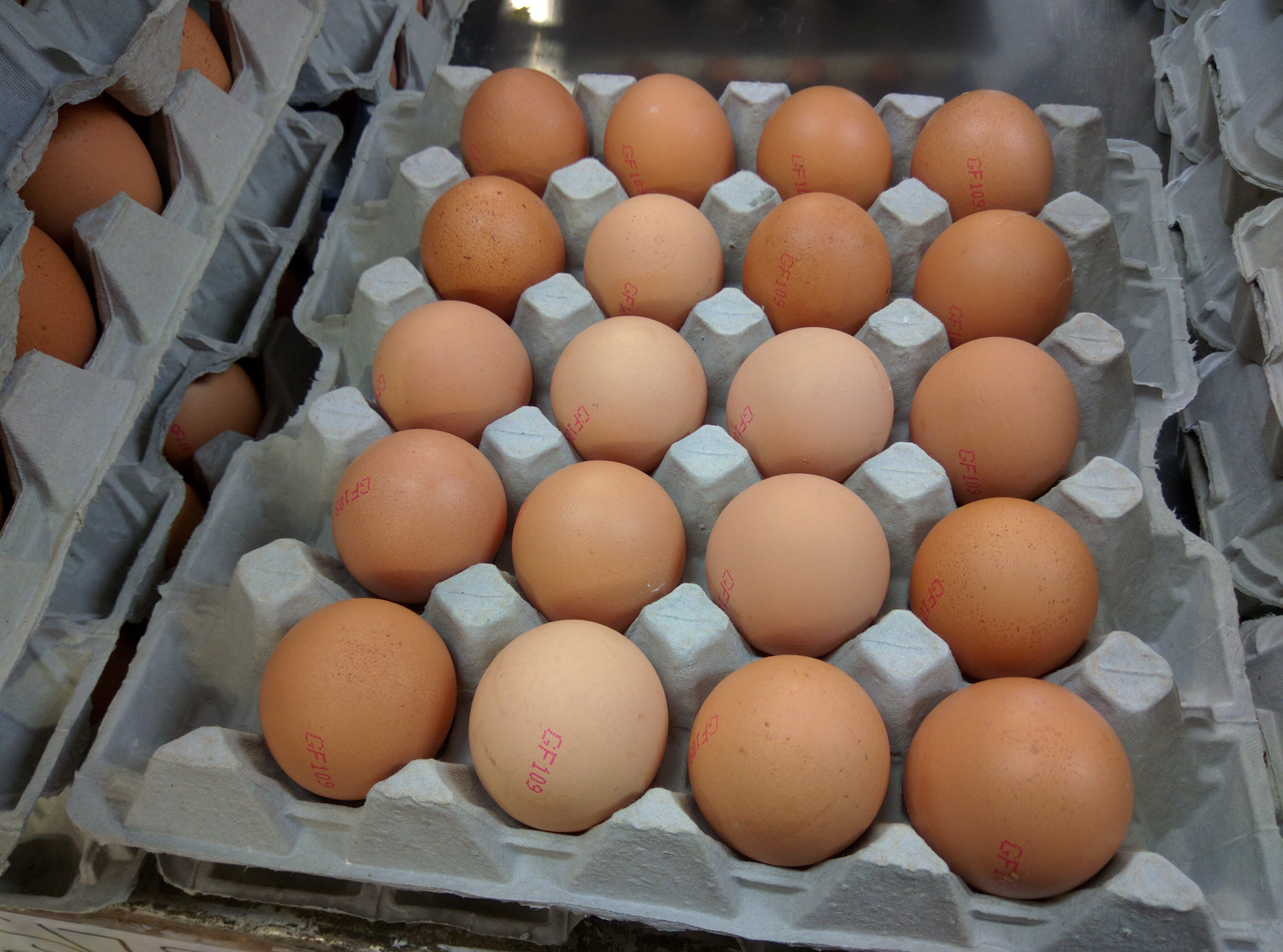
The eggs in the omelette come from the country's poultry sector. The Department of Livestock Services (DLS) publishes a summary, Livestock Economy at a Glance, based on BBS data. Its 2024-25 edition, with provisional figures for that year, puts egg production at 2,440.65 crore eggs in 2024-25, against 2,374.97 crore in 2023-24 and 1,191.24 crore in 2015-16.
The same summary sets the national demand for eggs in 2024-25 at 1,850.16 crore, based on 104 eggs per person a year, and the availability at 137.19 eggs per person a year. It counts 3,360.70 lakh chickens and 705.82 lakh ducks in the country in 2024-25. Livestock as a whole contributed 1.81 percent of gross domestic product at constant prices and 16.54 percent of agricultural GDP, and the DLS summary puts the sector's share of employment at 20 percent directly and 50 percent partly.
Turmeric, chilli, onion and coriander
The spices in the recipe are crops in their own right. Turmeric, Curcuma longa, is a flowering plant of the ginger family, Zingiberaceae, native to the Indian subcontinent and Southeast Asia. Its rhizomes are often boiled in water and dried, then ground into the deep orange-yellow powder used to colour and flavour curries; the bright yellow chemical it produces is curcumin. In this recipe turmeric appears twice: a little goes into the marinade for the shrimp, and half a teaspoon of the powder goes into the egg mixture.
Ground turmeric was at the centre of a food-safety problem in Bangladesh in the years before this recipe appeared. A study published in the journal Environmental Research in 2023 by J. E. Forsyth and colleagues stated that turmeric adulterated with lead chromate pigment had been identified as a primary source of lead exposure in the country. Between 2017 and 2021 an intervention publicised the scientific findings through the news media, educated consumers and traders through public notices and meetings, and worked with the Bangladesh Food Safety Authority to use a rapid lead detection technology to enforce the ban on adulterating turmeric. The share of market turmeric samples with detectable lead fell from 47 percent in 2019 to 0 percent in 2021, and the share of polishing mills with direct evidence of lead chromate adulteration fell from 30 percent in 2017 to 0 percent in 2021.
Chilli, Capsicum frutescens, of the family Solanaceae, is native to Mexico. Banglapedia gives its area in Bangladesh as about 66,235 hectares and its annual production as about 52,215 tonnes, and notes that both green and dry chillies are used as spices for curries and that dry chilli is an ingredient of curry powder. The onion, Allium cepa, probably originated in western Asia; Banglapedia puts its area at about 86,429 hectares and its production at about 589,410 tonnes, names Faridpur as the largest producing district, and says the bulb is used as a fresh vegetable, a spice and an ingredient of curries. Coriander, Coriandrum sativum, is a native of the Mediterranean region grown extensively in Bangladesh as a winter crop, sown in October and November and maturing in 90 to 105 days; its young plants are used in chutneys, sauces, curries and soups, and in this recipe the chopped leaves go on top of the omelette.
What the dish contains, and the allergy warning
The United States Department of Agriculture's FoodData Central database, in its SR Legacy data published in April 2019, gives values for both main ingredients. Per 100 grams, cooked shrimp contains 99 kilocalories, 23.98 grams of protein, 0.28 grams of fat, 189 milligrams of cholesterol, 111 milligrams of sodium, 70 milligrams of calcium and 1.64 milligrams of zinc. Per 100 grams, a whole raw chicken egg contains 143 kilocalories, 12.56 grams of protein, 9.51 grams of fat, 372 milligrams of cholesterol, 142 milligrams of sodium, 1.75 milligrams of iron, 30.7 micrograms of selenium, 293.8 milligrams of choline and 2 micrograms of vitamin D.
These figures are for the ingredients alone; the oil used for frying adds its own fat and energy, and the amounts in a serving depend on how much shrimp and how many eggs the cook uses, which the recipe does not state. Anyone following a special diet, or advised by a doctor to limit cholesterol, fat or salt, should ask a doctor or a registered dietitian how such a dish fits into their meals.
The dish also combines two common food allergens. The FDA lists nine major food allergens: milk, eggs, fish, crustacean shellfish, tree nuts, peanuts, wheat, soybeans and sesame. Shrimp is a crustacean shellfish, so this omelette contains two of the nine. According to the FDA, symptoms usually appear within a few minutes to a few hours of eating the food and can include hives, flushed skin or rash, a tingling or itchy feeling in the mouth, swelling of the face, tongue or lips, vomiting or diarrhoea, abdominal cramps, coughing or wheezing, dizziness, swelling of the throat, difficulty breathing and loss of consciousness. A severe, life-threatening allergic reaction is called anaphylaxis. The FDA advises anyone with a known food allergy who notices such symptoms to stop eating the food at once and seek medical attention.
Handling shrimp and eggs safely
Both ingredients spoil and can carry germs, so food-safety agencies give specific advice. On shrimp, the FDA's guidance on selecting and serving seafood safely says to buy fish only when it is refrigerated or displayed on a thick bed of fresh ice, and that shrimp flesh should be clear with a pearl-like colour and little or no odour. Seafood to be used within two days of purchase should be kept in a clean refrigerator at 40 degrees Fahrenheit or below; otherwise it should be wrapped tightly and frozen. Frozen seafood is best thawed gradually in the refrigerator overnight, or, if needed quickly, sealed in a plastic bag and put in cold water.
On cooking, the FDA says most seafood should reach an internal temperature of 145 degrees Fahrenheit, and that shrimp is done when its flesh becomes firm, pearly and opaque. It warns that spoiled seafood can smell sour, rancid, fishy or of ammonia, that these odours grow stronger after cooking, and that seafood with such a smell should not be eaten. Hands should be washed for at least 20 seconds with soap and warm water after handling raw food, and cutting boards, dishes, utensils and counters should be washed with soap and hot water between preparing raw seafood and cooked food. For this recipe, that means washing the grinding stone or blender used for the raw shrimp paste before it touches anything already cooked.
On eggs, the FDA explains that even clean eggs with uncracked shells may contain Salmonella bacteria, which can cause food poisoning; most people infected develop diarrhoea, fever, abdominal cramps and vomiting 12 to 72 hours later, and children, older adults, pregnant women and people with weakened immune systems are at greater risk of severe illness. Its advice is to keep eggs refrigerated, to cook eggs until both the yolk and the white are firm, and to cook dishes containing eggs to 160 degrees Fahrenheit. Leftover cooked egg dishes should be refrigerated and used within three to four days, and cooked eggs or egg dishes, like seafood, should not be left out of the refrigerator for more than two hours, or more than one hour when the temperature is above 90 degrees Fahrenheit.
The World Health Organization sums up the same principles for every kitchen in its Five Keys to Safer Food: keep clean; separate raw and cooked food; cook thoroughly; keep food at safe temperatures; and use safe water and raw materials. Anyone who thinks they or a family member has food poisoning should contact a doctor immediately, the FDA advises.
Photo: Torshac12 / Wikimedia Commons (CC BY-SA 4.0)
Sources: Jagonews24, Department of Fisheries (Yearbook of Fisheries Statistics of Bangladesh 2023-24), Department of Livestock Services (Livestock Economy at a Glance 2024-25), Banglapedia (Prawn, Chilli, Onion, Coriander), Ittefaq, UNB, Environmental Research (Forsyth et al., 2023), USDA FoodData Central, US Food and Drug Administration, World Health Organization, Wikipedia (Omelette, Egg foo young, Turmeric)


Comments
(0)