
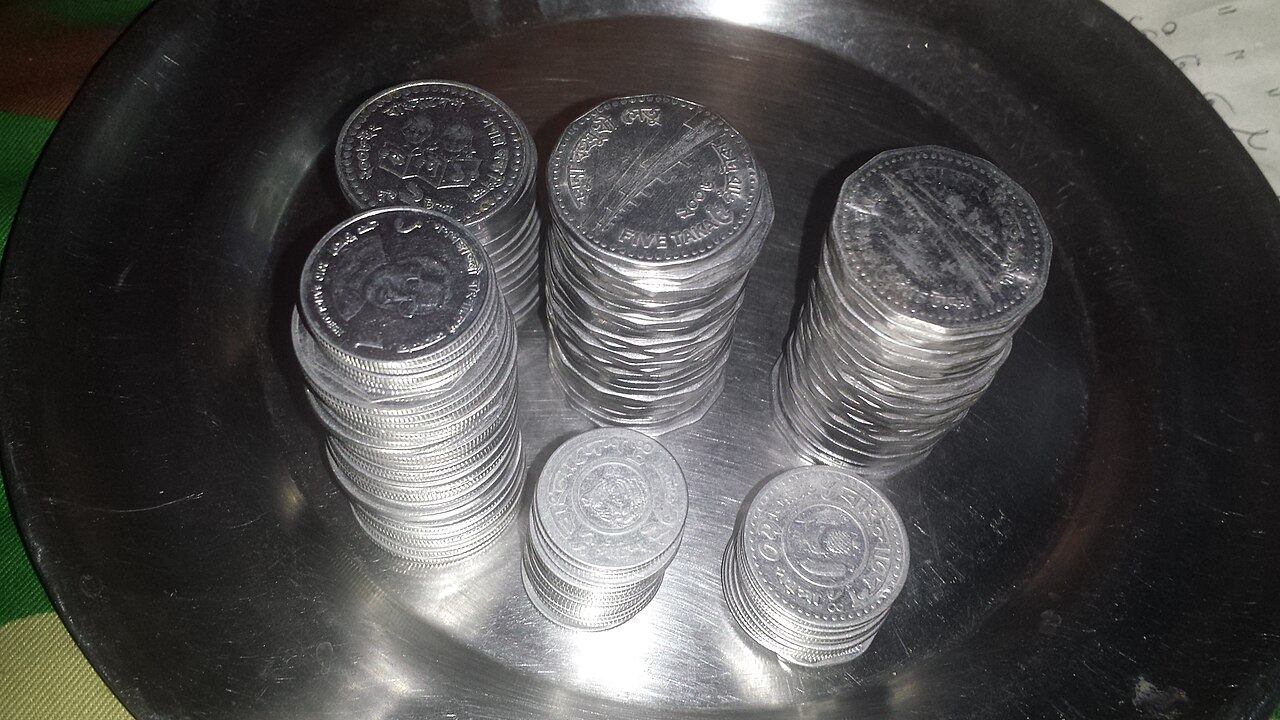
With inflation stretching household budgets, banker and economics writer Shoeb Shamyo Siddique recalls an old lesson from his mother's clay money box. In a column in Ajker Patrika, he writes that she dropped whatever little was left over from each day's housekeeping money into the box and broke it every three months to buy something the household needed, without ever borrowing. The column was prompted by World Thrift Day on 31 October, first declared at the international savings bank congress in Milan, Italy, in 1924.
By his figures, what cost Tk 100 last September cost Tk 108.34 this September: inflation of 8.34 percent, while the national average wage rose 7.90 percent in the same month. For four and a half years wage growth has failed to keep up with prices. In a city like Rajshahi, a household that spent Tk 30,000 a month now needs about Tk 32,500 for the same goods, an extra burden of nearly Tk 30,000 a year.
He links the pressure to conflict in West Asia, which has pushed crude oil to $117 a barrel, and to the Tk 20 a litre rise in four fuel prices in Bangladesh on 20 September, whose higher transport costs end up in the price of rice, lentils and vegetables. On savings, he notes that net sales of national savings certificates were negative at Tk 2,690 crore in July-March of last fiscal year, but rose to Tk 2,059 crore in July, the first month of the new year. In his view fear of uncertainty, more than interest rates, is driving this.
He is careful to say that thrift is not the same as cutting spending out of want: a day labourer, rickshaw puller or small shopkeeper first needs a fair income, work and affordable education and health care. For those who can, his advice is to set aside savings as soon as income arrives, keep an emergency fund worth three to six months of expenses, avoid unnecessary debt, not put all money in one place, stop and think before any offer of unusually high returns, and save for children's education and family health care rather than overspending on weddings or festivals.
He also sees a role for the state. The government has cut its borrowing target from savings certificates this year to Tk 8,500 crore; alongside that he wants safe options for ordinary people, such as simple bank accounts in villages, savings through mobile banking, savings schemes for children and financial literacy in schools, and the same discipline in the cost of public projects.
His closing question for readers is how much they have put aside for the future this month; however small the answer, he writes, that is where a household's courage begins. The views are the writer's own.
Photo: Shakibul Alam Risvy / Wikimedia Commons (CC BY-SA 4.0)
Source: Ajker Patrika


Comments
(0)