
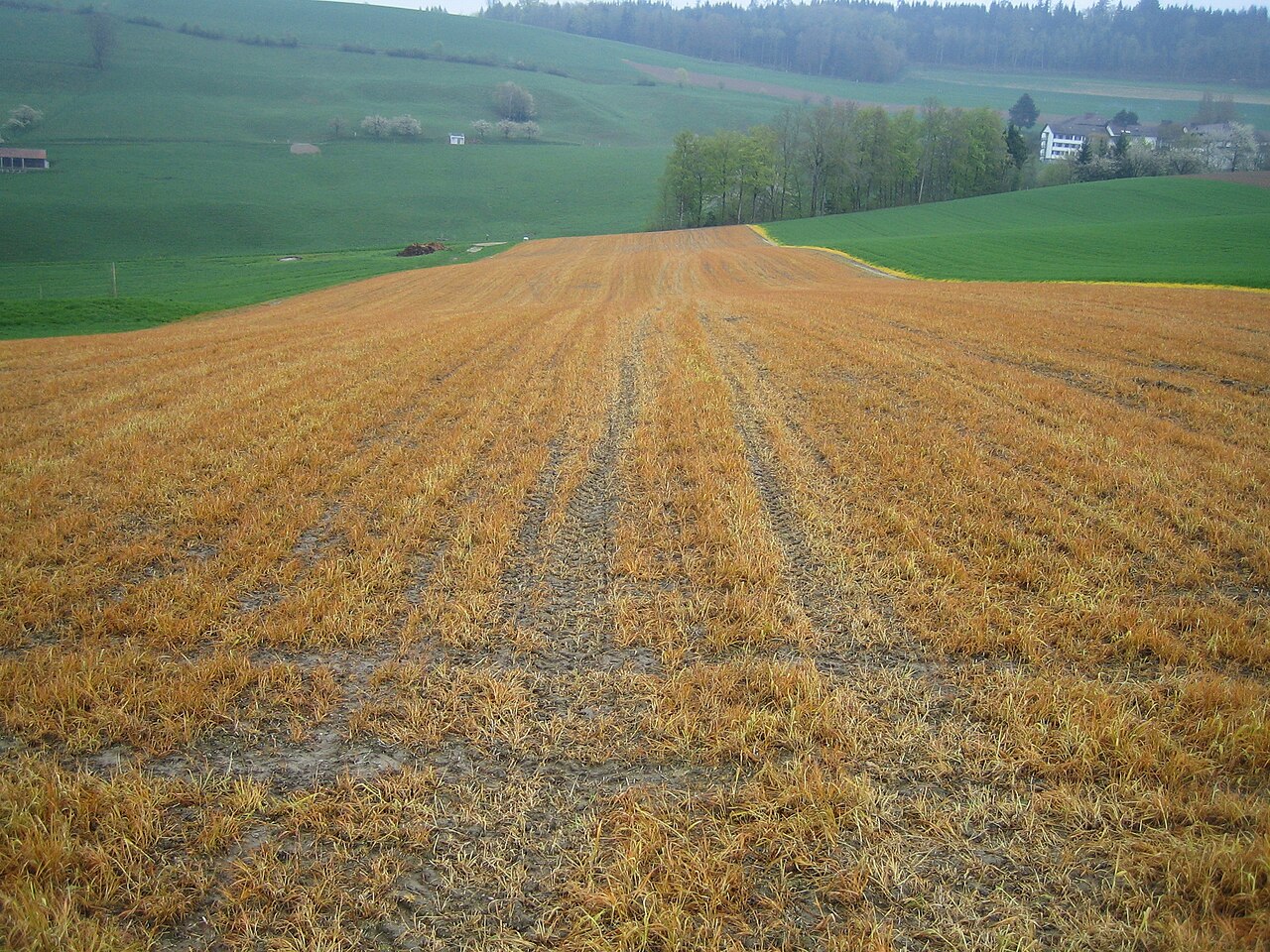
Conservation agriculture is not a single climate solution: some of its practices consistently cut greenhouse gas emissions while others can increase them, depending on conditions and management, according to a review by Rothamsted Research reported by Agriland.
The researchers analysed 422 studies from around the world on how the main principles of conservation agriculture, reduced or zero tillage, mulching, crop rotation and appropriate fertiliser use, affect emissions of carbon dioxide, nitrous oxide and methane.
Reduced and zero tillage showed the most consistent potential. The review found strong evidence that reduced tillage lowers carbon dioxide emissions, that it can also cut nitrous oxide, and some evidence that it increases the soil's uptake of methane, because less disturbance protects soil structure and slows the release of stored carbon.
Mulching, including crop-residue retention and cover crops, brings well-established benefits for soil protection, water retention and soil health, but in some systems it increased emissions, as decomposing material stimulates microbial activity that produces all three gases. Fertiliser strategies, from organic amendments to slow-release products and nitrogen-use-efficiency approaches, gave highly variable results, and nitrogen application rate remained a key driver of nitrous oxide. "This shows that environmental factors like rainfall and soil type create complex challenges for reducing emissions in temperate and tropical farming systems," said lead author Dr Grace Kangara.
Rotations that included legumes tended to be linked with lower carbon dioxide emissions than continuous cereals, while cereal-after-cereal systems were more often linked with higher emissions. The review found large gaps in the evidence, particularly in Africa, where few long-term studies have measured emissions under conservation agriculture, and called for more long-term field trials and standardised reporting. The authors argue each practice should be judged separately and in combination, in its local conditions. The report was written by Richard Halleron.
Photo: Volker Prasuhn / Wikimedia Commons (CC BY-SA 3.0)
Source: Agriland
Comments
(0)