
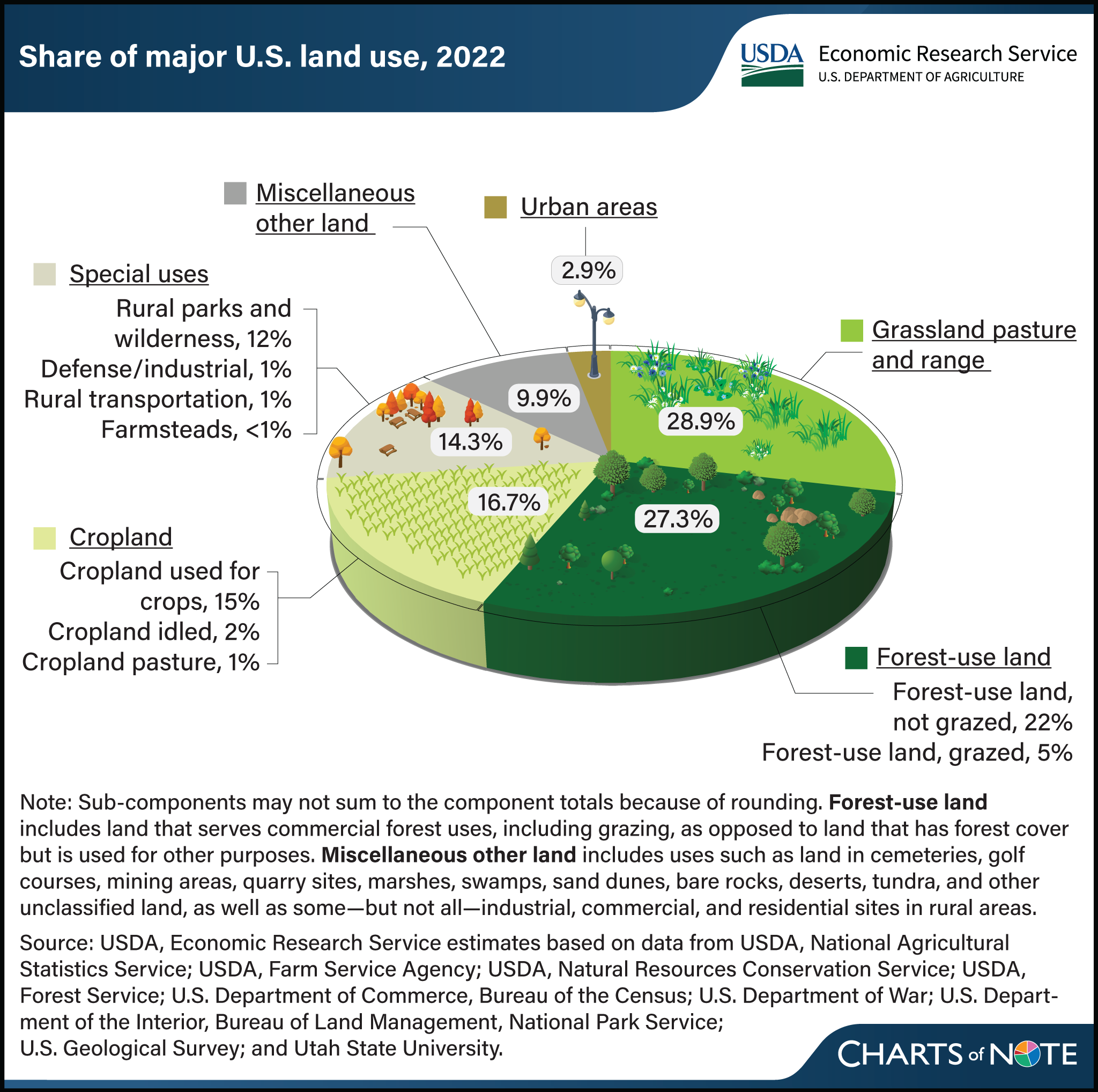
Grassland pasture and range remained the largest single use of land in the United States in 2022, covering nearly 29 percent of the country's 2.3 billion acres, according to a chart published on 10 November by the Economic Research Service (ERS) of the US Department of Agriculture.
Forest-use land, meaning land used mainly for commercial timber and other forest activities, was the next largest category at just over 27 percent. Cropland came third at nearly 17 percent of the national land base. ERS counts as cropland not only land actively growing crops but also idled cropland and cropland used for pasture.
Together the three categories made up nearly 73 percent of all US land. The rest was split among smaller uses. Special-use areas, which include rural parks and wildlife areas, defence installations and rural transport facilities, accounted for about 14 percent. Miscellaneous other land, a group that takes in marshes, swamps, deserts and tundra as well as built places such as cemeteries, golf courses and quarries, made up roughly 10 percent. Urban land was under 3 percent of the total.
The figures show how much of the American landscape is shaped by farming and forestry rather than by towns and cities. Pasture, range and cropland together, the land most directly used to raise livestock and crops, account for nearly 46 percent of the country by these figures, while urban areas, often the focus of debate about lost farmland, remain a small share.
ERS notes that the division of land among these major categories changes slowly from year to year. That stability reflects both the scale of the large land uses and the continuing role of agriculture and forest resources in the US landscape. For farmers, ranchers and land investors, the slow pace of change means that shifts at the margin, such as cropland moving into pasture or idle use, matter more than the headline shares.
The chart is drawn from the ERS Major Land Uses data product, which was updated in August 2026.
Source: ers_usda
Comments
(0)